Trek hybrid bikes are designed for riders who want a practical balance of comfort, efficiency, and versatility. Depending on the model, they can handle city streets, paved paths, fitness rides, commuting, and light off-road routes. Trek offers several hybrid styles, including fitness-focused, comfort-oriented, and adventure-ready options, so riders can choose a bike that matches their preferred terrain and riding position. This guide explains the main Trek hybrid bike categories, important features, riding uses, fit considerations, and what to look for before choosing a model.
What Are Trek Hybrid Bikes?
Trek hybrid bikes combine characteristics commonly associated with road, city, and mountain bikes. They generally use flat handlebars, comfortable geometry, versatile tires, and gearing suited to everyday riding. Trek currently positions its hybrid range across fitness, comfort, recreation, commuting, and adventure categories, giving riders different options depending on how they plan to use the bike.
Designed for Everyday Versatility
A Trek hybrid bicycle is typically easier to use across varied everyday conditions than a highly specialized road or mountain bike.
Depending on the model, riders can use one for:
- Commuting
- Fitness rides
- Recreational cycling
- Paved paths
- City streets
- Errands
- Light gravel
- Easy trails
This flexibility is one of the main reasons hybrid bikes appeal to casual and practical riders.
Flat Handlebars and Stable Control
Most Trek hybrids use flat handlebars rather than the drop bars found on traditional road bikes.
This creates a more upright riding position and gives riders straightforward access to braking and shifting controls. The result is generally stable, predictable handling for urban and recreational use.
Main Types of Trek Hybrid Bikes
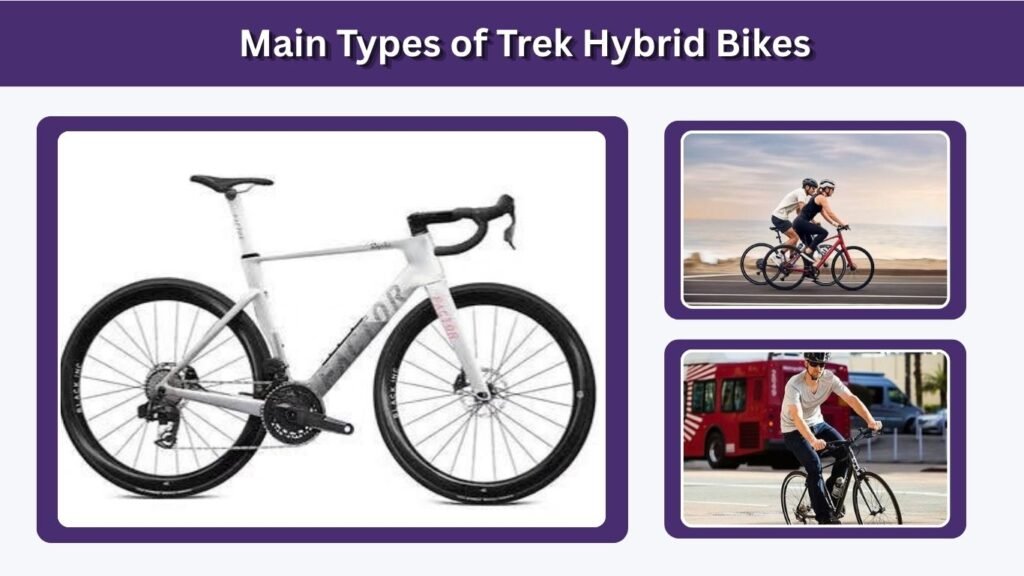
Trek offers different hybrid styles rather than treating all hybrids as the same. The current lineup includes FX for fitness and commuting, Verve for comfort and recreation, and Dual Sport for riders who want more capability across pavement and dirt. Choosing between these categories depends on speed, comfort, terrain, and riding goals.
Trek FX Hybrid Bikes
The FX line is Trek’s fitness-oriented hybrid range. Trek describes FX as suitable for riding to work, exercising, and general city use. Current FX models use lightweight aluminum frames, and many include mounts for practical accessories such as racks and fenders.
FX can be a strong choice if you want a hybrid mainly for:
- Fitness
- Commuting
- Pavement
- Bike paths
- Urban riding
- Everyday transportation
It generally favors efficiency and responsiveness over maximum comfort.
Trek Verve Hybrid Bikes
Verve is designed with comfort as the priority. Trek currently describes it as a recreational hybrid for everyday adventures, featuring an upright riding position, comfortable touchpoints, and accessory mounts. Some current versions also include low-step frame options for easier mounting and dismounting.
Verve suits riders who prefer relaxed cruising rather than aggressive fitness riding.
Trek Dual Sport
Dual Sport is Trek’s more adventure-focused hybrid option.
Trek positions it as a versatile bike capable of moving from road to trail, making it better suited to riders who expect a mixture of pavement, gravel, and easier dirt routes.
Trek Hybrid Bikes for Commuting
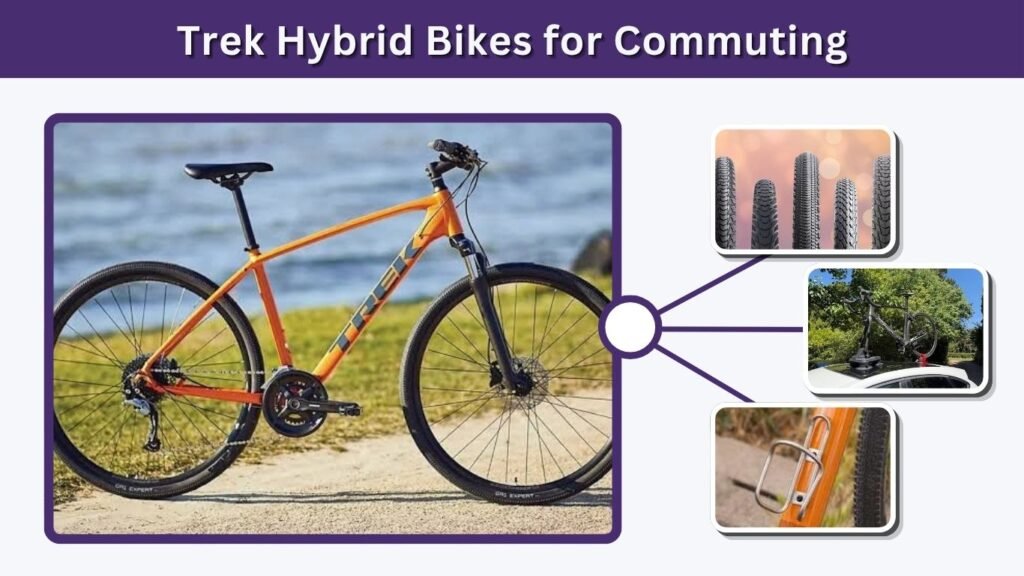
Hybrid bikes are commonly chosen for commuting because they balance efficiency, comfort, and practicality. Trek’s hybrid categories include models designed for city and commuter use, and several current bikes include mounts that make it easier to add everyday accessories such as racks, bags, lights, bottles, and fenders.
Why They Work Well for Daily Travel
Useful commuting characteristics may include:
- Upright visibility
- Flat handlebars
- Efficient tires
- Multiple gears
- Rack mounts
- Fender mounts
- Bottle mounts
- Disc-brake options
- Comfortable geometry
The exact equipment depends on the individual model and generation.
FX for Faster Urban Riding
FX is particularly well suited to riders who want commuting capability without giving up a more energetic fitness-bike feel.
Trek describes FX as equally suitable for riding to work, working out, or riding for fun.
Verve for Comfortable Commuting
Verve can make more sense for riders who value a relaxed posture.
Its upright geometry and comfort-oriented contact points make it more focused on easy, confident riding rather than outright speed.
Key Features of Trek Hybrid Bicycles
Features vary considerably across Trek hybrid bicycles, but the category generally emphasizes practical design, manageable handling, and adaptability. Some models focus on lighter weight and speed, while others prioritize comfort or mixed-surface capability.
Common Features to Look For
Depending on the model, you may find:
- Aluminum or carbon frames
- Flat handlebars
- Disc brakes
- Multiple frame sizes
- Rack mounts
- Fender mounts
- Bottle-cage mounts
- Wider all-purpose tires
- Internal cable routing
- Low-step frame options
For example, current FX generations include lightweight aluminum frames and utility mounts, while some versions use Shimano CUES drivetrains and disc brakes.
Disc Brakes
Disc brakes are common on many modern hybrid bikes because they provide dependable braking in varied weather and road conditions.
Trek currently offers several FX options with disc brakes, including hydraulic and mechanical systems depending on the model.
Accessory Compatibility
Accessory mounts can make a hybrid much more practical.
Racks, bags, fenders, lights, and bottle cages allow riders to adapt a bike for commuting, errands, fitness, or longer recreational rides.
Trek Hybrid Bikes for Men and Women
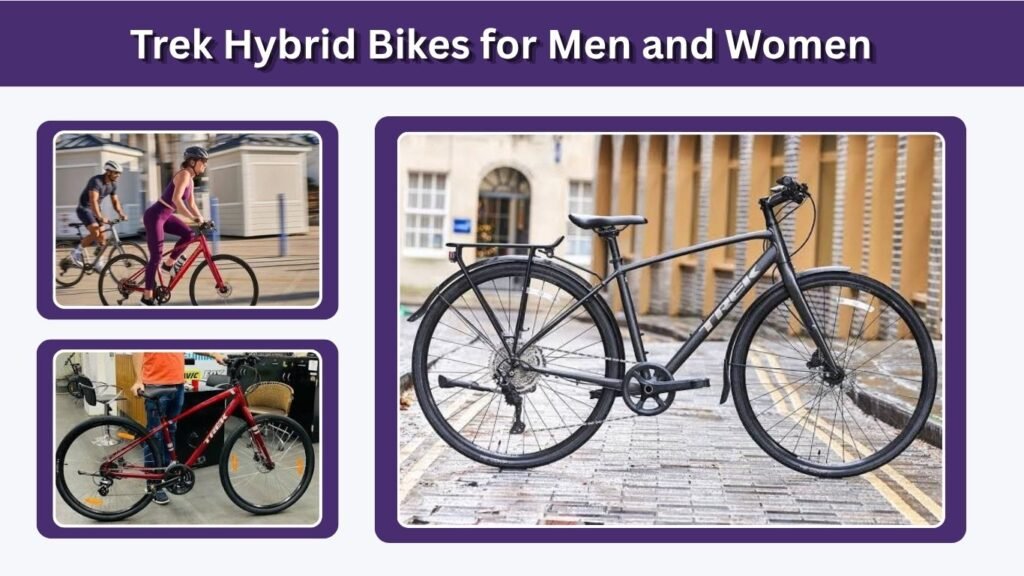
Your keyword list shows interest in Trek hybrid bikes for both men and women. Modern bike selection is generally more about frame size, geometry, and fit than simply choosing a bike by gender. Trek’s current hybrid filters include men’s, women’s, and unisex options depending on the product family.
Choose by Fit First
Important fit factors include:
- Rider height
- Inseam
- Frame size
- Reach
- Saddle position
- Handlebar position
- Riding style
A properly fitted hybrid should feel comfortable and controllable without requiring excessive stretching.
Low-Step Frames
Low-step frames make it easier to get on and off the bike.
Current Verve models include low-step options, and some generations are offered specifically in low-step configurations.
This style can be useful for riders who prioritize easy mounting or a more accessible frame design.
Trek Hybrid Bike vs Mountain Bike
Trek hybrid bikes and mountain bikes may both use flat handlebars, but they are designed for different terrain. Hybrids generally prioritize efficiency on roads and mixed surfaces, while mountain bikes focus on technical off-road riding.
When a Hybrid Is Better
Choose a Trek hybrid if most of your riding involves:
- Paved roads
- Bike paths
- Commuting
- Fitness
- Light gravel
- Urban streets
- Recreational riding
A hybrid will generally feel more efficient for these conditions.
When a Mountain Bike Is Better
A Trek mountain bike is better suited to technical trails with rocks, roots, steep descents, drops, or very rough surfaces.
Mountain bikes typically use more aggressive tires, stronger off-road geometry, and suspension designed specifically for demanding trails.
Trek Hybrid Bike vs Road Bike

A hybrid prioritizes everyday flexibility, while a road bike focuses more heavily on paved-road speed and efficiency. Riders deciding between the two should think about posture, surface conditions, riding distance, and desired performance.
Advantages of a Hybrid
A Trek hybrid typically offers:
- More upright posture
- Easier handling
- Wider tires
- Better rough-road comfort
- More accessory options
- Greater mixed-surface flexibility
These characteristics make hybrids useful for riders who do more than fast road cycling.
Advantages of a Road Bike
A road bike is generally lighter, more aerodynamic, and better suited to riders who prioritize long-distance pavement performance.
If speed and road efficiency are the main goals, a road bike may be the better choice.
Are Trek Hybrid Bikes Good?
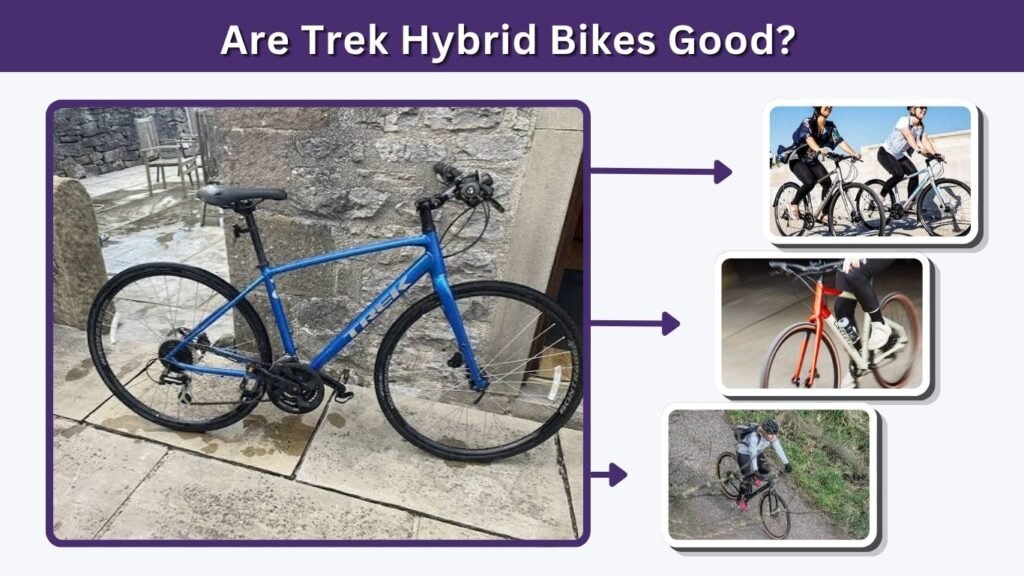
Trek hybrid bikes cover a broad range of use cases rather than focusing on only one riding style. The current lineup offers dedicated options for fitness, comfort, commuting, recreation, and mixed-surface riding, which gives riders the ability to choose according to their needs rather than settle for one generic hybrid design.
Strengths of Trek Hybrids
Common advantages include:
- Multiple hybrid categories
- Comfortable riding options
- Fitness-focused models
- Commuter-friendly mounts
- Mixed-surface choices
- Low-step options
- Disc-brake availability
- Broad sizing choices
The main advantage is the variety of configurations available.
Possible Limitations
A hybrid is still a compromise.
An FX will not match a dedicated road racing bike for speed, and a Dual Sport will not replace a full-suspension mountain bike on demanding trails. Buyers should choose according to their main riding environment rather than expecting one bike to excel at every task.
How to Choose a Trek Hybrid Bike
Choosing the right Trek hybrid bike starts with identifying your primary riding style. Fitness riders, commuters, casual recreational cyclists, and mixed-surface riders may all benefit from different models. Frame fit, braking, tire width, accessory compatibility, and comfort should be considered before focusing on appearance or price.
Match the Bike to Your Riding Style
A simple approach is:
- Choose FX for fitness, faster commuting, and pavement.
- Choose Verve for comfort and relaxed recreational riding.
- Choose Dual Sport for mixed pavement and light trail use.
- Consider an electric hybrid if you want motor assistance for commuting or longer rides.
Trek’s current hybrid lineup follows these broad use categories.
Check the Fit Carefully
Correct sizing can make more difference to comfort than many component upgrades.
Whenever possible, compare the manufacturer’s sizing guidance and test the bike before making a final decision.
FAQs
1. Are Trek hybrid bikes good for commuting?
Yes. Many Trek hybrids are well suited to commuting because they combine stable handling, efficient road performance, and practical accessory mounts. FX is particularly oriented toward fitness and urban riding, while Verve offers a more upright, comfort-focused position for riders who prefer relaxed daily transportation.
2. Which Trek hybrid bike is best for fitness?
Trek FX is the brand’s main fitness-oriented hybrid family. It is designed for pavement, commuting, workouts, and everyday city riding. Current generations include lightweight frames, practical mounts, and several braking and drivetrain configurations, depending on the specific model.
3. Which Trek hybrid is best for comfort?
Verve is Trek’s comfort-focused hybrid line. Current versions use upright geometry and comfort-oriented grips and saddles, with some models offering low-step frames for easier mounting. It is particularly suitable for relaxed recreational rides, paved paths, and riders who value comfort over aggressive speed.
4. Can Trek hybrid bikes go off road?
Some can handle light off-road conditions. Dual Sport is specifically designed for a mix of roads, dirt, and trails, while standard fitness hybrids are more road-oriented. For technical terrain with rocks, roots, jumps, or steep descents, a dedicated Trek mountain bike is generally more appropriate.
5. How do I choose the right Trek hybrid bike?
Start by deciding where you will ride most often. Choose FX for fitness and commuting, Verve for comfort and recreation, and Dual Sport for mixed surfaces. Then compare frame size, riding position, tire width, brakes, gearing, accessory mounts, and overall fit before selecting a particular model.
