
Choosing between a hybrid bike and a gravel bike can be challenging when both promise versatility, comfort, and reliable performance across different surfaces. However, their designs serve different cycling needs. Hybrid bikes prioritize everyday commuting, casual riding, and upright comfort, while gravel bikes focus on mixed-terrain adventures and longer-distance efficiency. Understanding their differences in handlebars, tires, speed, geometry, and riding comfort helps you decide which option matches your lifestyle. This hybrid bike vs gravel bike comparison explains their strengths, limitations, and ideal uses to make your decision easier.
What Is the Difference Between a Hybrid Bike and a Gravel Bike?
The main difference between hybrid and gravel bikes lies in their riding positions, handlebars, and intended terrain. Hybrid bicycles generally emphasize comfort and convenience for everyday travel, while gravel bicycles combine road cycling efficiency with off-road capabilities. Although both handle paved roads and moderate gravel surfaces, their geometry, tire clearance, gearing options, and handling characteristics create noticeably different riding experiences.
What Is a Hybrid Bike?
A hybrid bike combines characteristics of road and mountain bicycles. It typically features flat handlebars, an upright riding position, and tires suitable for paved roads and light trails.Hybrid bikes are commonly used for commuting, fitness, recreational cycling, and everyday transportation. Their approachable handling makes them particularly appealing to beginner riders.
What Is a Gravel Bike?
A gravel bike combines road-bike-style efficiency with features designed for unpaved surfaces. Most models use drop handlebars, wider tires, and geometry intended to provide stability over mixed terrain.Gravel bicycles are popular for long-distance cycling, gravel roads, adventure riding, and bikepacking. They offer versatility for cyclists who regularly travel beyond smooth pavement.
Hybrid Bike vs Gravel Bike: Key Differences
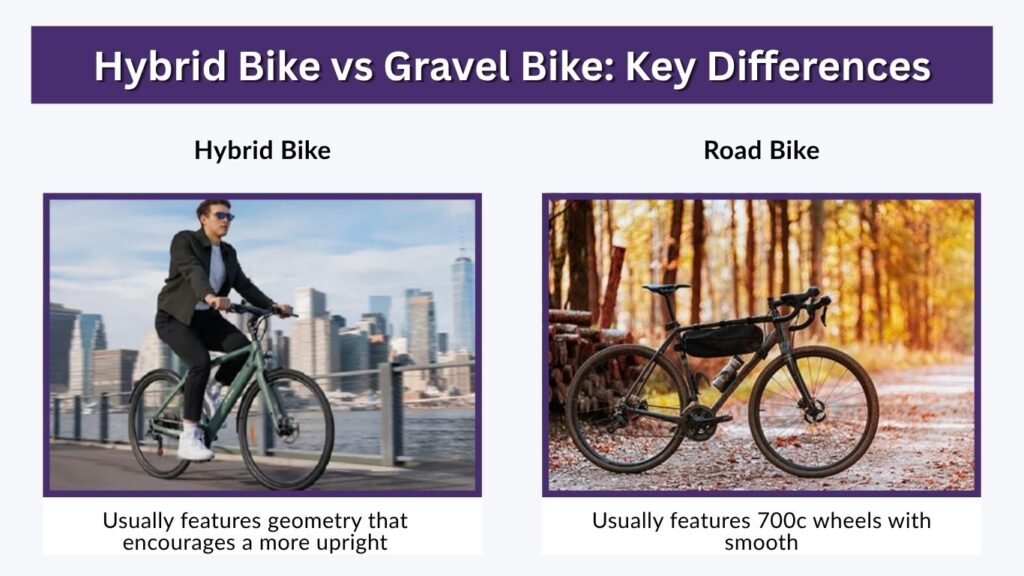
Hybrid and gravel bicycles share some design features, but their construction reflects different priorities. Hybrid bikes typically provide an upright posture and straightforward handling, while gravel bikes emphasize efficiency and control over varied surfaces. Understanding their components helps explain why one may feel more comfortable during city commuting while the other performs better on long-distance rides and unpaved routes.
Frame Geometry and Riding Position
- Hybrid bike: Usually features geometry that encourages a more upright, relaxed riding position.
- Gravel bike: Generally supports a more forward-leaning position that improves aerodynamic efficiency.
- Key difference: Hybrids favor everyday visibility and comfort, while gravel bikes balance efficiency with stability on mixed terrain.
Handlebar Design
- Hybrid bike: Commonly features flat handlebars that provide straightforward steering and easy access to controls.
- Gravel bike: Typically uses drop handlebars with several hand positions for longer rides.
- Key difference: Flat bars emphasize practical urban control, while drop bars offer greater riding-position flexibility.
Tires and Wheel Sizes
- Hybrid bike: Usually features 700c wheels with smooth or lightly treaded tires.
- Gravel bike: Commonly uses 700c or 650b wheels with wider tires designed for mixed surfaces.
- Key difference: Gravel tires often provide more traction and cushioning on loose terrain, while road-oriented hybrid tires favor pavement efficiency.
Hybrid Bike vs Gravel Bike Speed and Performance
Speed depends on several factors, including tire selection, riding position, fitness, terrain, and bicycle weight. Although both bicycles perform efficiently on suitable surfaces, their designs influence how easily riders maintain momentum. Gravel bikes often offer aerodynamic advantages during longer rides, while hybrids provide convenient handling in urban environments. Neither category is automatically faster in every situation because individual bicycle specifications vary considerably.
Which Bike Is Faster on Pavement?
A gravel bike may be faster during sustained road riding because drop handlebars allow a lower, more aerodynamic position. This advantage becomes more noticeable at higher speeds.However, a lightweight hybrid with efficient road tires can perform similarly at moderate speeds. Tire tread, gearing, and rider fitness often matter more than the bicycle category alone.
Which Bike Performs Better on Gravel Roads?
Gravel bikes generally offer better performance on loose, uneven gravel roads. Their wider tire clearance and terrain-oriented geometry improve traction and stability.Hybrids can comfortably navigate smooth gravel and compact dirt paths. However, rougher surfaces may expose limitations in tire clearance, traction, and overall handling.
Hybrid Bike vs Gravel Bike Comfort and Riding Experience
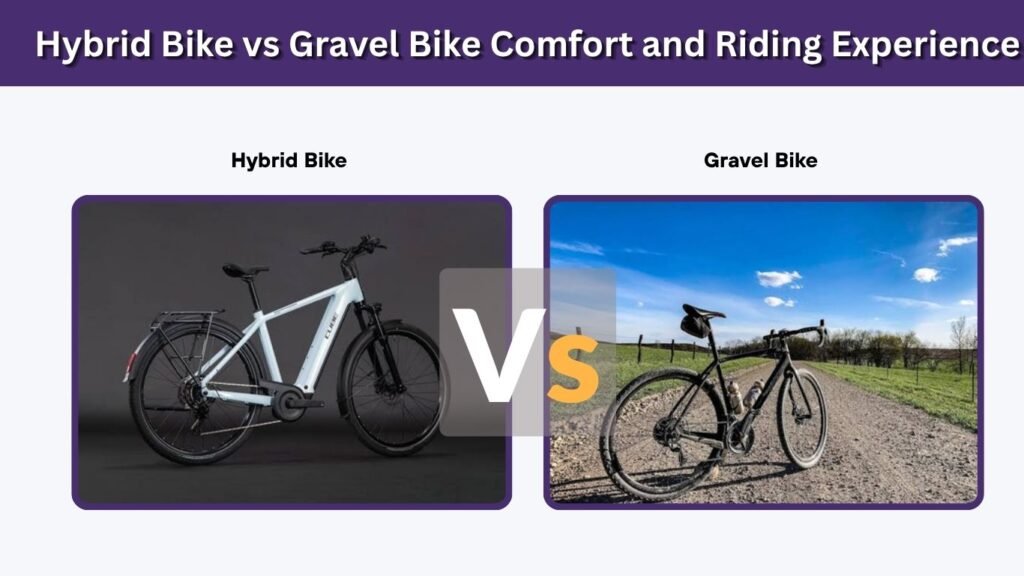
Comfort plays an important role when choosing between these two versatile bicycle categories. A hybrid bike often feels approachable because of its upright posture and familiar handlebars. A gravel bike provides multiple hand positions and can offer excellent comfort over long distances. The most comfortable option depends on riding duration, terrain conditions, bicycle fit, and individual preferences.
Hybrid Bike Comfort
Hybrid bicycles typically allow riders to sit relatively upright, reducing the need to lean forward. This position supports visibility in traffic and can feel natural during short commutes.Many hybrids also feature ergonomic grips and practical saddles. These characteristics make them appealing for recreational rides and everyday transportation.
Gravel Bike Comfort
Gravel bicycles commonly provide several hand positions through their drop handlebars. This flexibility can reduce fatigue during longer rides.Wider tires operated at appropriate pressures also improve comfort over rough surfaces. Although gravel bikes often encourage a more forward-leaning posture, endurance-oriented geometry can remain comfortable for extended cycling sessions.
Gravel Bike vs Hybrid Bike for Commuting
Both bicycles work well for commuting, but their advantages depend on travel distance, surface conditions, and daily requirements. Hybrid bikes prioritize practicality and convenient handling in urban settings, whereas gravel bikes combine transportation capabilities with more adventurous cycling potential. Considering your commuting route, accessory requirements, and preferred riding position helps identify which bicycle will provide the most enjoyable everyday experience.
Hybrid Bike for Commuting
Hybrid bicycles are often the more practical option for routine city transportation.
- Upright posture supports visibility in traffic.
- Flat handlebars provide familiar steering.
- Many models accommodate racks, fenders, and lights.
- Efficient tires suit paved streets and cycling paths.
Gravel Bike for Commuting
Gravel bicycles can be excellent commuting options, particularly for longer or mixed-surface routes.
- Drop handlebars provide multiple riding positions.
- Wider tires handle gravel and uneven roads.
- Efficient riding geometry supports longer journeys.
- Many models include mounts for luggage and accessories.
Which Is Better for Daily Transportation?
For short urban commutes, a hybrid bike is usually more convenient because of its comfortable riding position and practical design.For longer commutes that combine pavement and gravel, a gravel bike may provide greater versatility and efficiency. Bicycle fit and route conditions should guide the final choice.
Hybrid Bike vs Gravel Bike: Price and Maintenance
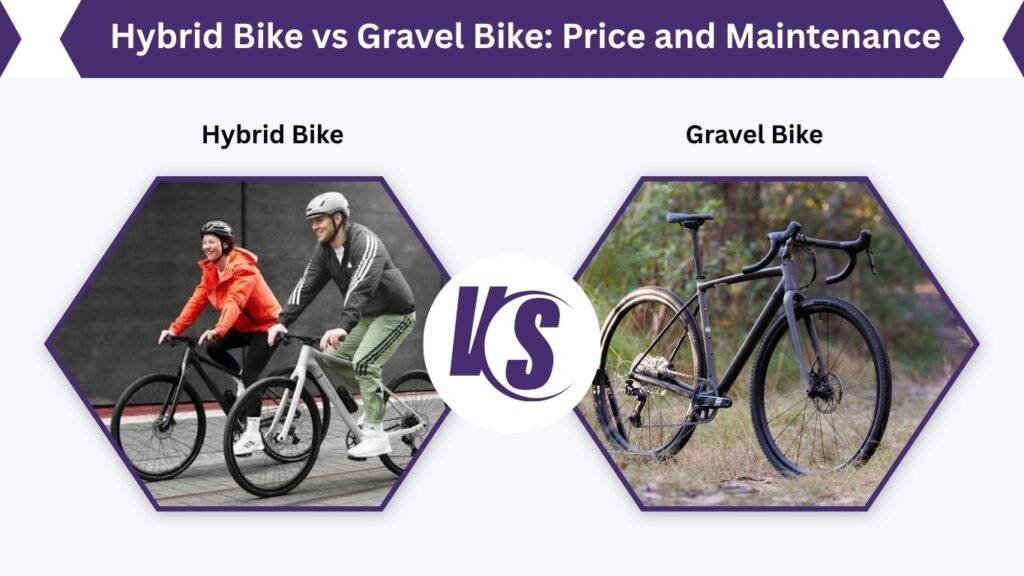
Price and maintenance can influence your decision as much as riding performance. Both bicycle categories are available in entry-level and premium versions, but gravel bikes often include specialized components intended for demanding mixed-terrain use. Hybrid bikes frequently prioritize affordability and simple everyday operation. Comparing equipment quality, service requirements, and long-term ownership costs can help you select a suitable bicycle without unnecessary spending.
Which Bike Is More Affordable?
Hybrid bikes are generally more affordable at the entry level. Their relatively straightforward components and practical designs often keep initial costs manageable.Gravel bikes may cost more because of specialized drivetrains, drop-bar controls, and performance-oriented frames. However, prices overlap considerably depending on the manufacturer and specifications.
Which Bike Is Easier to Maintain?
A basic rigid hybrid bike can be relatively straightforward to maintain, particularly when equipped with uncomplicated gearing and standard components.Gravel bikes require similar routine maintenance, including drivetrain cleaning, tire inspection, and brake servicing. Frequent muddy riding may increase cleaning requirements, while specialized components can sometimes raise replacement costs.
Hybrid Bike vs Gravel Bike: Pros and Cons
Every bicycle design involves compromises between comfort, efficiency, performance, and practicality. Hybrid bicycles suit riders who value approachable handling and reliable daily transportation. Gravel bicycles appeal to cyclists seeking versatility across paved and unpaved routes. Understanding their main advantages and disadvantages can prevent choosing a bicycle that looks attractive but does not match your actual riding requirements.
Hybrid Bike Pros and Cons
Pros
- Comfortable upright riding position.
- Practical for daily commuting and fitness.
- Often affordable and beginner-friendly.
- Convenient handling in urban environments.
Cons
- Less efficient aerodynamics at higher speeds.
- Limited capability on rough gravel trails.
- Fewer standard hand positions for long rides.
Gravel Bike Pros and Cons
Pros
- Versatile across paved and unpaved roads.
- Multiple hand positions on drop-bar models.
- Suitable for long-distance and adventure cycling.
- Wide tire options improve mixed-terrain capability.
Cons
- Often more expensive initially.
- Drop handlebars may require adjustment for beginners.
- Sportier riding positions may not suit everyone.
Hybrid Bike vs Gravel Bike: Which Should You Choose?
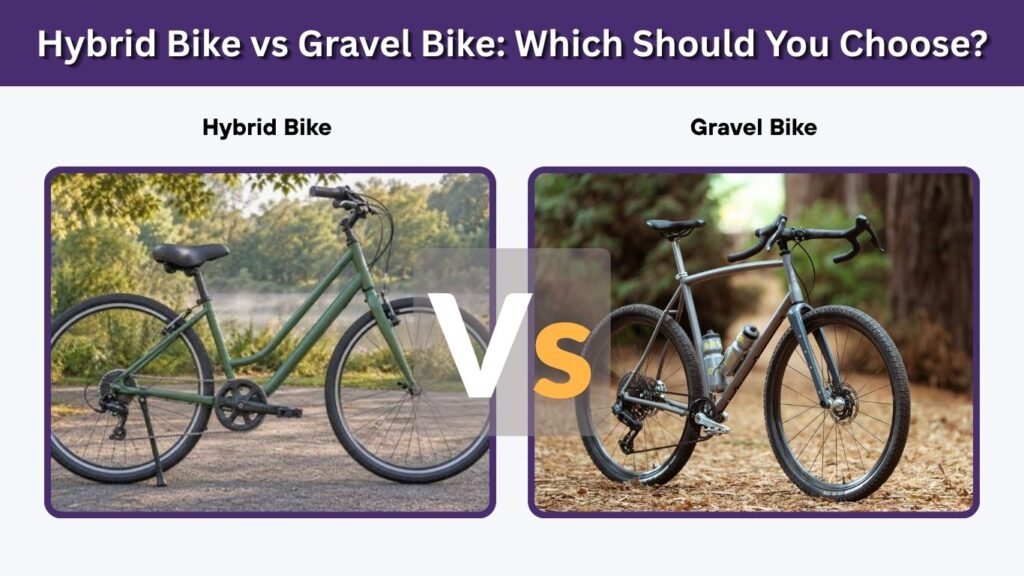
The best choice depends on your typical riding environment, fitness goals, commuting requirements, and personal comfort preferences. Hybrid bikes offer practicality and approachable handling for everyday journeys. Gravel bikes provide additional flexibility for cyclists interested in long-distance exploration and mixed-terrain routes. Instead of choosing solely based on appearance or performance claims, consider how frequently you will actually use each bicycle’s capabilities.
Choose a Hybrid Bike If You:
- Primarily ride on paved streets and cycling paths.
- Prefer upright, relaxed riding positions.
- Need an affordable bicycle for commuting.
- Enjoy casual fitness and recreational cycling.
Choose a Gravel Bike If You:
- Regularly ride gravel roads and mixed terrain.
- Plan longer-distance cycling adventures.
- Prefer drop handlebars and multiple hand positions.
- Want a bicycle suitable for commuting and bikepacking.
FAQs
1. Is a gravel bike faster than a hybrid bike?
A gravel bike can be faster during sustained road riding because its drop handlebars allow a more aerodynamic position. However, tire selection, gearing, and rider fitness significantly influence actual speed.
2. Is a hybrid bike or gravel bike better for beginners?
A hybrid bike is often easier for beginners because of its upright posture and flat handlebars. A gravel bike may suit beginners interested in longer rides and mixed-terrain adventures.
3. Can a hybrid bike be used on gravel roads?
Yes. Many hybrid bikes handle smooth gravel roads and compact dirt paths. Wider compatible tires can improve traction, but rough gravel terrain may exceed the capabilities of some models.
4. Are flat-bar gravel bikes the same as hybrid bikes?
Not necessarily. Flat-bar gravel bikes often retain gravel-oriented geometry, wider tire clearance, and off-road-focused components. Hybrid bikes generally emphasize commuting comfort and everyday riding, although the categories overlap.
5. Which is better for long-distance riding, a hybrid or gravel bike?
Gravel bikes are often better suited to long-distance mixed-terrain riding because their drop handlebars provide several hand positions and their geometry supports efficient travel. However, a properly fitted hybrid can also be comfortable for extended rides.
