
Hybrid bike frames come in different materials, each offering unique benefits in weight, durability, comfort, and performance. Choosing the right frame material can make a big difference in your daily commuting, fitness rides, or weekend adventures. From lightweight aluminum and carbon fiber to durable steel and titanium, this guide explores 8 types of hybrid bike frames by material, including their features, advantages, disadvantages, and ideal uses.
1. Aluminum Hybrid Bike Frame

Aluminum is one of the most popular materials used in hybrid bike frames because it is lightweight, affordable, and resistant to rust. Aluminum hybrid bikes are suitable for daily commuting, fitness riding, and recreational cycling. Their relatively low weight makes them easier to accelerate, maneuver, and carry. Many manufacturers use aluminum alloys to create strong, practical frames that balance durability, performance, and cost.
Identification
- Frame Material: Aluminum alloy, commonly 6061 or 7005.
- Weight: Generally lighter than comparable steel frames.
- Appearance: Smooth or visibly welded tubes with a modern finish.
- Corrosion Resistance: Naturally resistant to rust.
- Frame Stiffness: Relatively stiff, providing responsive handling.
- Price Range: Commonly found in budget and mid-range hybrid bikes.
- Common Uses: City commuting, fitness cycling, recreational riding, and light touring.
Advantages of Aluminum Hybrid Bike Frames
Aluminum hybrid bike frames offer several benefits for everyday cyclists. Their lightweight construction makes riding uphill, accelerating, and navigating busy streets easier. Aluminum also resists rust, making it a practical option for riders who frequently encounter rain or humid conditions.Another advantage is affordability. Aluminum frames are generally less expensive than carbon fiber or titanium alternatives while providing reliable performance. Their responsive handling makes them particularly suitable for commuting and fitness riding.
Disadvantages of Aluminum Hybrid Bike Frames
Despite their advantages, aluminum hybrid bike frames have some limitations. They can transmit more road vibrations than certain steel or carbon fiber designs, depending on the frame construction, tires, and components. This may affect comfort when riding on rough roads. Aluminum frames can also develop fatigue cracks over time, particularly around highly stressed areas or damaged welds. Unlike steel, aluminum frame damage is often difficult to repair safely. However, a properly designed and maintained aluminum frame can provide many years of dependable use.
Who Should Choose an Aluminum Hybrid Bike Frame?
An aluminum hybrid bike frame is an excellent choice for beginners, commuters, and recreational cyclists who want a lightweight, practical, and reasonably priced bicycle. It is particularly useful for city riding, paved bike paths, fitness workouts, and regular transportation. Riders looking for a balance of affordability, durability, and everyday performance will find aluminum frames a suitable option.
2. Steel Hybrid Bike Frame
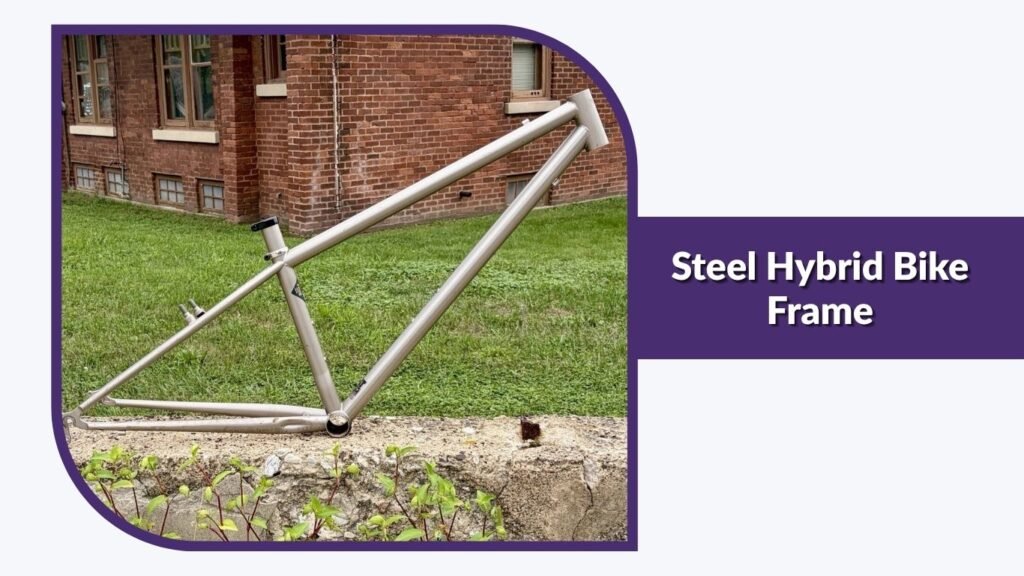
Steel hybrid bike frames are known for their durability, strength, and comfortable riding characteristics. Steel has been used in bicycle manufacturing for decades and remains a reliable choice for commuting, touring, and recreational cycling. Although steel frames are generally heavier than aluminum alternatives, they offer excellent toughness and can provide a smooth riding experience when properly designed.
Identification
- Frame Material: Steel, including high-tensile steel and various steel alloys.
- Weight: Generally heavier than aluminum and carbon fiber frames.
- Appearance: Traditional round tubing with welded, brazed, or lugged joints.
- Corrosion Resistance: Can rust when exposed to moisture without protective coatings.
- Frame Strength: Strong and tough, with good resistance to impact damage.
- Price Range: Available in budget, mid-range, and premium bicycles.
- Common Uses: Daily commuting, touring, recreational cycling, and urban transportation.
Advantages of Steel Hybrid Bike Frames
Steel hybrid bike frames offer excellent durability and dependable performance for everyday cycling. One major advantage is their toughness, allowing them to withstand regular use on uneven roads and challenging surfaces. Steel tubing can also provide comfortable riding characteristics, depending on the frame’s geometry and construction.Another important benefit is repairability. Many steel frames can be repaired by experienced bicycle frame builders, making them attractive to cyclists interested in long-term ownership. Steel is also commonly used in touring bicycles because it supports practical frame designs suitable for carrying luggage and accessories.
Disadvantages of Steel Hybrid Bike Frames
The main disadvantage of steel hybrid bike frames is their relatively heavy weight. Compared with aluminum or carbon fiber frames, steel bicycles may require more effort to carry upstairs or accelerate, although overall bicycle weight also depends on the components.Steel is also vulnerable to rust when its protective coating becomes damaged. Regular cleaning, drying, and inspection help prevent corrosion. Some inexpensive steel frames use heavier tubing, which can make the bicycle less efficient for riders prioritizing speed and lightweight performance.
Who Should Choose a Steel Hybrid Bike Frame?
Steel hybrid bike frames are ideal for commuters, recreational cyclists, and touring enthusiasts who prioritize durability and practical everyday performance. They are especially suitable for riders who value repairability and reliable construction over minimum weight. Cyclists who frequently ride on imperfect urban roads or carry commuting equipment may find a well-designed steel hybrid bicycle particularly useful.
3. Chromoly Steel Hybrid Bike Frame
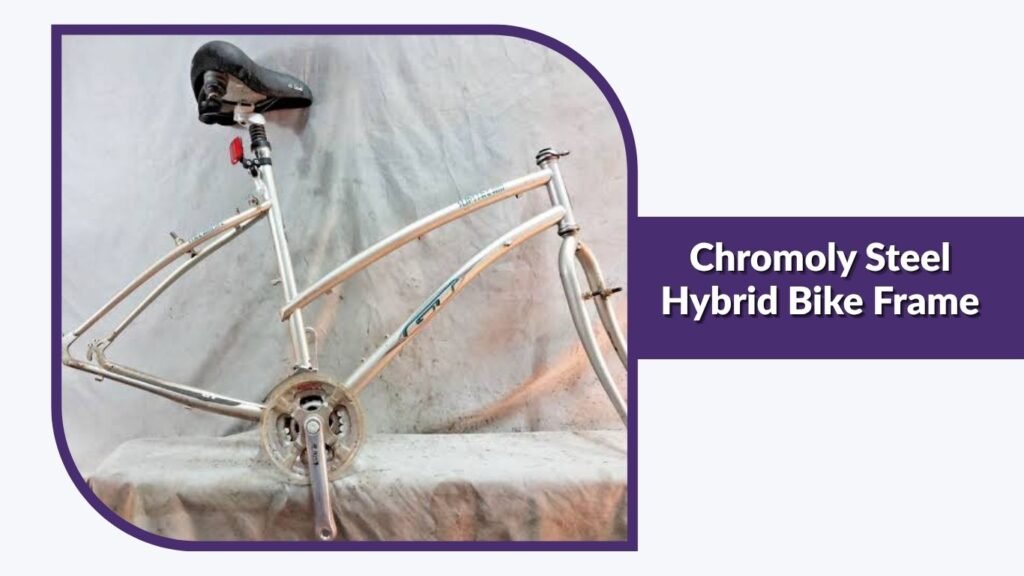
Chromoly steel hybrid bike frames are manufactured using chromium-molybdenum alloy steel, commonly known as 4130 chromoly. This material is valued for its strength, toughness, and ability to be formed into relatively thin-walled bicycle tubes. Compared with basic high-tensile steel frames, chromoly designs can offer reduced weight while maintaining excellent durability. They are commonly associated with quality commuting, touring, and adventure-oriented bicycles.
Identification
- Frame Material: Chromium-molybdenum alloy steel, commonly 4130 chromoly.
- Weight: Often lighter than basic high-tensile steel frames of similar design.
- Appearance: Slender tubing with welded, brazed, or lugged connections.
- Corrosion Resistance: Requires protective coatings to prevent rust.
- Frame Strength: High strength and toughness with good fatigue performance when properly engineered.
- Price Range: Generally found in mid-range and premium steel bicycles.
- Common Uses: Commuting, touring, adventure cycling, and recreational riding.
Advantages of Chromoly Steel Hybrid Bike Frames
Chromoly steel offers an excellent combination of durability, strength, and practical versatility. Its relatively high strength allows manufacturers to use thinner tubing than might be practical with lower-strength steel, potentially reducing overall frame weight. This makes chromoly attractive for cyclists seeking the toughness of steel without unnecessary weight.Another advantage is its suitability for bicycle frames intended for touring and carrying equipment. Chromoly frames can incorporate racks, fenders, and bottle mounts while maintaining dependable performance. Depending on tube dimensions and frame geometry, they may also provide a comfortable ride on uneven roads.
Disadvantages of Chromoly Steel Hybrid Bike Frames
Chromoly steel frames are typically more expensive than basic high-tensile steel frames because of material selection and manufacturing requirements. Although they can be lighter than conventional steel designs, they are generally heavier than comparable lightweight aluminum or carbon fiber frames.Corrosion is another consideration. Chromoly contains chromium, but it is not stainless steel and can rust when exposed to moisture. Protective paint, internal frame treatments where appropriate, and regular maintenance can help preserve the frame.
Who Should Choose a Chromoly Steel Hybrid Bike Frame?
Chromoly steel hybrid bike frames are ideal for cyclists who want a durable, versatile bicycle for commuting, touring, or recreational adventures. They particularly suit riders who appreciate traditional steel construction, long-term serviceability, and practical accessory mounting options. For cyclists who prioritize toughness and everyday reliability over the lowest possible weight, chromoly steel is an excellent frame material.
4. Carbon Fiber Hybrid Bike Frame
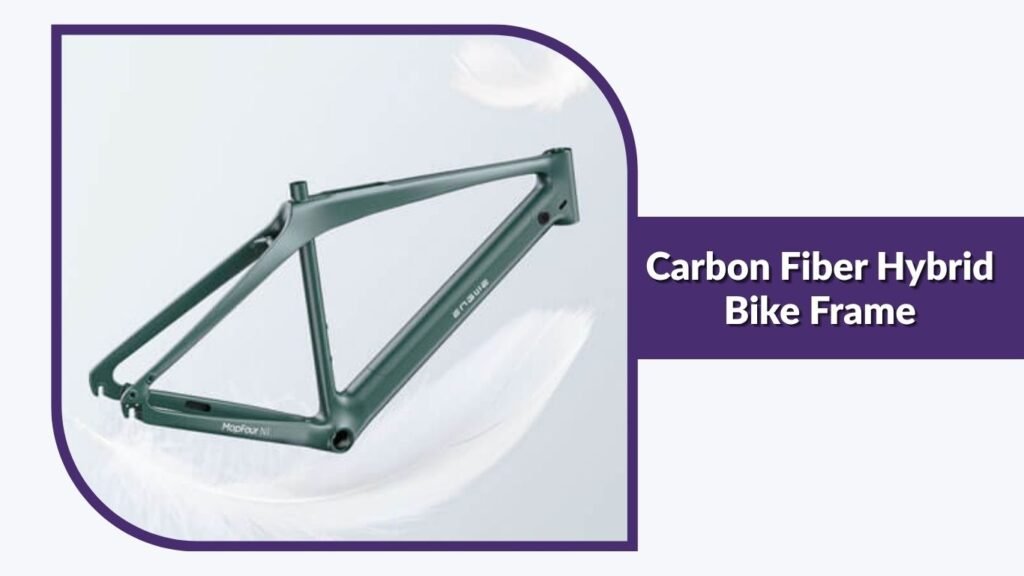
Carbon fiber hybrid bike frames are known for their lightweight construction, stiffness, and advanced engineering. These frames are manufactured using layers of carbon fiber reinforcement combined with resin to create a strong composite structure. Carbon fiber allows manufacturers to control frame stiffness and flexibility in specific areas, helping improve riding performance and comfort. Although more expensive than aluminum or steel, carbon fiber frames are popular among fitness-oriented cyclists who prioritize efficiency and low weight.
Identification
- Frame Material: Carbon fiber-reinforced polymer composite.
- Weight: Generally lighter than aluminum and steel frames of comparable design.
- Appearance: Smooth surfaces, aerodynamic tube shapes, and minimal visible joints.
- Corrosion Resistance: Does not rust like steel.
- Frame Stiffness: Can be engineered for high stiffness and controlled flexibility.
- Price Range: Usually found in premium and high-end hybrid bicycles.
- Common Uses: Fitness cycling, long-distance riding, recreational cycling, and performance commuting.
Advantages of Carbon Fiber Hybrid Bike Frames
Carbon fiber hybrid bike frames provide several benefits for cyclists seeking lightweight performance. Their low weight makes bicycles easier to accelerate, climb hills, and carry. Manufacturers can also design carbon fiber frames with specific stiffness characteristics, improving pedaling efficiency while allowing selected areas to absorb road vibrations.Another important advantage is corrosion resistance. Unlike traditional steel, carbon fiber composites do not rust, making them useful in various weather conditions. Their construction also allows designers to create aerodynamic shapes and integrate components for a clean, modern appearance.
Disadvantages of Carbon Fiber Hybrid Bike Frames
The biggest disadvantage of carbon fiber hybrid bike frames is their high cost. Manufacturing requires specialized materials, molds, and processes, making these bicycles more expensive than most aluminum or steel alternatives.Carbon fiber can also be vulnerable to impact damage from crashes or sharp objects. Some damage may be difficult to identify through visual inspection, requiring professional evaluation. Although specialized repairs are possible, they can be expensive. Riders must also follow manufacturer recommendations when tightening components to avoid damaging the composite structure.
Who Should Choose a Carbon Fiber Hybrid Bike Frame?
Carbon fiber hybrid bike frames are ideal for fitness enthusiasts, experienced cyclists, and commuters who prioritize lightweight construction and efficient riding performance. They are particularly suitable for paved roads, longer recreational rides, and fitness training. Cyclists willing to invest in premium materials and careful maintenance may appreciate the combination of low weight, responsive handling, and advanced frame design.
5. Titanium Hybrid Bike Frame
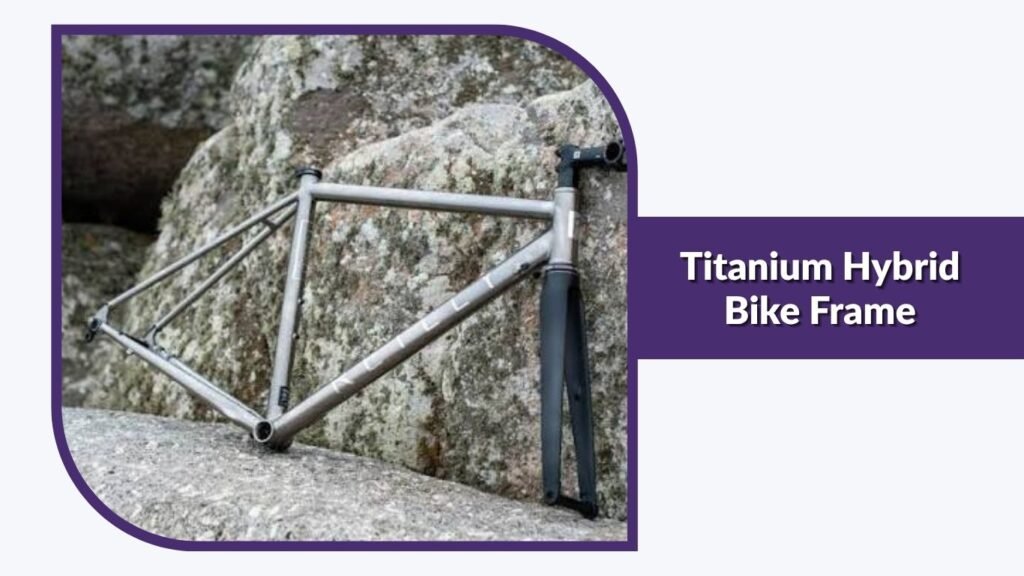
Titanium hybrid bike frames are premium bicycle frames valued for their durability, corrosion resistance, and excellent strength-to-weight ratio. Titanium combines relatively low weight with outstanding toughness, making it attractive for high-quality commuting, touring, and recreational bicycles. These frames are often left unpainted because titanium naturally forms a protective oxide layer that resists corrosion. Although titanium bicycles are expensive, their long service life and dependable construction make them appealing to dedicated cyclists.
Identification
- Frame Material: Titanium alloys, commonly 3Al-2.5V titanium.
- Weight: Generally lighter than traditional steel frames but often heavier than comparable carbon fiber designs.
- Appearance: Natural silver-gray metallic finish with visible welded joints.
- Corrosion Resistance: Excellent resistance to rust and environmental corrosion.
- Frame Strength: High strength-to-weight ratio with good toughness and fatigue resistance.
- Price Range: Primarily found in premium and custom-built bicycles.
- Common Uses: Long-distance commuting, touring, recreational cycling, and adventure riding.
Advantages of Titanium Hybrid Bike Frames
Titanium hybrid bike frames offer exceptional durability and corrosion resistance. One of their greatest advantages is their ability to withstand wet and humid environments without developing conventional steel rust. This reduces the need for protective paint and makes titanium attractive for cyclists seeking a bicycle that can remain in excellent condition for many years.Titanium also provides an impressive combination of strength and relatively low weight. Well-designed titanium frames can deliver responsive handling and comfortable riding characteristics. Their toughness and long-term durability make them particularly appealing for commuting, touring, and recreational adventures.
Disadvantages of Titanium Hybrid Bike Frames
The primary disadvantage of titanium hybrid bike frames is their expensive price. Titanium materials are costly, and manufacturing requires specialized equipment, experienced welders, and careful quality control. Consequently, titanium bicycles are generally less accessible to beginners and budget-conscious cyclists.Another limitation is availability. Titanium hybrid frames are less common than aluminum or steel alternatives, making replacement frames and certain custom configurations harder to find. Although titanium is durable, poorly designed frames or defective welds can still experience fatigue damage. Professional repairs may also require specialized welding expertise.
Who Should Choose a Titanium Hybrid Bike Frame?
Titanium hybrid bike frames are ideal for dedicated commuters, touring cyclists, and recreational riders seeking premium durability and long-term reliability. They are especially suitable for cyclists who frequently ride in wet or humid environments and prefer a corrosion-resistant frame. Riders who value craftsmanship, practical performance, and long-lasting materials may find titanium a worthwhile investment despite its higher initial cost.
6. Bamboo Hybrid Bike Frame
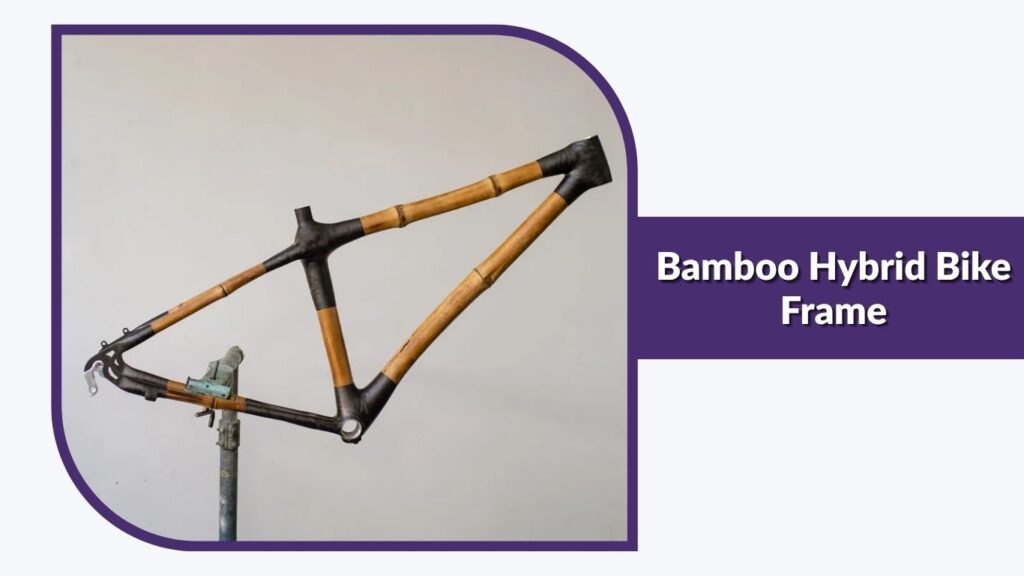
Bamboo hybrid bike frames are an uncommon alternative to traditional metal and carbon fiber bicycle frames. They use specially selected and treated bamboo tubes connected with composite joints or other reinforced fittings. Bamboo is valued for its natural appearance, renewable origin, and potential vibration-damping characteristics. Although bamboo hybrid bicycles are relatively rare, they appeal to environmentally conscious cyclists and riders interested in unique frame designs.
Identification
- Frame Material: Treated bamboo tubes combined with composite or reinforced joints.
- Weight: Varies depending on bamboo thickness, joint construction, and frame design.
- Appearance: Natural bamboo tubes with visible grain patterns and distinctive joints.
- Corrosion Resistance: Does not develop metal rust, but requires protection against moisture and deterioration.
- Frame Strength: Depends on bamboo quality, treatment, joint construction, and engineering.
- Price Range: Usually found in specialty, handmade, and custom-built bicycles.
- Common Uses: Recreational cycling, urban commuting, and environmentally focused bicycle projects.
Advantages of Bamboo Hybrid Bike Frames
Bamboo hybrid bike frames offer several unique advantages, particularly for cyclists interested in natural materials and distinctive bicycle designs. Bamboo is a rapidly renewable resource, and responsibly sourced bamboo can reduce reliance on certain conventional frame materials.Another advantage is its potential vibration-damping ability. Properly engineered bamboo frames may help reduce some road vibrations, creating a comfortable riding experience on paved streets and recreational cycling routes.Bamboo also provides a distinctive appearance. Each bamboo tube has natural grain patterns and variations, making individual frames visually unique. Some manufacturers combine bamboo with carbon fiber or plant-based fiber joints to improve structural stability.
Disadvantages of Bamboo Hybrid Bike Frames
Bamboo hybrid bike frames have several limitations, including limited availability and specialized maintenance requirements. Unlike mass-produced aluminum or steel frames, bamboo bicycles are commonly manufactured by smaller workshops or custom frame builders.Bamboo can also be affected by moisture, temperature changes, and inadequate protective treatments. Poorly constructed joints may compromise frame strength and durability. Regular inspections are important, particularly around connection points.Another disadvantage is the limited availability of standardized testing and long-term performance information for certain handmade designs. Cyclists should choose frames from reputable manufacturers that provide appropriate safety testing and warranty information.
Who Should Choose a Bamboo Hybrid Bike Frame?
Bamboo hybrid bike frames are suitable for recreational cyclists, urban commuters, and environmentally conscious riders who appreciate natural materials and distinctive designs. They are particularly attractive to cyclists seeking a handcrafted bicycle for casual riding on paved roads.However, riders should prioritize verified frame construction, weather protection, and manufacturer safety standards before purchasing a bamboo hybrid bicycle.
7. Magnesium Alloy Hybrid Bike Frame
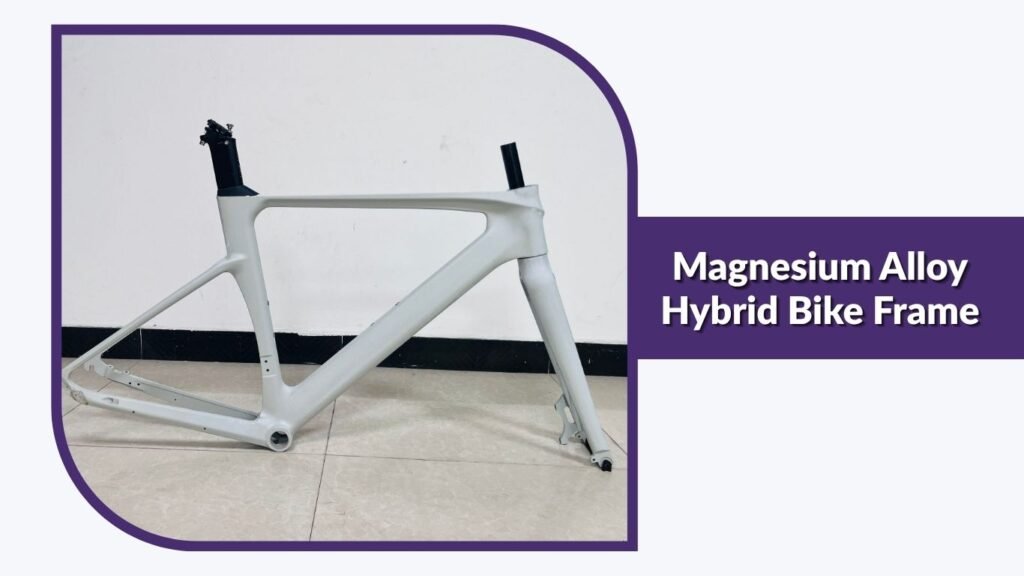
Magnesium alloy hybrid bike frames are lightweight bicycle frames manufactured using magnesium-based metal alloys. Magnesium is one of the lightest structural metals used in transportation and engineering applications. Its low density makes it attractive for bicycle manufacturers seeking to reduce frame weight. Although magnesium hybrid bicycles are uncommon compared with aluminum models, properly engineered magnesium frames can offer responsive handling, good vibration damping, and distinctive construction.
Identification
- Frame Material: Magnesium-based alloys, sometimes containing aluminum, zinc, or other alloying elements.
- Weight: Potentially lighter than comparable aluminum designs, depending on frame engineering.
- Appearance: Smooth cast or formed tubes with painted or coated surfaces.
- Corrosion Resistance: Requires suitable protective coatings to prevent corrosion.
- Frame Strength: Depends on the specific alloy, manufacturing method, and frame design.
- Price Range: Mostly found in specialty bicycle models and limited-production designs.
- Common Uses: Lightweight urban cycling, recreational riding, and specialized bicycle applications.
Advantages of Magnesium Alloy Hybrid Bike Frames
Magnesium alloy hybrid bike frames offer several potential benefits, particularly their low material density. Magnesium is lighter per unit volume than aluminum, allowing manufacturers to explore lightweight bicycle frame designs. However, actual frame weight depends on the amount of material needed to achieve the required strength and stiffness.Another advantage is magnesium’s vibration-damping characteristics. Well-designed magnesium frames may reduce certain road vibrations, helping improve comfort during recreational cycling and everyday commuting.Magnesium alloys can also be manufactured through specialized casting processes, allowing designers to create complex frame shapes and integrated structures. This provides opportunities for distinctive bicycle designs.
Disadvantages of Magnesium Alloy Hybrid Bike Frames
One major disadvantage of magnesium alloy hybrid bike frames is their susceptibility to corrosion if protective coatings become damaged. Although modern coatings can improve resistance, regular inspection and maintenance remain important.Magnesium frames are also less common than aluminum or steel alternatives. Limited availability can make replacement frames and specialized repairs more difficult to obtain.Manufacturing and engineering requirements present additional challenges. Magnesium alloys must be carefully selected and processed to achieve suitable strength, fatigue resistance, and long-term reliability. Not all magnesium frames are lighter or more durable than well-designed aluminum alternatives.
Who Should Choose a Magnesium Alloy Hybrid Bike Frame?
Magnesium alloy hybrid bike frames are suitable for cyclists interested in lightweight materials, innovative bicycle construction, and specialized frame designs. They may appeal to recreational riders and urban commuters seeking something different from conventional aluminum or steel bicycles.However, buyers should carefully evaluate manufacturer reputation, frame testing, protective coatings, and warranty coverage. A well-engineered magnesium frame can provide practical riding performance, but material choice alone does not guarantee a superior bicycle.
8. Aluminum-Carbon Composite Hybrid Bike Frame
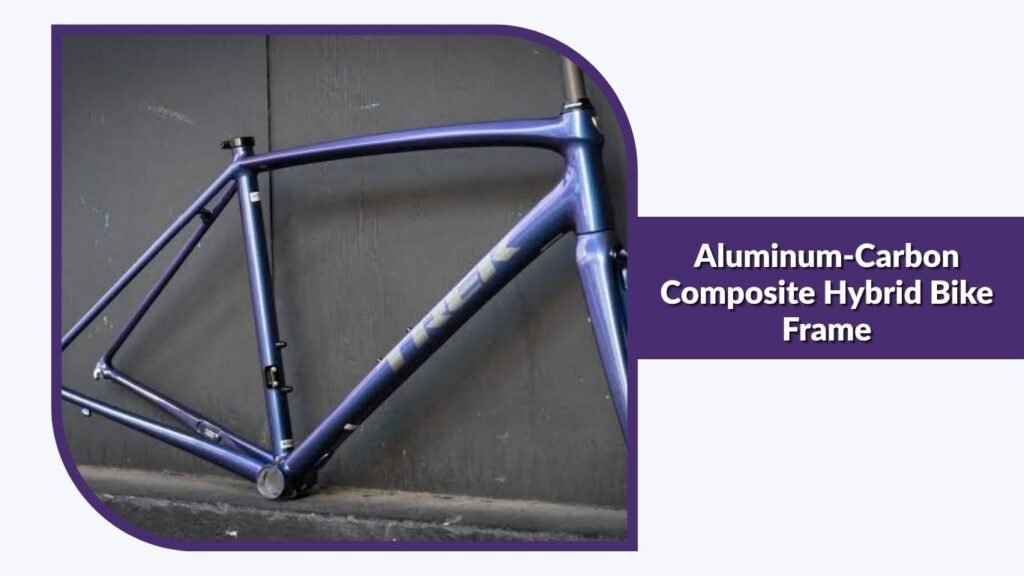
Aluminum-carbon composite hybrid bike frames combine aluminum alloy sections with carbon fiber components to balance durability, stiffness, weight, and riding comfort. These frames typically feature an aluminum main triangle with selected carbon fiber sections, such as the seat stays. This design allows manufacturers to use different materials where their mechanical properties are most beneficial. Although uncommon in modern hybrid bicycles, aluminum-carbon composite frames offer an interesting alternative to traditional single-material construction.
Identification
- Frame Material: Combination of aluminum alloy and carbon fiber composite.
- Weight: Depends on the proportion of aluminum and carbon fiber used.
- Appearance: Smooth or welded aluminum tubing with integrated carbon fiber sections.
- Corrosion Resistance: Aluminum resists rust, while carbon fiber does not develop conventional metal corrosion.
- Frame Stiffness: Engineered to provide stiffness in selected areas and controlled flexibility in others.
- Price Range: Generally associated with specialty and higher-end frame designs.
- Common Uses: Fitness cycling, recreational riding, performance commuting, and road-oriented cycling.
Advantages of Aluminum-Carbon Composite Hybrid Bike Frames
Aluminum-carbon composite hybrid bike frames offer the potential to combine the practical benefits of two different materials. Aluminum provides a relatively lightweight and stiff structure, while strategically positioned carbon fiber components can be designed to manage vibration and frame flexibility.Another advantage is design versatility. Manufacturers can optimize different frame sections according to their intended function. For example, an aluminum main triangle can provide responsive handling, while carbon fiber seat stays may contribute to riding comfort.These mixed-material frames can also provide an alternative to fully carbon fiber construction, although their weight and cost advantages depend on the specific design.
Disadvantages of Aluminum-Carbon Composite Hybrid Bike Frames
One major disadvantage of aluminum-carbon composite hybrid bike frames is their construction complexity. Joining two different materials requires specialized engineering and manufacturing processes to maintain structural reliability.Connections between aluminum and carbon fiber need careful design to prevent bonding failures and galvanic corrosion where conductive carbon fibers contact aluminum in the presence of moisture.Repairing damaged composite sections can also be difficult and expensive. Additionally, these frames are uncommon in the hybrid bicycle market, so cyclists may have limited purchasing options.
Who Should Choose an Aluminum-Carbon Composite Hybrid Bike Frame?
Aluminum-carbon composite hybrid bike frames are suitable for cyclists interested in specialized bicycle technology and performance-oriented designs. They may appeal to fitness riders and commuters seeking a combination of responsive handling and carefully engineered riding comfort.However, riders should evaluate the complete bicycle rather than assuming that combining aluminum and carbon fiber automatically improves performance. Frame geometry, manufacturing quality, tire selection, and overall construction remain important considerations when choosing a hybrid bike.
FAQs
1. What Is the Best Material for a Hybrid Bike Frame?
Aluminum is generally the best frame material for most hybrid bike riders because it is lightweight, affordable, and corrosion-resistant. Steel is excellent for durability and repairability, while carbon fiber and titanium suit cyclists seeking premium performance.
2. Which Hybrid Bike Frame Material Is the Lightest?
Carbon fiber is typically the lightest material used in high-performance hybrid bike frames. Magnesium alloys and aluminum are also lightweight options. However, actual frame weight depends on its design, tube dimensions, and manufacturing techniques.
3. Are Steel or Aluminum Hybrid Bike Frames Better?
Aluminum hybrid bike frames are generally lighter and naturally resist rust, making them ideal for commuting and fitness riding. Steel frames offer excellent toughness, repairability, and long-term durability. The better choice depends on riding preferences, budget, and intended use.
4. Which Hybrid Bike Frame Material Lasts the Longest?
Titanium and steel are excellent choices for long-lasting hybrid bike frames. Titanium offers outstanding corrosion resistance, while properly maintained steel frames can remain serviceable for decades. However, actual lifespan depends on construction quality, riding conditions, and maintenance.
5. Are Carbon Fiber Hybrid Bike Frames Worth Buying?
Carbon fiber hybrid bike frames can be worth buying for cyclists who prioritize low weight, responsive handling, and performance-oriented construction. However, they are usually more expensive than aluminum alternatives and require careful inspection after significant impacts. For everyday commuting, aluminum often provides better value.
