
A hybrid bike combines the comfort of a city bicycle, the efficiency of a road bike, and some of the stability found in mountain bikes. This versatile design makes hybrid bikes suitable for commuting, fitness rides, recreational cycling, paved trails, and light gravel paths. They are especially popular with riders who want one bicycle for several activities rather than a highly specialized model. This guide explains hybrid bike types, benefits, common uses, key features, and practical buying tips to help you choose the right option.
What Is a Hybrid Bike?
A hybrid bike is a multipurpose bicycle designed to perform comfortably across several riding environments. It usually combines flat handlebars, an upright riding position, moderate-width tires, and practical gearing. While individual models vary, most hybrids prioritize comfort and versatility over extreme speed or aggressive off-road performance, making them useful for everyday transportation and recreational cycling.
How Hybrid Bikes Combine Different Designs
Hybrid bikes borrow features from both road and mountain bicycles. Road-bike influence can be seen in relatively lightweight frames and efficient tires, while mountain-bike characteristics include flat handlebars, stable steering, and wider tires.
This combination creates a bicycle that rolls efficiently on pavement while remaining comfortable on rougher urban roads and maintained trails.
Who Should Consider a Hybrid Bike?
A hybrid bicycle can suit beginners, commuters, fitness riders, students, recreational cyclists, and people returning to cycling after a long break.
It is particularly useful for someone who wants one bike for weekday transportation and weekend leisure rides without needing separate bicycles for each activity.
Main Features of Hybrid Bikes
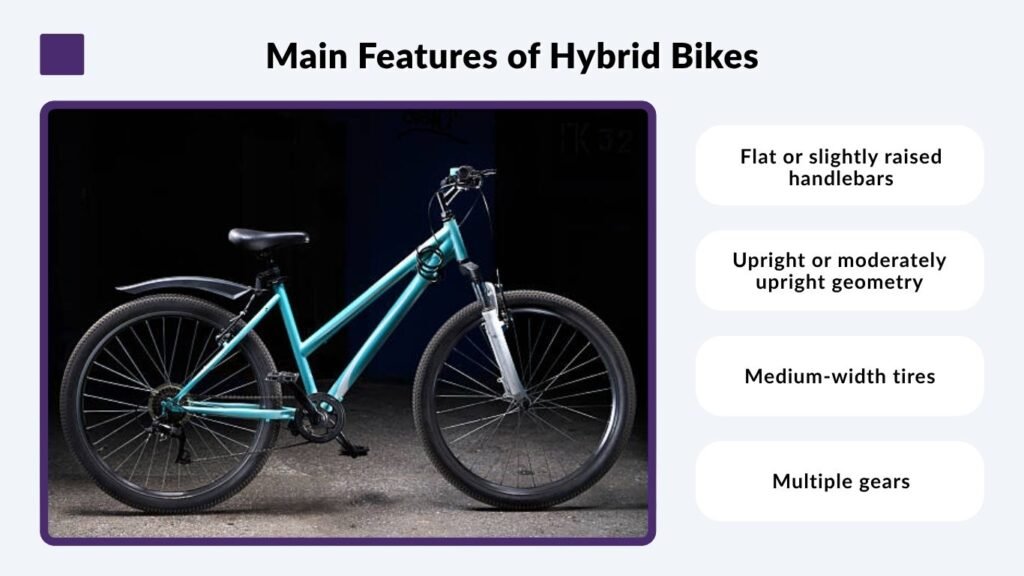
Hybrid bicycles are available in many configurations, but several features are common across the category. These components are selected to create a balance between riding comfort, efficiency, control, and practicality. Understanding the basic features can help you compare different models and determine whether a particular hybrid is designed more for commuting, fitness, comfort, or mixed-surface riding.
Common Hybrid Bike Features
Typical features include:
- Flat or slightly raised handlebars
- Upright or moderately upright geometry
- Medium-width tires
- Multiple gears
- Disc or rim brakes
- Aluminum, steel, or carbon frames
- Rack and fender mounting points
- Comfortable saddles
- Reflector and light compatibility
Comfortable Riding Position
Many hybrid bikes place the rider in a more upright position than traditional road bikes.
This posture can provide better forward visibility and may feel more comfortable during relaxed rides. It also makes it easier to observe traffic, pedestrians, and obstacles when commuting through urban environments.
Practical Tire Design
Hybrid tires usually fall between narrow road tires and wide mountain-bike tires.
Smoother tread helps them roll efficiently on pavement, while additional width provides stability and comfort on uneven surfaces. Some hybrids use more pronounced tread patterns when they are intended for frequent gravel or trail riding.
Types of Hybrid Bikes
Not every hybrid bicycle is built for exactly the same purpose. Some models emphasize speed, while others focus on comfort, commuting, or mixed terrain. Understanding the major categories can make shopping easier because you can narrow your choices according to your typical riding surface, distance, speed expectations, and preferred riding position.
Common Types of Hybrid Bikes
The main types include:
- Fitness hybrid: Lightweight and efficient for exercise and faster paved rides.
- Commuter hybrid: Designed for transportation and everyday practicality.
- Comfort hybrid: Uses relaxed geometry and comfort-focused components.
- Urban hybrid: Built for city streets and regular stop-and-go riding.
- Dual-sport hybrid: Suitable for pavement, gravel, and light trails.
- Touring-style hybrid: Designed for longer rides and carrying equipment.
Fitness Hybrid Bikes
Fitness hybrids are usually lighter and more road-oriented than other hybrid types. They often use rigid forks and relatively smooth tires to improve efficiency.
These bikes are suitable for riders who want exercise, faster recreational riding, or longer journeys without using drop handlebars.
Dual-Sport Hybrid Bikes
Dual-sport hybrids are designed for riders who regularly move between pavement and rougher surfaces.
They may feature wider tires and front suspension to improve control and comfort on gravel paths. The trade-off is that additional suspension and heavier components can reduce efficiency on smooth pavement.
Benefits of Riding a Hybrid Bike

The main appeal of a hybrid bike is its ability to handle several types of everyday riding without requiring highly specialized equipment. While a hybrid may not match a racing bike for speed or a mountain bike on technical trails, its balanced design can provide enough performance for most casual riders, commuters, and fitness cyclists.
Key Benefits
Hybrid bikes offer several advantages:
- Comfortable riding position
- Stable steering
- Good pavement efficiency
- Capability on light gravel
- Beginner-friendly controls
- Multiple gearing options
- Compatibility with practical accessories
- Suitability for commuting and exercise
- Easier handling than many specialized bicycles
Versatility for Everyday Riding
A hybrid bike can be used for commuting during the week and recreational riding on weekends.
Many models handle city streets, bike lanes, park paths, and well-maintained gravel routes without requiring major setup changes. This flexibility makes hybrids especially useful for riders with varied routines.
Comfortable for Longer Casual Rides
The more upright geometry of many hybrids can reduce the aggressive forward lean associated with performance road bikes.
Combined with moderate-width tires and a comfortable saddle, this can make recreational rides more enjoyable for cyclists who value comfort over maximum speed.
Common Uses for Hybrid Bikes
Hybrid bikes are popular because they can adapt to different cycling activities. Rather than being designed for racing or technical mountain biking, they usually perform best in everyday environments. The exact range of uses depends on tire type, gearing, frame geometry, and whether the bike has suspension, racks, or other practical equipment.
Everyday Commuting
Hybrids are well suited to commuting because they combine reasonable speed with stable handling.
Models with rack and fender mounts can be equipped to carry work bags, groceries, or clothing while providing protection from wet roads. Flat handlebars also provide convenient access to brakes during busy city riding.
Fitness and Recreation
Many riders use hybrid bikes for exercise because they are efficient enough for steady fitness rides without requiring an aggressive racing position.
They are also suitable for neighborhood rides, parks, paved greenways, and recreational cycling with friends or family.
Light Trails and Gravel
Certain hybrids can handle packed dirt, canal paths, and light gravel.
Models with wider tires are generally better for these surfaces. However, hybrids are not normally intended for jumps, rocky technical trails, or demanding mountain-bike terrain.
Hybrid Bike vs Road Bike vs Mountain Bike

Understanding the differences between bicycle categories can make choosing much easier. Hybrid bikes sit between road and mountain bicycles in several areas, including tire width, riding position, weight, and terrain capability. The best option depends on whether you value speed, comfort, off-road capability, or the flexibility to ride across several types of surfaces.
Hybrid Bike vs Road Bike
Road bikes are generally lighter and more aerodynamic. Their drop handlebars and narrow tires are designed for efficient travel on pavement.
Hybrid bikes usually have flat handlebars, wider tires, and a more upright position. They may be slightly slower on smooth roads but typically offer more comfort and flexibility for everyday riding.
Hybrid Bike vs Mountain Bike
Mountain bikes are built for rough terrain, steep trails, obstacles, and loose surfaces. They commonly have wide, aggressive tires and substantial suspension.
Hybrids are generally lighter and more efficient on pavement. They can handle mild gravel but are not designed to replace a mountain bike on challenging trails.
How to Choose the Right Hybrid Bike
Choosing a hybrid bike should begin with how you intend to ride rather than focusing only on appearance or price. Consider your usual terrain, riding distance, comfort preferences, storage needs, and whether you plan to carry bags or equipment. Proper fit is equally important because even a high-quality bike can feel uncomfortable when the frame size is unsuitable.
Important Buying Factors
Consider these points before choosing:
- Correct frame size
- Typical riding surface
- Average riding distance
- Tire width and tread
- Brake type
- Number and range of gears
- Frame material
- Suspension requirements
- Rack and fender mounts
- Overall bicycle weight
Choose the Correct Frame Size
Correct sizing improves comfort, control, and pedaling efficiency.
Bike manufacturers usually provide size charts based on rider height and sometimes inseam measurement. Because frame geometry differs between brands, a medium frame from one company may not fit exactly like a medium from another.
Testing the bike when possible can help confirm that the reach, saddle position, and handlebar height feel comfortable.
Consider Your Main Terrain
If most of your riding is on smooth pavement, a lightweight hybrid with relatively smooth tires may be the better fit.
For rough roads or gravel paths, consider a model with wider tires and stronger wheels. Front suspension may be helpful on rougher routes but can add weight when most riding occurs on pavement.
Useful Hybrid Bike Accessories

Hybrid bikes are often designed to accept practical accessories that make commuting, recreation, and longer rides easier. You do not need to add everything immediately. Start with safety essentials and then choose storage, weather protection, or repair equipment according to your normal riding habits and the distances you expect to travel.
Recommended Accessories
Useful accessories include:
- Properly fitted cycling helmet
- Front and rear bicycle lights
- Water bottle and cage
- Tire pump
- Spare inner tube or repair kit
- Reliable bike lock
- Rear cargo rack
- Panniers or bike bag
- Fenders
- Compact bicycle multitool
Racks and Storage
A rear rack allows riders to carry panniers, baskets, or cargo without wearing a heavy backpack.
This can be particularly useful for commuting or grocery trips. Before purchasing a rack, make sure your hybrid frame has compatible mounting points.
Lights and Visibility
Front and rear lights improve visibility during low-light conditions.
Reflective clothing, wheel reflectors, and other visibility accessories can provide additional help when riding around traffic. Always follow local cycling equipment requirements where you ride.
Hybrid Bike Maintenance Tips
Basic maintenance helps a hybrid bike remain smooth, reliable, and safe. You do not need advanced mechanical knowledge to perform simple checks at home. Paying attention to tire pressure, chain condition, brakes, gears, and loose components can identify minor problems before they become more expensive or affect the quality of your ride.
Check Tires Regularly
Keep tires within the recommended pressure range shown by the tire manufacturer.
Low pressure can make riding inefficient and increase the chance of pinch flats, while unsuitable excessive pressure may reduce comfort and traction. Inspect tires periodically for cuts, embedded debris, and significant tread wear.
Clean and Lubricate the Chain
A dirty drivetrain can become noisy and wear prematurely.
Wipe accumulated dirt from the chain and apply bicycle-specific lubricant when necessary. Remove excess lubricant afterward so the chain does not attract unnecessary dust and grime.
Inspect Brakes and Gears
Brakes should operate smoothly and provide predictable stopping power. Gears should shift without excessive hesitation or noise.
If braking becomes weak, shifting is inconsistent, or components appear damaged, professional inspection can help identify the problem before your next longer ride.
FAQs
1. What is a hybrid bike best for?
A hybrid bike is best for commuting, fitness rides, recreational cycling, city streets, paved paths, and occasional light gravel. It is designed for riders who want versatility rather than specialization.
2. Are hybrid bikes good for beginners?
Yes. Hybrid bikes are often beginner-friendly because they typically provide stable handling, flat handlebars, comfortable geometry, and straightforward controls.
3. Can a hybrid bike be used on trails?
A hybrid can handle smooth dirt paths and light gravel, particularly when equipped with wider tires. Technical mountain-bike trails with rocks, jumps, steep drops, or deep mud usually require a dedicated mountain bike.
4. Are hybrid bikes good for long-distance riding?
Yes. A properly fitted hybrid can be comfortable for longer rides. Suitable gearing, comfortable contact points, hydration, correct tire pressure, and proper bike fit become increasingly important as distances increase.
5. Is a hybrid bike faster than a mountain bike?
A hybrid bike is generally more efficient than a mountain bike on pavement because it usually has smoother tires, less suspension, and lighter components. Actual riding speed depends on fitness, terrain, gearing, weather, and bicycle setup.
