
A hybrid cycle bike is a practical choice for riders who want comfort, efficiency, and versatility in one bicycle. It combines useful features from road bikes, mountain bikes, and city bikes, making it suitable for commuting, fitness, casual rides, paved paths, and light gravel. Hybrid bikes are especially useful for people who do not want a highly specialized bicycle. This guide explains how hybrid cycle bikes work, their main types, benefits, common uses, buying factors, accessories, and maintenance tips for everyday riders.
What Is a Hybrid Cycle Bike?
A hybrid cycle bike is a multipurpose bicycle designed to perform well across several everyday riding conditions. It normally combines a comfortable riding position, flat handlebars, medium-width tires, practical gearing, and relatively lightweight construction. These characteristics create a balance between road efficiency and off-road stability, making hybrids suitable for riders who regularly travel on different surfaces.
How a Hybrid Bike Is Designed
Hybrid bikes borrow characteristics from several bicycle categories. Road-bike influence can be seen in their relatively efficient rolling and lighter frames, while mountain-bike features include flat handlebars, stable steering, and wider tires.
City-bike characteristics may also appear through upright geometry, rack mounts, fender compatibility, and comfort-focused components.
Who Is a Hybrid Bike Best For?
Hybrid bikes can suit beginners, commuters, fitness riders, students, recreational cyclists, and people returning to cycling after several years.
They are particularly practical for riders who want one bicycle for transportation, exercise, errands, and weekend leisure rather than maintaining several specialized bikes.
Main Features of a Hybrid Cycle Bike
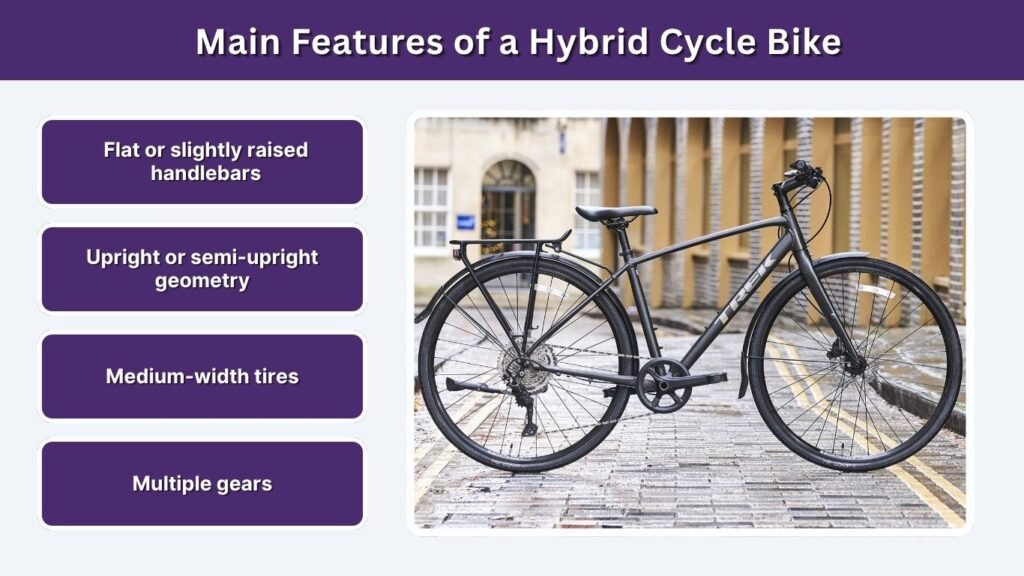
Hybrid bikes vary considerably between brands and models, but most share a set of practical features. These components are designed to create a balanced riding experience with enough comfort for daily use and enough efficiency for moderate-distance travel. Understanding these features can make it easier to compare different hybrid bikes before choosing one.
Common Hybrid Bike Features
Typical features include:
- Flat or slightly raised handlebars
- Upright or semi-upright geometry
- Medium-width tires
- Multiple gears
- Disc or rim brakes
- Aluminum, steel, or carbon frames
- Comfortable saddle
- Rack and fender mounts
- Light and reflector compatibility
- Practical commuter-friendly design
Comfortable Riding Position
Most hybrid bikes position the rider more upright than a traditional road bike.
This posture may feel more comfortable for casual riding and can improve visibility in traffic. It also reduces the need to maintain an aggressive aerodynamic position during everyday trips.
Versatile Tire Design
Hybrid tires generally sit between narrow road-bike tires and wide mountain-bike tires.
This gives them a useful balance between low rolling resistance and stability. Smooth or lightly treaded tires work well on pavement, while wider options can provide better control on gravel or rough roads.
Types of Hybrid Cycle Bikes
Not all hybrid bikes are intended for exactly the same purpose. Some models prioritize speed and fitness, while others focus more on commuting, comfort, or mixed terrain. Choosing the correct type depends on where you normally ride, how far you travel, and whether you prefer efficiency, relaxed comfort, or additional off-road capability.
Common Types of Hybrid Bikes
The main categories include:
- Fitness hybrid: Designed for exercise and faster road riding.
- Commuter hybrid: Built for transportation and practical daily use.
- Comfort hybrid: Focuses on relaxed geometry and smooth riding.
- Urban hybrid: Designed for city streets and frequent stops.
- Dual-sport hybrid: Suitable for pavement and light gravel.
- Touring-style hybrid: Better suited to longer rides and carrying gear.
Fitness Hybrid Bikes
Fitness hybrids are generally lighter and more road-focused.
They often use rigid forks, smoother tires, and efficient gearing. These bikes are suitable for riders who want exercise and moderate speed without using the drop handlebars found on traditional road bikes.
Dual-Sport Hybrid Bikes
Dual-sport hybrids are designed for riders who frequently move between pavement and rougher surfaces.
They may use wider tires and front suspension to improve comfort on gravel paths. However, suspension and heavier components can slightly reduce efficiency on smooth roads.
Benefits of Riding a Hybrid Cycle Bike
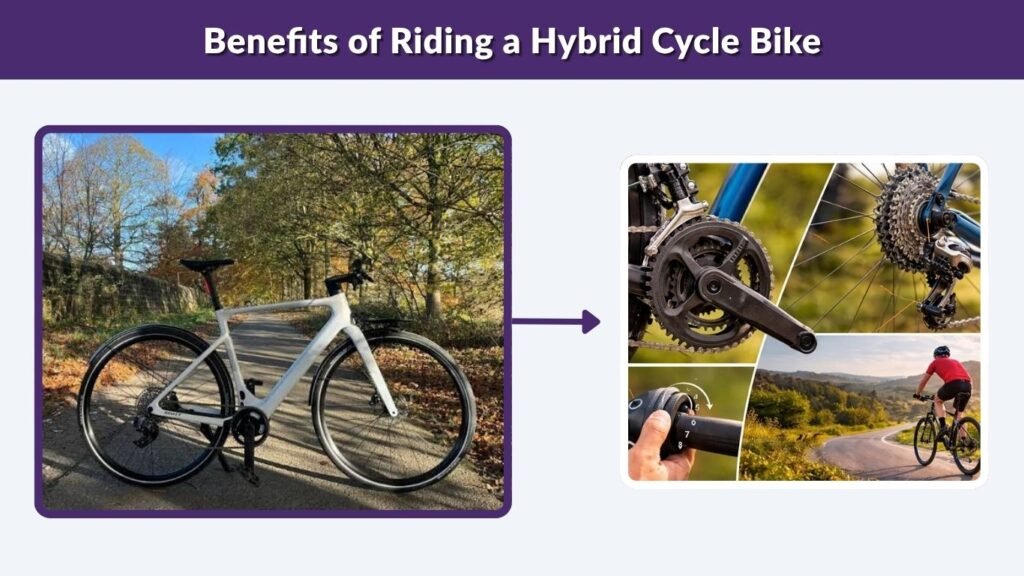
The biggest advantage of a hybrid bike is versatility. Instead of focusing entirely on speed or off-road performance, it offers a practical combination of both. This makes hybrid bikes especially appealing to riders who want a reliable bicycle for different activities without sacrificing too much comfort, control, or everyday usability.
Main Benefits
Hybrid bikes can provide:
- Comfortable riding posture
- Stable handling
- Efficient performance on pavement
- Capability on light gravel
- Beginner-friendly controls
- Practical gearing
- Easy accessory compatibility
- Suitability for exercise
- Good everyday versatility
Comfortable for Daily Rides
The more upright geometry used on many hybrid bikes can reduce the aggressive forward lean associated with performance road bikes.
Combined with moderate-width tires and practical saddles, this makes hybrids comfortable for commuting, recreational trips, and moderate-distance rides.
One Bike for Several Activities
A hybrid can often handle weekday commuting and weekend recreation without requiring major changes.
You can use the same bicycle for neighborhood rides, errands, fitness sessions, bike paths, or occasional gravel routes, depending on the model.
Common Uses for Hybrid Bikes
Hybrid cycle bikes are intended for everyday versatility rather than extreme specialization. Their geometry, tires, gearing, and accessory compatibility allow them to adapt to several situations. While they are not ideal for racing or technical mountain-bike trails, they perform very well in many environments encountered by ordinary recreational and commuter cyclists.
Commuting
Hybrid bikes are popular for commuting because they provide a useful balance of speed, comfort, and control.
Many models include mounting points for racks and fenders, allowing riders to carry work bags or groceries and stay cleaner during wet conditions.
Fitness Riding
A hybrid can also be used for regular exercise.
Its relatively efficient tires and gearing make it suitable for longer recreational rides while still maintaining a more comfortable position than many performance road bikes.
Casual and Recreational Riding
Hybrid bikes work well for relaxed cycling around neighborhoods, parks, waterfront paths, and shared trails.
Their straightforward controls and stable steering also make them suitable for riders who simply want to enjoy cycling without focusing heavily on speed.
Hybrid Bike vs Road Bike
Hybrid and road bikes can both be used on paved surfaces, but their designs serve different priorities. Road bikes generally emphasize maximum efficiency and speed, while hybrids focus more on comfort, stability, and versatility. Understanding these differences can help you decide which bicycle better matches your normal riding style and expectations.
Riding Position
Road bikes usually use drop handlebars and place the rider in a lower, more aerodynamic posture.
Hybrid bikes normally use flat handlebars and provide a more upright position. This may offer better visibility and comfort for everyday riding.
Tires and Surface Capability
Road bikes usually use narrower tires designed primarily for smooth pavement.
Hybrid bikes generally use wider tires that can better handle uneven roads, bike paths, and light gravel while remaining efficient enough for urban riding.
Hybrid Bike vs Mountain Bike

Hybrid and mountain bikes may look similar because both often use flat handlebars and wide gear ranges. However, mountain bikes are built for rough trails and demanding off-road terrain, while hybrids are optimized for roads and easier mixed surfaces. The main differences involve tires, suspension, weight, and overall efficiency.
Suspension and Tires
Mountain bikes generally have wide tires with aggressive tread and significant suspension.
Most hybrid bikes either use rigid forks or basic front suspension with smoother tires. This keeps them lighter and more efficient on pavement.
Road Performance
Hybrid bikes usually require less effort than mountain bikes on smooth roads.
Their tires create less rolling resistance, and the overall bicycle is often lighter. Mountain bikes become more suitable when trails are rocky, muddy, steep, or technically challenging.
How to Choose the Right Hybrid Cycle Bike
Choosing a hybrid bicycle should start with how you plan to use it. Think about your main riding surface, average trip distance, preferred posture, and whether you need to carry equipment. Proper fit is equally important because even a good-quality bike can feel uncomfortable or inefficient if the frame size does not suit the rider.
Important Buying Factors
Consider these points:
- Correct frame size
- Typical riding terrain
- Tire width
- Brake type
- Gear range
- Frame material
- Riding position
- Suspension
- Rack and fender mounts
- Overall bicycle weight
Choose the Correct Frame Size
Proper sizing improves comfort, handling, and pedaling efficiency.
Manufacturers generally provide sizing charts based on rider height and sometimes inseam measurements. Since frame geometry varies between brands, testing a bicycle can help confirm whether the reach and handlebar position feel comfortable.
Match Tires to Your Riding Surface
For mostly paved riding, smoother tires can improve efficiency.
If you frequently ride on rough roads or gravel, slightly wider tires with more tread may provide better stability and confidence.
Useful Accessories for a Hybrid Cycle Bike
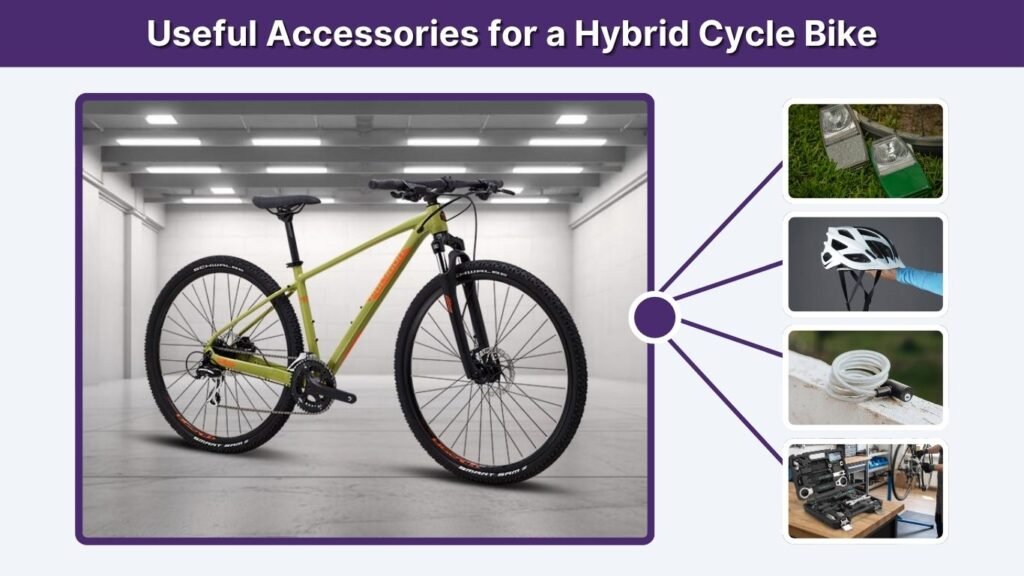
One advantage of a hybrid bicycle is its compatibility with useful accessories. These additions can make commuting, fitness riding, and recreational cycling more practical. Start with safety essentials, then add storage, repair equipment, or weather protection according to how frequently you ride and what type of trips you normally make.
Helpful Accessories
Useful additions include:
- Properly fitted bicycle helmet
- Front and rear lights
- Reliable bicycle lock
- Water bottle and cage
- Portable pump
- Spare inner tube
- Repair kit
- Rear rack
- Panniers
- Fenders
- Compact multitool
Racks and Bags
A rear rack makes it easier to carry panniers, work equipment, groceries, or recreational gear.
Using bike-mounted storage can also reduce the need to wear a heavy backpack during longer rides.
Lights and Visibility
Front and rear lights improve visibility in low-light conditions.
Reflective clothing, wheel reflectors, and other visibility accessories can provide additional support when riding around traffic or during early morning and evening hours.
Hybrid Bike Maintenance Tips
Regular maintenance helps a hybrid bike remain smooth, dependable, and safe. You do not need advanced mechanical knowledge to perform basic checks. Tire pressure, chain condition, brakes, gears, and loose parts should be inspected periodically. Riders who use their bikes frequently should perform these checks more often than occasional recreational cyclists.
Check Tire Pressure
Bicycle tires gradually lose air, so pressure should be checked regularly.
Use the recommended pressure range printed on the tire as a starting point. Suitable pressure can vary depending on rider weight, tire width, terrain, and comfort preferences.
Clean and Lubricate the Chain
A dirty chain can become noisy and increase drivetrain wear.
Wipe away accumulated dirt and apply bicycle-specific chain lubricant when necessary. Remove excess lubricant afterward so the chain does not attract unnecessary dust and debris.
Inspect Brakes and Gears
Brakes should provide reliable stopping power, while gears should shift smoothly without excessive noise or skipping.
If braking becomes weak or shifting becomes inconsistent, the bicycle should be inspected and adjusted before longer rides.
FAQs
1. What is a hybrid cycle bike used for?
A hybrid cycle bike is commonly used for commuting, fitness riding, casual cycling, paved paths, city streets, and occasional light gravel. Its balanced design makes it suitable for several everyday activities.
2. Is a hybrid bike good for beginners?
Yes. Hybrid bikes are often suitable for beginners because they provide stable handling, flat handlebars, comfortable geometry, and relatively simple controls.
3. Can a hybrid bike be used on gravel roads?
Yes. Many hybrid bikes can handle light gravel, especially models with wider tires. Technical trails with large rocks, jumps, or deep mud are generally better suited to mountain bikes.
4. Is a hybrid bike faster than a mountain bike?
On smooth pavement, a hybrid bike is generally more efficient because it typically uses smoother tires, less suspension, and lighter components.
5. Can I use a hybrid cycle bike for long rides?
Yes. A properly fitted hybrid can be used for longer recreational rides. Correct bike fit, comfortable contact points, suitable gearing, tire pressure, and hydration become increasingly important as distance increases.
