
Choosing between a hybrid bike and a road bike can be challenging, especially when both offer excellent options for commuting, fitness, and recreational cycling. While hybrid bikes focus on comfort, versatility, and everyday practicality, road bikes prioritize speed, efficiency, and long-distance performance. Understanding their differences in design, tires, riding position, and handling can help you make a confident decision. This hybrid bike vs road bike comparison explores their features, advantages, disadvantages, and ideal uses to help you find the right bicycle for your needs.
What Is the Difference Between a Hybrid Bike and Road Bike?
Hybrid bicycles and road bikes share several characteristics, but their designs serve different purposes. Hybrid bikes combine features associated with road and mountain bicycles, making them suitable for commuting and recreational riding. Road bikes emphasize lightweight construction, aerodynamic efficiency, and paved-road performance. Understanding their differences in handlebars, geometry, tires, and riding characteristics helps cyclists select the most appropriate option for their needs.
Key Differences Between Hybrid and Road Bikes
| Features | Hybrid Bike | Road Bike |
| Handlebars | Flat handlebars | Drop handlebars |
| Riding position | Upright and relaxed | Forward-leaning |
| Speed | Moderate to fast | Generally faster |
| Tire width | Usually 32–50 mm | Usually 25–32 mm |
| Comfort | Relaxed everyday riding | Depends on fit and geometry |
| Terrain | Roads and light gravel | Primarily paved roads |
| Weight | Often heavier | Often lighter |
| Best for | Commuting and recreation | Speed and endurance |
Which Bike Is More Versatile?
Hybrid bikes generally provide greater versatility because they handle various everyday riding conditions. Their wider tires and upright positioning make them suitable for city streets, bike paths, and light gravel.Road bikes are more specialized for efficient paved-road cycling, although some endurance road models also handle mixed surfaces.
Hybrid Bike vs Road Bike Speed Comparison
Speed is one of the biggest differences between hybrid and road bicycles. Road bikes generally offer higher speed potential because of their aerodynamic riding positions and performance-focused designs. However, the actual speed difference depends on rider fitness, road conditions, tire quality, and wind resistance. Comparing their performance helps determine whether speed or everyday practicality matters more for your cycling experience.
How Much Faster Is a Road Bike Than a Hybrid?
A road bike is generally faster than a comparable hybrid bike when the same cyclist rides both at a similar effort on paved roads.However, the exact speed difference varies considerably. A lightweight fitness hybrid with efficient tires may perform similarly to an entry-level road bike at moderate speeds.
Why Are Road Bikes Faster?
Road bikes feature drop handlebars that allow cyclists to adopt a lower, more aerodynamic riding position.Their lightweight components, efficient tires, and performance-oriented geometry can support faster riding. Aerodynamic advantages become especially important as cycling speed increases.
Hybrid Bike vs Road Bike Comfort and Riding Position
Comfort is an important factor when selecting a bicycle for commuting, exercise, or long-distance journeys. Hybrid bikes generally provide a more upright riding position, while road bikes encourage cyclists to lean forward. Both designs offer advantages depending on individual preferences and riding conditions. Bicycle sizing, saddle position, handlebar adjustment, and flexibility also influence overall comfort during regular cycling.
Hybrid Bike Riding Position
Hybrid bikes usually feature flat handlebars and relatively relaxed frame geometry. This positioning allows cyclists to sit more upright while maintaining a clear view of surrounding traffic.The relaxed posture can feel comfortable during recreational rides and urban commuting, particularly when frequently stopping or navigating busy streets.
Road Bike Riding Position
Road bikes generally position cyclists farther forward to reduce aerodynamic resistance and improve efficiency.Drop handlebars provide multiple hand positions, which can be helpful during extended rides. Endurance road bikes often feature more relaxed geometry than racing models, offering a balance between comfort and performance.
Hybrid Bike Tires vs Road Bike Tires
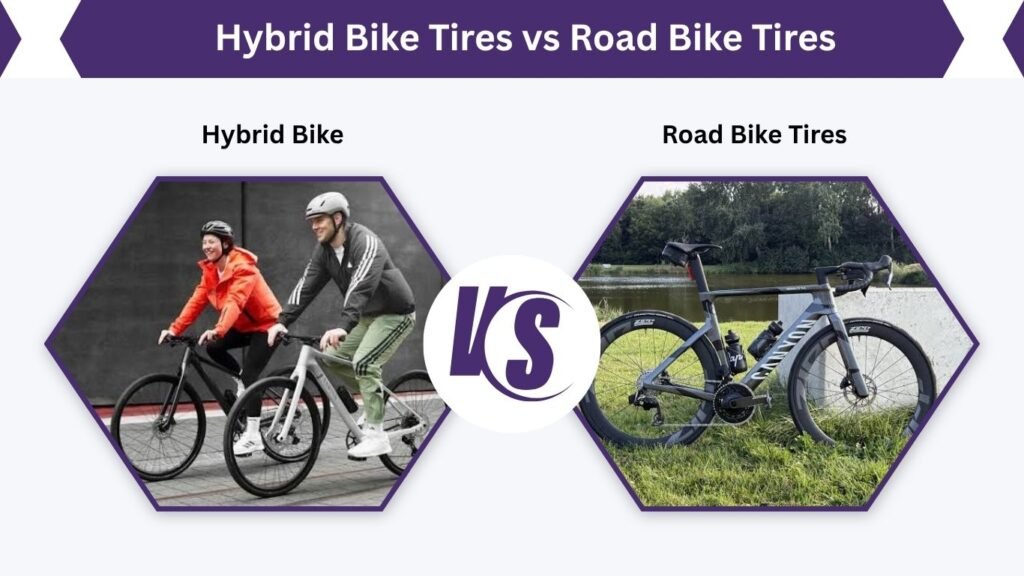
Tires significantly influence bicycle speed, traction, comfort, and handling. Hybrid bicycles typically use wider tires designed for everyday roads and occasional uneven surfaces. Traditional road bikes generally feature narrower tires optimized for paved-road efficiency. However, modern endurance road bikes increasingly accommodate wider tires, reducing the difference between the categories. Understanding tire characteristics helps cyclists choose suitable equipment for their riding conditions.
Hybrid Bike Tire Width
Many hybrid bicycles use tires approximately 32–50 mm wide, although specifications vary between models.Wider tires can provide comfortable riding on rough pavement and light gravel. Appropriate inflation pressure also helps improve traction and reduce road vibrations.
Road Bike Tire Width
Modern road bikes commonly use tires around 25–32 mm wide, although some models accommodate wider alternatives.Road tires typically emphasize efficient rolling and reliable handling on paved surfaces. Tire construction, pressure, and tread design also influence rolling resistance.
Hybrid Bike vs Road Bike for Commuting
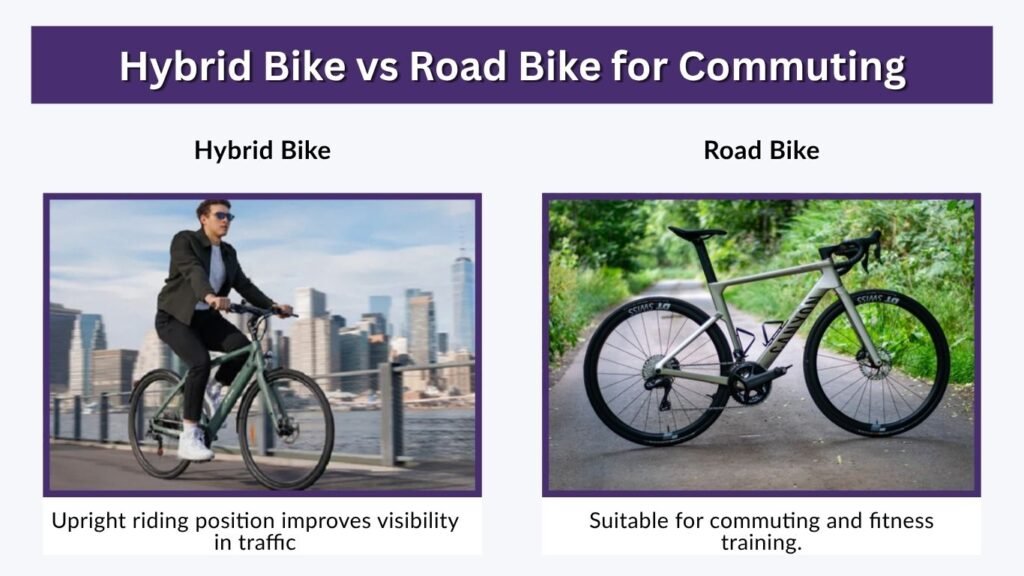
Both hybrid and road bicycles are suitable for commuting, but they offer different advantages. Hybrid bikes prioritize practical transportation and comfortable handling, while road bikes can provide greater efficiency during longer paved journeys. The better choice depends on commuting distance, traffic conditions, road quality, and personal riding preferences. Comparing their everyday features helps cyclists choose a bicycle that matches their travel routine.
Advantages of Hybrid Bikes for Commuting
- Upright riding position improves visibility in traffic.
- Wider tires handle uneven city roads comfortably.
- Many models support racks, fenders, and other accessories.
- Flat handlebars provide straightforward control.
- Practical geometry suits frequent stopping and turning.
Advantages of Road Bikes for Commuting
- Aerodynamic riding position improves efficiency on open roads.
- Lightweight designs can make climbing and acceleration easier.
- Drop handlebars provide multiple hand positions.
- Efficient performance benefits longer paved commutes.
- Suitable for commuting and fitness training.
Hybrid vs Road Bike for Fitness and Long-Distance Riding
Fitness and long-distance cycling require bicycles that provide suitable comfort, efficiency, and handling. Both hybrid and road bikes can support regular exercise and endurance development. However, road bikes are generally designed for sustained paved-road performance, while hybrids emphasize accessible handling and recreational versatility. The best option depends on your fitness goals, preferred riding position, and typical cycling distance.
Which Bike Is Better for Fitness?
Both bicycle types provide excellent cardiovascular exercise and help develop stamina.Hybrid bikes are suitable for casual workouts, daily commuting, and recreational fitness rides. Road bikes may appeal more to cyclists interested in higher-speed training, longer group rides, or performance-oriented cycling.
Which Bike Is Better for Long Distances?
Road bikes often have an advantage on long paved journeys because of their aerodynamic positioning and multiple handlebar grip options.However, hybrid bicycles can also handle substantial distances when properly fitted. Riders who prefer relaxed handling and upright positioning may find hybrids more comfortable for their individual needs.
Hybrid vs Road vs Mountain Bike vs Gravel Bike
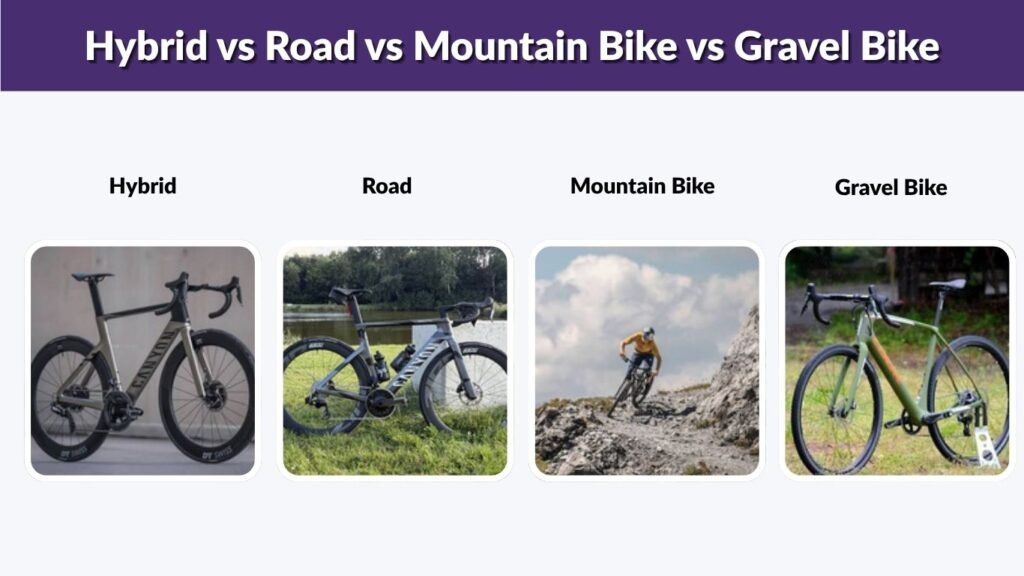
Hybrid, road, mountain, and gravel bicycles serve different cycling purposes. Although their designs sometimes overlap, each category emphasizes particular surfaces and riding styles. Road bikes specialize in paved-road efficiency, mountain bikes handle challenging trails, and gravel bikes balance road performance with rough-surface capability. Hybrid bicycles offer practical versatility, making them popular among cyclists who regularly travel across different everyday environments.
Comparing the Four Bicycle Types
- Hybrid bike: Suitable for commuting, recreation, and light gravel paths.
- Road bike: Designed primarily for paved roads, speed, and endurance.
- Mountain bike: Built for technical trails, rocky terrain, and off-road cycling.
- Gravel bike: Combines drop handlebars with wider tires for mixed-surface adventures.
Flat Bar Road Bike vs Hybrid Bike
Flat-bar road bikes often resemble fitness-focused hybrids because both feature straight handlebars and efficient road-oriented designs.However, flat-bar road bikes generally prioritize pavement performance, while many hybrids emphasize comfort, tire clearance, and practical accessories. The distinction varies between manufacturers and individual models.
Hybrid Bike vs Road Bike: Which Should You Choose?
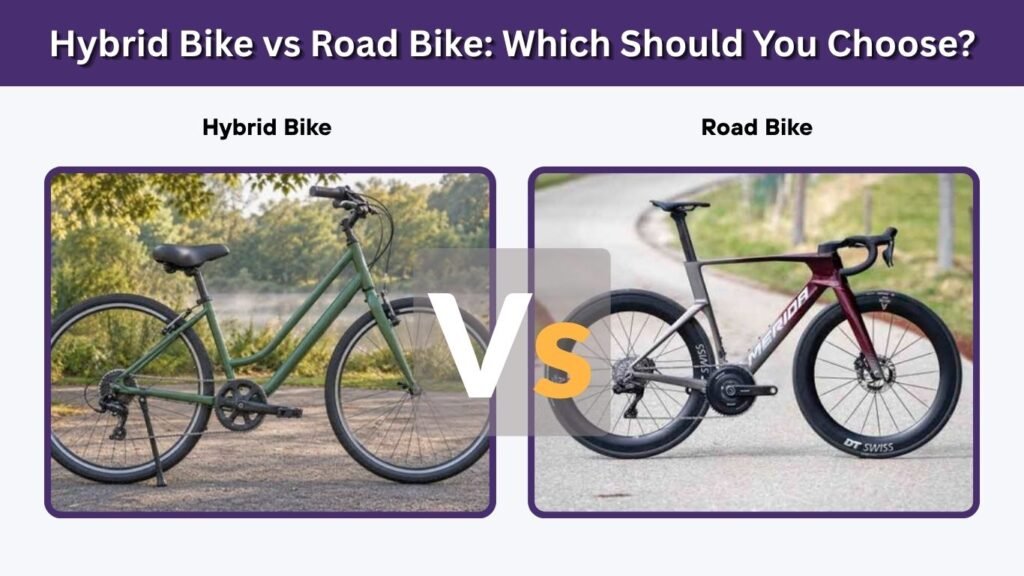
Choosing between a hybrid and road bicycle depends on your riding goals, comfort preferences, and typical routes. Neither category is universally better, and the right choice should reflect how you actually plan to use the bicycle. Consider commuting distances, road conditions, fitness objectives, and accessory requirements. Test riding different models can also help identify the most comfortable and practical option.
Choose a Hybrid Bike If You Want
A hybrid bicycle is an excellent choice for riders who prioritize comfort, versatility, and everyday practicality.It is especially suitable for beginners, city commuters, and recreational cyclists who prefer upright handlebars and the flexibility to explore occasional gravel paths.
Choose a Road Bike If You Want
A road bike is ideal for cyclists who prioritize speed, aerodynamic efficiency, and long-distance paved-road performance.Its performance-oriented design makes it particularly appealing for endurance training, organized group rides, and recreational cyclists interested in improving their cycling speed.
Common Mistakes When Choosing Between Hybrid and Road Bikes
Selecting the wrong bicycle can lead to unnecessary discomfort, reduced performance, or limited versatility. Many beginners focus primarily on appearance or speed without considering their actual riding conditions. Others overlook frame sizing, tire clearance, and maintenance requirements. Understanding these common mistakes helps cyclists make informed decisions and choose bicycles that provide reliable performance and comfort over time.
Choosing Speed Over Comfort
Some cyclists select road bikes solely because they are generally faster.However, an aggressive riding position may feel uncomfortable without proper sizing and adjustment. Choosing a bicycle suited to your flexibility and riding habits is more important than maximizing speed alone.
Ignoring Road Conditions
Road quality significantly affects bicycle handling and comfort.Cyclists who regularly encounter potholes, rough pavement, or gravel may benefit from wider tires and suitable tire clearance. Smooth paved routes generally favor efficient road-oriented bicycles.
Selecting the Wrong Frame Size
Incorrect frame sizing can cause discomfort regardless of bicycle type.Always consider manufacturer sizing recommendations, reach, handlebar position, and saddle adjustment. A professional fitting or test ride can help identify suitable frame geometry and component positioning.
FAQs
1. Is a Hybrid Bike Better Than a Road Bike?
A hybrid bike is generally better for practical commuting, relaxed recreational riding, and mixed surfaces. Road bikes typically offer greater efficiency for long-distance and higher-speed paved-road cycling. The best choice depends on your priorities.
2. How Much Faster Is a Road Bike Than a Hybrid Bike?
Road bikes are generally faster at the same effort on paved roads, but there is no fixed speed difference. Rider fitness, aerodynamics, tire quality, road conditions, and bicycle weight all influence performance.
3. Can You Ride a Hybrid Bike on Long-Distance Trips?
Yes, hybrid bikes can handle long-distance rides with proper setup and maintenance. However, road bikes may provide advantages in aerodynamic efficiency and handlebar positioning during extended paved-road journeys.
4. Are Hybrid Bikes Good for Beginners?
Yes. Hybrid bikes are popular among beginners because they generally offer comfortable upright positioning, straightforward controls, and versatile riding capabilities. They work well for daily commuting, casual exercise, and recreational cycling.
5. Which Bike Is Better for Weight Loss: Hybrid or Road Bike?
Both hybrid and road bikes can support weight management through regular exercise. The effectiveness depends more on cycling frequency, duration, intensity, and overall lifestyle than on the bicycle type. Choose whichever encourages consistent and enjoyable riding.
