
A hybrid bike with suspension offers a comfortable way to explore city streets, uneven roads, gravel paths, and recreational trails. Combining the versatility of hybrid bicycles with shock-absorbing technology, these bikes help reduce impacts from bumps and rough surfaces. Whether you are a beginner, daily commuter, or casual cyclist, choosing the right suspension system can improve riding comfort and control. This guide explains different hybrid bike suspension types, their advantages, important features, and how to choose the best option for your riding needs.
Do Hybrid Bikes Have Suspension?
Yes, some hybrid bikes include suspension systems designed to absorb impacts from uneven riding surfaces. However, not every hybrid bicycle comes with suspension. Many lightweight fitness hybrids use rigid forks to maximize pedaling efficiency and reduce maintenance. Suspension-equipped hybrids are generally designed for recreational riding, urban commuting, and mixed-terrain adventures where additional comfort and front-wheel control may be beneficial.
How Hybrid Bike Suspension Works
Suspension systems absorb part of the impact created when bicycle wheels encounter bumps, potholes, and uneven surfaces.Most suspension-equipped hybrids use a front suspension fork containing springs or air chambers with damping mechanisms. The fork compresses when the front wheel encounters an obstacle and extends afterward.This movement helps maintain front-wheel contact with uneven ground and reduces some of the shock transmitted through the handlebars.
Do All Hybrid Bikes Need Suspension?
Not every hybrid bicycle requires suspension. Riders who primarily travel on smooth pavement often benefit from lighter rigid forks and wider, properly inflated tires.Suspension becomes more useful when routes regularly include broken pavement, gravel, or uneven pathways.The ideal choice depends on riding conditions, comfort preferences, and maintenance expectations.
Types of Suspension on Hybrid Bikes
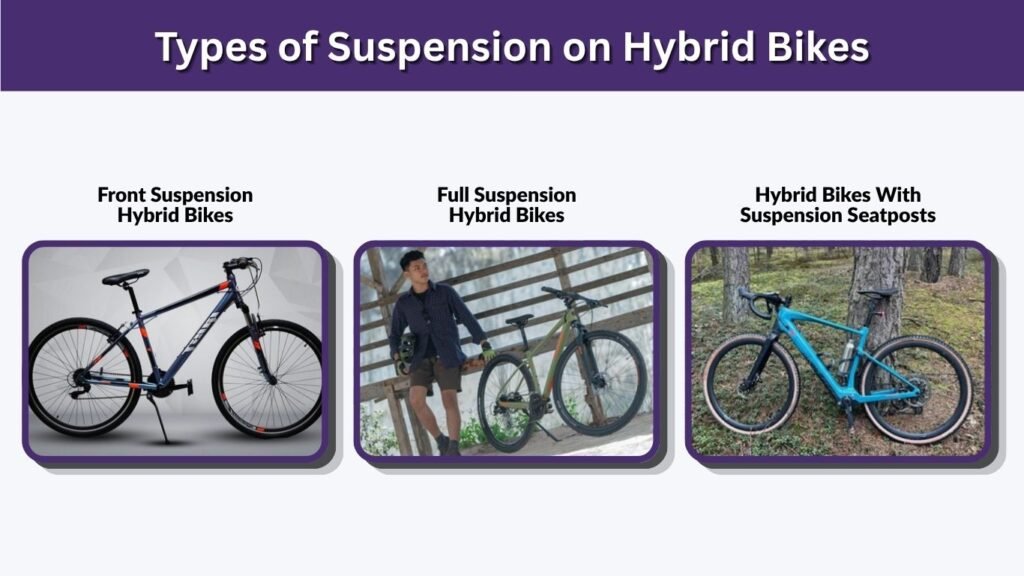
Hybrid bicycles use different suspension arrangements depending on their intended riding environments. Front suspension is the most common option, while some comfort-focused bicycles incorporate suspension seatposts. Full suspension, which includes both front and rear suspension, is unusual among conventional hybrid bikes. Understanding these differences helps cyclists select appropriate equipment without paying for unnecessary weight or mechanical complexity.
Front Suspension Hybrid Bikes
Front suspension hybrids use shock-absorbing forks positioned between the front wheel and bicycle frame.These forks reduce some impacts transmitted through the handlebars and improve control on uneven surfaces. Suspension travel commonly ranges from approximately 40–80 mm on comfort and trekking-oriented hybrids.Front suspension is particularly useful for recreational cycling, rough urban streets, and light gravel routes.
Full Suspension Hybrid Bikes
Full suspension bicycles feature both front suspension forks and rear suspension systems.However, genuine full suspension is uncommon in traditional hybrid bicycles. Models marketed as full suspension hybrids are often closer to mountain bikes or specialized comfort bicycles.For riders who regularly encounter rocky trails, steep descents, and substantial obstacles, an appropriate full-suspension mountain bike may be more suitable.
Hybrid Bikes With Suspension Seatposts
A suspension seatpost helps absorb some impacts transmitted through the saddle.Unlike front suspension forks, seatposts primarily improve seated comfort rather than front-wheel control.They can be useful for commuters who ride rough roads but prefer the efficiency and lower weight of a rigid-fork hybrid.
Benefits of a Hybrid Bike With Front Suspension
Front suspension can improve comfort and control when cycling over irregular surfaces. By allowing the front wheel to move upward when encountering obstacles, suspension forks reduce some vibrations and impacts experienced by riders. These benefits are especially noticeable on damaged roads and gravel pathways. However, the improvement depends on suspension quality, tire setup, rider weight, and terrain conditions.
Main Advantages of Suspension Hybrid Bikes
- Improved comfort: Suspension reduces some impacts transmitted through the handlebars.
- Better front-wheel control: The fork helps the wheel follow uneven surfaces.
- Versatile riding: Suitable for paved streets, light gravel, and recreational paths.
- Reduced hand fatigue: Shock absorption can make rough routes more comfortable.
- Greater confidence: Beginners may feel more comfortable navigating minor surface irregularities.
- Adaptable performance: Lockout-equipped forks offer firmer settings for smoother roads.
Disadvantages of Hybrid Bike Suspension
Suspension systems generally increase bicycle weight and introduce additional maintenance requirements.Low-quality forks may provide limited damping performance, while suspension movement can absorb some pedaling energy.For cyclists who rarely encounter rough surfaces, wide tires and a rigid fork may offer a more efficient and economical combination.
Best Hybrid Bikes With Suspension in 2026

Several established bicycle manufacturers produce suspension-equipped hybrids for commuting, fitness, and mixed-surface cycling. The most suitable models balance frame comfort, suspension performance, braking reliability, and overall weight. Rather than choosing a bicycle solely because it includes suspension, riders should compare suspension travel, components, geometry, and maintenance requirements to ensure the bicycle matches their regular riding conditions.
Giant Roam 4
The Giant Roam 4 is a versatile hybrid bicycle designed for recreational riding, daily commuting, and mixed-surface exploration.It combines an aluminum frame, flat handlebars, disc brakes, and a front suspension fork. These features support comfortable riding on paved roads and relatively smooth gravel paths.Its practical geometry makes it suitable for riders seeking a balance between urban efficiency and occasional off-road adventures.
Cannondale Quick CX 3
The Cannondale Quick CX 3 combines everyday cycling versatility with front suspension for improved comfort.Its fitness-oriented design supports commuting, recreational riding, and light mixed-terrain cycling. Flat handlebars provide intuitive steering, while its suspension fork helps absorb smaller impacts.This model is worth considering for cyclists who want a comfortable hybrid without switching to a dedicated mountain bike.
Cannondale Quick CX 1
The Cannondale Quick CX 1 is a more advanced hybrid designed for riders seeking versatile performance.It offers front suspension, disc brakes, and a practical drivetrain suitable for changing terrain. Some model-year configurations include a suspension lockout feature.Its combination of comfort and fitness-oriented geometry makes it suitable for commuting and recreational adventures.
Hybrid Bike With Suspension vs. Without Suspension
Choosing between a suspension-equipped hybrid and a rigid-fork model depends on road conditions, riding distance, and personal priorities. Suspension forks provide additional impact absorption, while rigid forks offer simplicity and often lower weight. Both designs can deliver excellent everyday performance when paired with appropriate tires. Understanding their practical differences helps cyclists avoid unnecessary spending and select equipment suited to their routes.
Key Differences Between Suspension and Rigid Hybrid Bikes
| Feature | With Suspension | Without Suspension |
| Comfort | Better over larger bumps | Good on smooth roads |
| Weight | Usually heavier | Usually lighter |
| Maintenance | More demanding | Simpler |
| Pedaling efficiency | May lose some energy | Generally efficient |
| Rough surfaces | More forgiving | Depends more on tires |
| Cost | Often higher | Often lower |
Which Hybrid Bike Is Better for Commuting?
For commuting primarily on smooth pavement, a rigid-fork hybrid is often the more practical choice.However, commuters navigating potholes, broken surfaces, and gravel shortcuts may appreciate front suspension.Proper tire pressure, suitable tire width, and comfortable bicycle geometry remain important regardless of suspension type.
Features to Look for in a Suspension Hybrid Bike
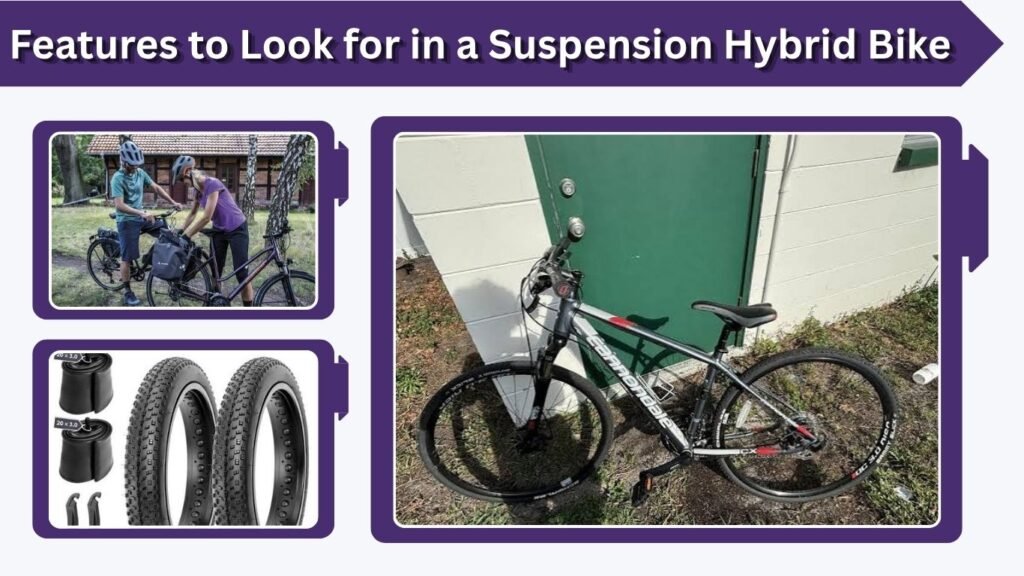
A suspension fork alone does not determine bicycle quality. Buyers should evaluate suspension travel, fork adjustability, braking systems, frame construction, and tire compatibility before selecting a model. An appropriate combination of these features improves comfort without unnecessarily sacrificing efficiency. Understanding the essential specifications also makes comparing affordable and premium suspension hybrids easier.
Important Suspension Hybrid Bike Features
- Suspension travel: Approximately 40–80 mm is common for light mixed-surface riding.
- Lockout system: Allows some suspension forks to operate more firmly on smooth roads.
- Disc brakes: Provide reliable braking, particularly in wet conditions.
- Aluminum frame: Offers a practical balance between durability and manageable weight.
- Wider tires: Improve traction and comfort on uneven surfaces.
- Adjustable suspension: Preload or air-pressure adjustments can help match the fork to rider weight.
- Comfortable geometry: Proper reach and riding posture reduce unnecessary discomfort.
Hybrid Bike With Lockout Suspension
Lockout systems reduce fork movement when cycling on smooth roads or climbing.Some systems use a lever mounted directly on the fork, while others offer handlebar-operated controls.Lockout is useful for riders frequently transitioning between pavement and rougher pathways. Follow the fork manufacturer’s instructions when using it.
Can You Add Suspension to a Hybrid Bike?
Adding front suspension to an existing hybrid bicycle may be possible, but compatibility is essential. Fork replacement can affect steering geometry, braking alignment, wheel fit, and overall bicycle handling. Not every rigid hybrid frame is designed to accept a suspension fork. Riders considering this modification should evaluate compatibility and total costs before attempting an upgrade.
Installing Front Suspension Forks on Hybrid Bikes
A replacement suspension fork must match the bicycle’s steerer dimensions, headset, wheel size, axle standard, and brake mounting system.Its axle-to-crown length and suspension travel must also be appropriate for the frame.Installing an unsuitable fork can negatively affect handling or place excessive stress on components. A qualified bicycle mechanic should confirm compatibility before installation.
Is Upgrading to Suspension Worth It?
For some bicycles, replacing the fork can be expensive relative to the bike’s original value.If the frame was not designed for suspension, purchasing a purpose-built suspension hybrid is often the better option.Riders primarily seeking comfort should also consider wider tires or a compatible suspension seatpost.
Hybrid Bike Suspension Maintenance Tips

Proper maintenance helps suspension forks operate smoothly and maintain consistent performance. Dust, moisture, and road debris can gradually affect moving components, particularly when bicycles are used on gravel or muddy surfaces. Routine cleaning and periodic professional servicing reduce premature wear. Maintenance requirements differ between coil-spring and air-suspension systems, so manufacturer recommendations should guide service intervals.
How to Maintain Hybrid Bike Suspension
Clean exposed fork stanchions gently after dusty or muddy rides.Inspect the fork for oil leaks, unusual noises, loose components, or excessive play. Check that lockout controls operate normally.Avoid pressure washing suspension seals. Follow the manufacturer’s maintenance schedule and arrange professional servicing whenever suspension performance deteriorates.
FAQs
1. Do Hybrid Bikes Need Front Suspension?
Not always. Front suspension is useful on uneven roads and gravel paths, but rigid forks are often preferable for smooth pavement because they are lighter and simpler.
2. Are Full Suspension Hybrid Bikes Available?
Yes, although they are uncommon. Most traditional hybrids use rigid forks or front suspension. Full-suspension models are more commonly classified as mountain bikes.
3. Can You Add Suspension to a Hybrid Bike?
Sometimes. However, the replacement fork must be compatible with the bicycle’s frame, wheel, brakes, and steering geometry.
4. Is a Hybrid Bike With Suspension Good for Beginners?
Yes. Front suspension can improve comfort on uneven surfaces, although beginners riding mostly smooth roads may prefer a lighter rigid-fork hybrid.
5. Is a Hybrid Bike Better With or Without Suspension?
Neither option is universally better. Suspension is useful for rougher surfaces, while rigid forks generally provide lower weight, simpler maintenance, and efficient riding on paved roads.
