
Choosing between a hybrid bike and a commuter bike can be confusing, especially when both offer comfort, practicality, and reliable performance for everyday cycling. However, their designs, features, and riding experiences differ in important ways. A hybrid bike provides versatility for city streets, fitness rides, and recreational cycling, while a commuter bike focuses on convenient daily transportation. Understanding the differences between a hybrid bike vs commuter bike can help you choose the right option for your lifestyle, riding distance, budget, and road conditions.
What Is a Hybrid Bike?
A hybrid bike combines characteristics of road bikes and mountain bikes to create a versatile option for different riding environments. It typically features flat handlebars, relatively lightweight construction, and medium-width tires. Hybrid bikes work well for commuting, exercising, and recreational adventures, making them appealing to cyclists who want one bicycle for multiple activities.
Key Features of a Hybrid Bike
- Versatile tires: Medium-width tires balance rolling efficiency, comfort, and traction.
- Flat handlebars: Provide comfortable steering and an upright or moderately forward riding position.
- Multiple gears: Help riders manage hills, flat roads, and changing terrain.
- Lightweight frames: Aluminum frames are common, making many hybrids relatively easy to maneuver.
- Flexible riding surfaces: Suitable for paved roads, bike paths, and maintained gravel trails, depending on the tires.
- Accessory compatibility: Many models include mounting points for racks, fenders, and bottle cages.
Where Hybrid Bikes Perform Best
Hybrid bikes perform particularly well on routes combining paved streets, bike lanes, and maintained paths. Their adaptable construction allows riders to use the same bicycle for weekday transportation and weekend recreation.Fitness-focused models emphasize efficient pedaling, while comfort-oriented hybrids provide a more relaxed riding position. This flexibility makes them suitable for beginners and experienced cyclists.
What Is a Commuter Bike?
A commuter bike is designed primarily for regular transportation, including riding to work, school, or nearby destinations. Unlike a hybrid bike, which emphasizes versatility, a commuter bike prioritizes convenience, reliability, and everyday practicality. Many models feature integrated accessories, comfortable geometry, and components that reduce maintenance, although the exact equipment varies between bicycles and manufacturers.
Key Features of a Commuter Bike
- Comfortable geometry: Typically supports an upright or moderately upright riding position.
- Cargo carrying: Many models include racks or mounting points for panniers and baskets.
- Fenders: Often fitted to reduce water and mud splashes during wet-weather travel.
- Lighting systems: Some models feature integrated lights for everyday visibility.
- Practical drivetrains: May use derailleur gears, internally geared hubs, or belt drives.
- Durable tires: Often prioritize puncture resistance and dependable performance on urban roads.
Where Commuter Bikes Perform Best
Commuter bikes are particularly suitable for predictable routes involving roads, bike lanes, and urban pathways. Their practical features make traveling with work equipment, groceries, or personal belongings easier.Many commuter models emphasize low-maintenance components and everyday comfort rather than recreational performance. However, commuter bikes are not necessarily slower or heavier than hybrids, since specifications vary considerably.
Hybrid Bike vs Commuter Bike: Key Differences
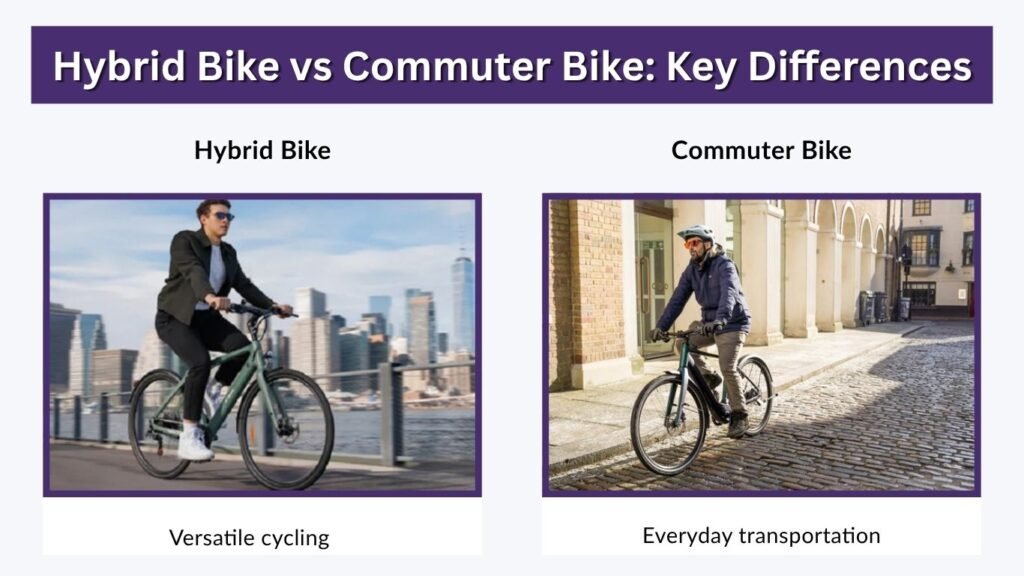
Although hybrid and commuter bikes share several characteristics, their priorities differ. Hybrids generally offer flexibility across different cycling activities, while commuter bikes focus on convenient transportation. Comparing their riding positions, tires, gearing, weight, and accessories helps reveal which design better matches your daily needs and intended riding conditions.
Hybrid Bike vs Commuter Bike Comparison Table
| Features | Hybrid Bike | Commuter Bike |
| Primary purpose | Versatile cycling | Everyday transportation |
| Riding position | Upright to moderately sporty | Usually upright or relaxed |
| Tires | Smooth to moderately treaded | Often road-oriented |
| Frame weight | Frequently lightweight | Varies with equipment |
| Gearing | Often multiple external gears | External or internal gears |
| Accessories | Often optional | Frequently included |
| Maintenance | Depends on components | Some prioritize low maintenance |
| Best surfaces | Roads and light trails | Mostly urban roads |
| Cargo capacity | Usually requires accessories | Often cargo-ready |
| Best use | Fitness and mixed-purpose riding | Regular commuting |
Frame Design and Riding Position
Hybrid bikes commonly feature frames designed to balance comfortable handling with efficient pedaling. Some fitness hybrids place riders slightly forward, allowing more energetic riding.Commuter bikes often emphasize a relaxed position that supports visibility and comfort in urban traffic. Step-through frames are also available, making mounting and dismounting easier.
Tires and Road Performance
Hybrid bicycles typically use tires that accommodate different riding conditions. Some models feature smooth, relatively narrow tires, while others use wider options for improved comfort on uneven surfaces.Commuter bikes generally favor dependable tires suited to pavement, with puncture protection often receiving particular attention. Tire pressure, tread, and width all influence speed, grip, and comfort.
Speed and Efficiency
A lightweight fitness hybrid may feel faster than a utility-focused commuter bike because of its riding position, tires, and overall weight.However, commuter bikes can also be highly efficient. On paved routes, differences in rider fitness, tire selection, gearing, and bicycle design often matter more than the category label.
Maintenance and Durability
Hybrid bikes with traditional derailleur systems require periodic cleaning, lubrication, and gear adjustment. Their exposed components can collect dirt during wet rides.Some commuter bikes offer internally geared hubs, belt drives, or enclosed components that reduce routine maintenance. Nevertheless, both bicycle types need regular brake inspections, tire care, and safety checks.
Advantages and Disadvantages of Hybrid and Commuter Bikes
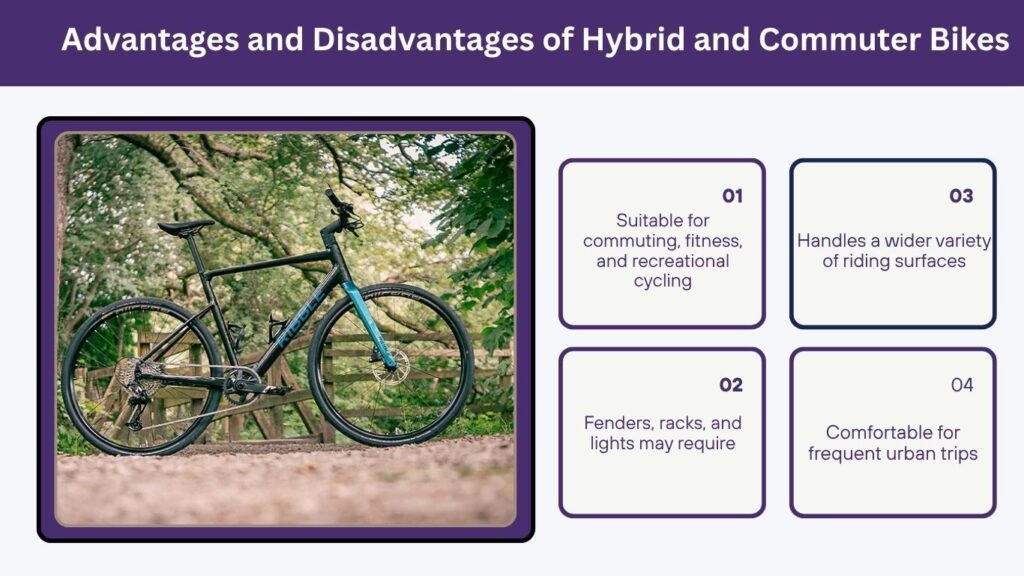
Every bicycle design involves compromises between comfort, speed, convenience, and versatility. Hybrid bikes are attractive for riders who want recreational freedom alongside practical transportation. Commuter bikes appeal to people prioritizing everyday usability. Understanding the advantages and limitations of each category helps prevent choosing features that do not match your regular cycling habits.
Hybrid Bike Pros and Cons
Pros:
- Suitable for commuting, fitness, and recreational cycling.
- Handles a wider variety of riding surfaces.
- Many models offer efficient, lightweight designs.
- Can be customized with commuting accessories.
Cons:
- Fenders, racks, and lights may require additional purchases.
- Some sporty models are less comfortable for relaxed urban riding.
- Off-road capability is limited compared with dedicated mountain bikes.
Commuter Bike Pros and Cons
Pros:
- Often includes practical daily transportation accessories.
- Comfortable for frequent urban trips.
- Many models provide convenient cargo-carrying options.
- Low-maintenance drivetrains are available.
Cons:
- Fully equipped models may weigh more.
- Some models are less adaptable to recreational trail riding.
- Utility-focused designs may feel less sporty.
Which Bike Is Better for Daily Commuting?
Choosing a bicycle for daily commuting depends on distance, traffic, terrain, and how much equipment you carry. Both hybrid and commuter bikes can perform exceptionally well on city roads. The ideal choice is not necessarily determined by the bicycle’s category but by its comfort, reliability, practical features, and ability to handle your particular commuting routine.
For Short City Commutes
A commuter bike can be particularly convenient for short urban trips involving frequent stops, intersections, and errands. Upright handling, racks, and fenders improve everyday usability.However, a comfortable hybrid equipped with similar accessories can perform just as well, especially when riding conditions are straightforward.
For Long-Distance Commuting
A fitness-oriented hybrid may be preferable for longer rides because of its efficient geometry and relatively lightweight construction.Nevertheless, commuter bikes designed for extended distances can offer comparable performance while providing practical features. Correct bike fit and comfortable contact points become increasingly important as commuting distance increases.
For Hills and Uneven Roads
On hilly routes, suitable gearing and bicycle weight are especially important. Hybrid bikes often provide wide gear ranges that make climbing easier.Commuter bikes can also handle hills effectively when equipped with appropriate gears. For rough pavement, prioritize wider tires and adequate tire clearance rather than relying on category labels.
How to Choose Between a Hybrid and Commuter Bike

Before selecting your next bicycle, consider how frequently you ride and what your journeys involve. Daily transportation places different demands on equipment than occasional fitness cycling. Evaluating your regular routes, comfort preferences, budget, and storage requirements helps narrow your options and ensures your bicycle remains practical beyond the first few rides.
Important Factors to Consider
- Riding purpose: Choose a hybrid for mixed recreational and transportation use or a commuter model for regular utility riding.
- Route conditions: Consider hills, pavement quality, gravel sections, and traffic.
- Comfort: Test the frame size, handlebar reach, saddle, and riding position.
- Accessories: Check whether racks, fenders, lights, and a reliable lock fit your needs.
- Budget: Compare the complete cost, including necessary accessories and maintenance.
- Storage: Consider bicycle weight if you regularly carry it upstairs or use limited storage space.
Is a Commuter Bike Worth Buying?
A dedicated commuter bike is worth considering when cycling forms a regular part of your transportation routine. Integrated accessories and low-maintenance components can make repeated journeys more convenient.However, purchasing a dedicated commuter model is not essential if you already own a comfortable, properly equipped hybrid bike.
Hybrid Bike vs Commuter Bike: Which Should You Choose?
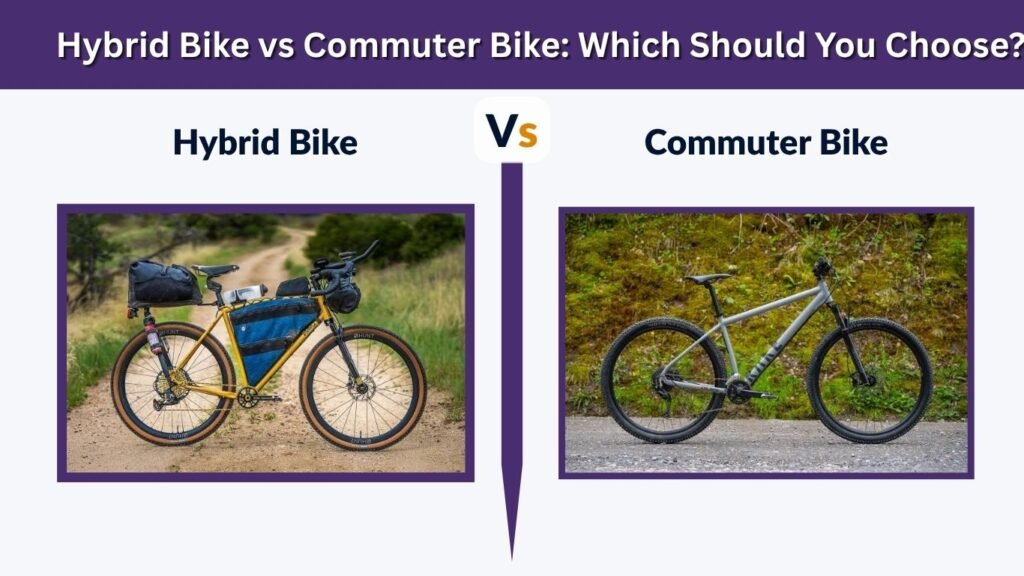
The decision ultimately depends on whether you value versatility or transportation-focused convenience. Both bicycle types can provide comfortable, efficient riding, and their features frequently overlap. Rather than assuming one category is universally better, compare the specific components and geometry of individual models against the demands of your regular cycling routine.
Choose a Hybrid Bike If You Want Versatility
A hybrid bike is generally the better option if you regularly combine commuting with exercise, weekend rides, or occasional maintained gravel paths.Its adaptable design allows you to explore different environments without purchasing a specialized bicycle for every activity.
Choose a Commuter Bike If You Prioritize Convenience
A commuter bike makes sense if most rides involve traveling to work, school, shops, or other familiar urban destinations.Convenient cargo storage, dependable components, and weather protection can make everyday cycling more practical, particularly when carrying belongings or riding in changing conditions.
FAQs
1. Is a Hybrid Bike Better Than a Commuter Bike?
A hybrid bike is better for mixed-purpose riding, including fitness, recreation, and commuting. A commuter bike may be more convenient for regular transportation because it often includes practical accessories and comfort-focused features.
2. Are Hybrid Bikes Faster Than Commuter Bikes?
Some fitness-focused hybrid bikes are faster than heavier utility-oriented commuter models. However, speed depends on bicycle weight, tires, gearing, riding position, and cyclist fitness rather than the category alone.
3. Can You Use a Hybrid Bike for Daily Commuting?
Yes. Hybrid bikes work well for everyday commuting, particularly on paved roads and maintained cycling paths. Adding fenders, lights, racks, and suitable tires can improve their practicality.
4. Which Is More Comfortable: A Hybrid or Commuter Bike?
Commuter bikes often prioritize relaxed riding positions, but comfort-oriented hybrid bikes can feel equally comfortable. Proper frame sizing, handlebar position, saddle fit, and tire selection are more important than the bicycle’s label.
5. Should I Buy a Hybrid Bike or a Commuter Bike for Work?
Choose a commuter bike if you prioritize everyday convenience, cargo storage, and practical equipment. Choose a hybrid bike if you also want to exercise, ride recreationally, or explore different surfaces outside your regular commute.
