
Choosing between a hybrid bike and a mountain bike can be confusing, especially when both offer comfort, versatility, and practical features. However, they are designed for different riding conditions and purposes. Hybrid bikes generally perform better on paved roads and smooth paths, while mountain bikes handle rough trails and challenging terrain. Understanding their differences in speed, tires, suspension, weight, and comfort can help you make a smarter decision. This hybrid bike vs mountain bike comparison explains their features and helps you choose the right bicycle for your lifestyle.
What Is the Difference Between a Hybrid Bike and a Mountain Bike?
The main difference between a hybrid bike and a mountain bike is their intended riding environment. Hybrid bikes combine features of road and mountain bicycles, making them suitable for commuting, fitness, and recreational cycling. Mountain bikes prioritize traction, stability, and control on uneven trails. Although both bicycles share certain characteristics, their frame geometry, tires, suspension systems, and riding performance differ significantly.
Hybrid Bike Overview
A hybrid bike combines everyday comfort with efficient road performance. It typically features flat handlebars, moderately wide tires, and an upright riding position.Many models include mounts for racks and fenders, making them practical for transportation. Hybrid bicycles are especially suitable for paved roads, bike paths, and relatively smooth gravel trails.
Mountain Bike Overview
A mountain bike is designed to handle uneven surfaces, rocky paths, and challenging outdoor trails. It usually features wide, knobby tires, durable components, and suspension for absorbing impacts.Mountain bikes offer greater traction and stability on technical terrain. Their construction makes them suitable for trail riding, forest exploration, and off-road cycling.
Hybrid Bike vs Mountain Bike: Key Differences
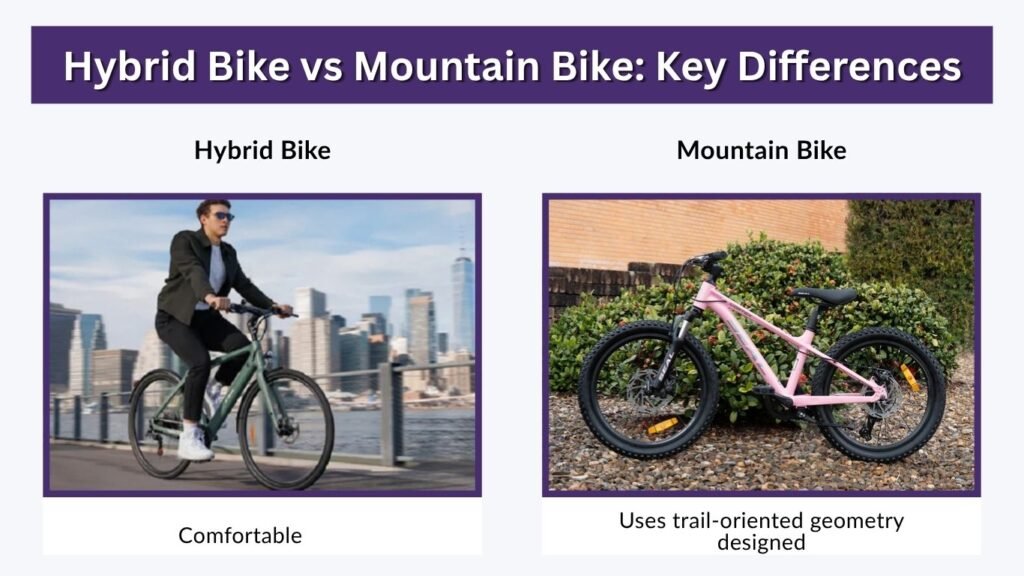
Hybrid and mountain bikes may appear similar because both commonly feature flat handlebars and comfortable riding positions. However, their construction reflects different performance priorities. Hybrid bicycles emphasize efficiency and everyday versatility, while mountain bikes prioritize control and durability on rough terrain. Comparing their essential components helps explain how each bicycle performs under different riding conditions.
Frame Design and Geometry
- Hybrid bike: Usually features geometry intended for comfortable, efficient riding on roads and paths.
- Mountain bike: Uses trail-oriented geometry designed to maintain stability and control over uneven surfaces.
- Key difference: Hybrid frames favor everyday usability, while mountain bike frames emphasize off-road handling.
Tires and Wheel Sizes
- Hybrid bike: Commonly uses 700c wheels with moderately wide, smooth or lightly treaded tires.
- Mountain bike: Frequently uses 27.5-inch or 29-inch wheels with wider, aggressively treaded tires.
- Key difference: Hybrid tires generally roll more efficiently on pavement, while mountain bike tires provide better traction on loose surfaces.
Suspension Systems
- Hybrid bike: Often features a rigid fork, although some models include short-travel front suspension.
- Mountain bike: Commonly uses front suspension or both front and rear suspension.
- Key difference: Mountain bike suspension is designed to improve control and absorb larger impacts on rough trails.
Hybrid Bike vs Mountain Bike Speed and Performance
Speed is an important consideration when comparing hybrid and mountain bikes. Although both can travel efficiently under suitable conditions, tire design, riding position, weight, and terrain influence their performance. Hybrid bikes generally require less effort to maintain speed on paved surfaces. Mountain bikes perform better when riding conditions demand traction, shock absorption, and stability rather than maximum road efficiency.
Which Bike Is Faster on Roads?
A hybrid bike is generally faster than a comparable mountain bike on smooth pavement. Its less aggressive tire tread and relatively efficient riding setup help reduce rolling resistance.Mountain bikes can maintain reasonable road speeds, but wide knobby tires and suspension may require additional pedaling effort. Actual speed depends on fitness, gearing, tire pressure, and bicycle design.
Which Performs Better on Rough Terrain?
Mountain bikes perform better on rocky trails, steep dirt tracks, and technical terrain. Their wide tires provide traction, while suspension helps keep the wheels controlled over obstacles.Hybrid bikes can manage compact gravel and smooth dirt paths. However, most are not designed for demanding mountain bike trails involving large rocks, roots, or drops.
Hybrid Bike vs Mountain Bike Comfort and Weight
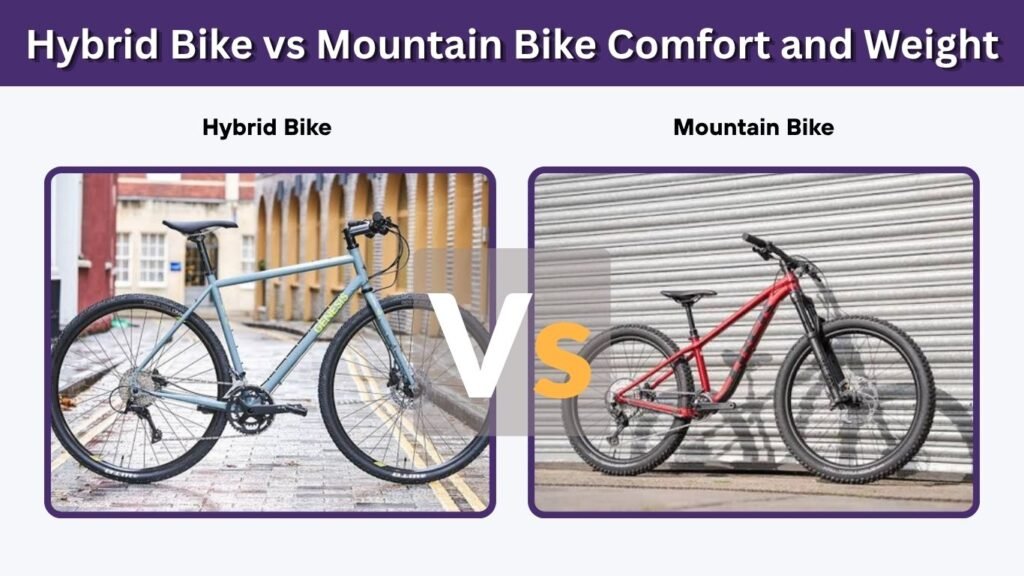
Comfort depends on more than having a soft saddle or upright handlebars. Frame geometry, tire width, suspension, bicycle fit, and terrain all influence how comfortable a ride feels. Weight also matters, particularly when climbing hills, accelerating, or carrying a bicycle upstairs. Hybrid and mountain bikes provide different forms of comfort because their designs accommodate different riding environments.
Riding Position and Comfort
Hybrid bikes usually provide a relatively upright position that supports visibility and comfortable everyday riding. This can make commuting and recreational cycling more enjoyable.Mountain bikes also offer comfortable positions, but their geometry emphasizes stability and maneuverability on trails. Their larger tires and suspension help reduce impacts from uneven ground.
Which Bike Is Lighter?
Hybrid bikes are often lighter than comparable mountain bikes because they commonly have rigid forks, slimmer tires, and simpler frames.Mountain bikes may weigh more because of their suspension systems, wider tires, and reinforced components. However, lightweight mountain bikes can weigh less than some heavily equipped hybrids.
Hybrid Bike vs Mountain Bike for Commuting and Exercise
Choosing a bicycle for commuting or exercise requires considering the roads you regularly travel, distance, comfort, and maintenance requirements. Both hybrid and mountain bikes provide excellent opportunities for physical activity, but they serve different practical needs. Hybrid bikes are commonly preferred for everyday transportation, while mountain bikes become more suitable when riding includes challenging off-road routes and adventurous outdoor activities.
Hybrid Bike for Daily Commuting
Hybrid bicycles are particularly practical for commuting because they balance speed, comfort, and versatility.
- Efficient on paved streets and bike paths.
- Often compatible with racks, lights, and fenders.
- Generally easier to pedal over longer road distances.
- Suitable for commuting, errands, and recreational rides.
Mountain Bike for Daily Commuting
Mountain bikes can also serve as commuter bicycles, especially where routes include rough paths or uneven surfaces.
- Provides reliable traction on loose terrain.
- Handles potholes and rough tracks effectively.
- Offers stable handling on challenging routes.
- May require greater pedaling effort on smooth pavement.
Which Is Better for Exercise?
Both bicycles support cardiovascular fitness, endurance, and leg strength. A hybrid bike is particularly convenient for consistent road cycling and longer fitness rides.Mountain biking adds technical handling challenges and frequent changes in effort. Ultimately, the better exercise bicycle is one that matches your preferred routes and encourages regular riding.
Hybrid Bike vs Mountain Bike: Pros and Cons
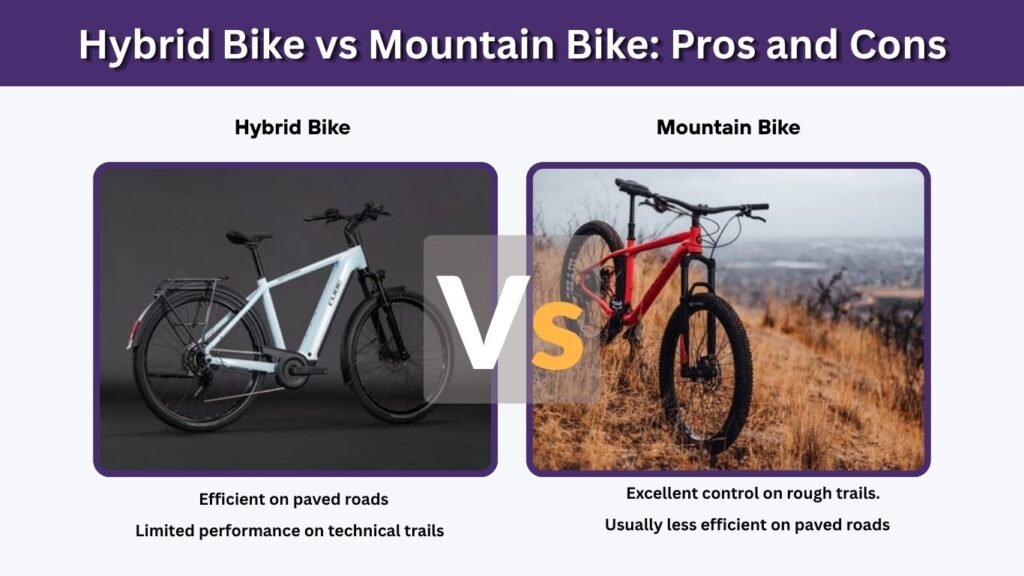
Every bicycle category has advantages and limitations that become noticeable under different riding conditions. Hybrid bikes offer efficiency, versatility, and convenience, making them popular for everyday transportation. Mountain bikes provide greater traction and off-road capability but may feel less efficient on paved roads. Reviewing their advantages and disadvantages can help determine which bicycle better meets your expectations.
Hybrid Bike Pros and Cons
Pros
- Efficient on paved roads and smooth paths.
- Comfortable for commuting and fitness cycling.
- Often lighter and simpler to maintain.
- Usually supports practical commuting accessories.
Cons
- Limited performance on technical trails.
- Less traction on muddy or rocky surfaces.
- Suspension options may be less capable off-road.
Mountain Bike Pros and Cons
Pros
- Excellent control on rough trails.
- Wide tires provide strong off-road traction.
- Suspension improves handling over obstacles.
- Suitable for recreational and technical trail riding.
Cons
- Usually less efficient on paved roads.
- Often heavier than comparable hybrid bicycles.
- Suspension components may require additional maintenance.
Hybrid Bike vs Mountain Bike: Which Should You Choose?
The best bicycle depends on where you ride most frequently rather than which category offers more features. Hybrid bicycles suit riders who prioritize smooth roads, everyday practicality, and efficient transportation. Mountain bikes are intended for riders who regularly explore challenging outdoor trails. Before making your decision, consider your riding environment, cycling goals, comfort preferences, and the amount of maintenance you are willing to manage.
Choose a Hybrid Bike If You:
- Primarily ride on paved roads and bike paths.
- Need a bicycle for work or school commuting.
- Prefer efficient fitness and recreational cycling.
- Occasionally explore smooth gravel trails.
Choose a Mountain Bike If You:
- Frequently ride rocky or uneven trails.
- Enjoy mountain biking and technical off-road adventures.
- Need better traction on loose dirt and challenging terrain.
- Prioritize off-road stability over road efficiency.
FAQs
1. Is a hybrid bike faster than a mountain bike?
Generally, yes. Hybrid bikes are usually faster on paved roads because their tires and riding setups create less rolling resistance. Mountain bikes perform better on technical off-road terrain.
2. Can you use a hybrid bike on mountain bike trails?
A hybrid bike can handle some smooth dirt and gravel trails. However, technical mountain bike trails with large rocks, roots, or steep obstacles generally require a suitable mountain bike.
3. Is a hybrid bike better than a mountain bike for commuting?
Usually, yes. Hybrid bikes are generally more efficient on paved roads and often accommodate commuting accessories such as racks and fenders.
4. Can you put hybrid tires on a mountain bike?
Yes, compatible smoother tires can improve a mountain bike’s road efficiency. However, tire width, rim compatibility, frame clearance, and wheel diameter must be checked before replacement.
5. Which is better for beginners, a hybrid or mountain bike?
A hybrid bike is often better for beginners riding on roads and bike paths. A mountain bike is more appropriate for beginners planning to explore off-road trails regularly.
