
Hybrid bike handlebars play an important role in riding comfort, steering control, and overall cycling performance. Whether you use your hybrid bike for commuting, fitness, or weekend adventures, choosing the right handlebars can improve your riding experience. Different styles, including flat, riser, swept-back, and drop handlebars, provide unique benefits for posture and handling. Understanding their differences helps you select the right option for your cycling needs. This guide explores popular hybrid bike handlebar types, their advantages, proper sizing, adjustments, and replacement considerations.
What Are Hybrid Bike Handlebars?
Hybrid bike handlebars are steering components designed to balance comfort, control, and versatility across different riding conditions. Most hybrid bicycles feature flat or slightly raised handlebars that support a relatively upright riding position. Unlike traditional road bike handlebars, these designs generally prioritize easy steering and everyday comfort.The handlebar shape also influences wrist position, shoulder alignment, and weight distribution.
How Hybrid Bike Handlebars Work
Hybrid handlebars connect to the bicycle’s steering system through the stem. Riders use them to control direction, maintain balance, and support their upper body while cycling.Their width, rise, and backward sweep influence how naturally your arms and wrists rest. Wider handlebars can provide greater steering leverage, while raised designs may reduce the need to lean forward. Proper positioning helps riders remain comfortable and maintain reliable control during daily commuting or recreational cycling.
Types of Hybrid Bike Handlebars
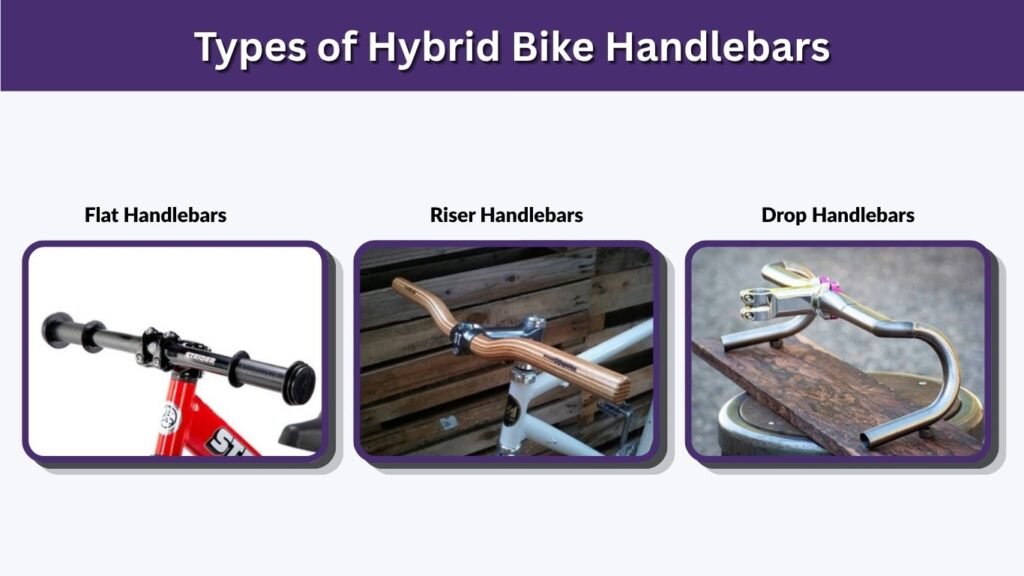
Several handlebar styles are available for hybrid bicycles, each offering different comfort levels, steering characteristics, and riding positions. Some designs prioritize efficient pedaling and fitness cycling, while others emphasize relaxed posture and improved visibility.Understanding these differences makes selecting suitable handlebars easier, especially when upgrading an existing hybrid bike for daily commuting or longer recreational rides.
1. Flat Handlebars
Flat handlebars are among the most common options for hybrid bicycles. Their nearly straight design provides direct steering response and predictable handling on city streets and paved trails.They generally place riders in a moderately upright position, depending on the bicycle’s frame and stem geometry.Flat handlebars suit commuters and fitness riders who prefer straightforward control. However, their limited hand positions may become uncomfortable during particularly long rides.
2. Riser Handlebars
Riser handlebars feature an upward bend that positions the grips higher than the center section. This design can encourage a more upright posture and reduce forward reach.Riser handlebars for hybrid bikes are particularly useful for recreational cycling, commuting, and riders seeking a more relaxed upper-body position.The amount of rise varies between models, allowing cyclists to choose a suitable height without necessarily replacing the bicycle’s stem.
3. Swept-Back Handlebars
Swept-back handlebars curve toward the rider, bringing the grips closer to the body. Their shape supports a relaxed riding position and may improve wrist comfort when correctly fitted.They are popular for city cycling, casual commuting, and comfort-oriented hybrid bicycles.However, substantial backward sweep changes steering feel and may require adjustments to the stem, cables, and brake lever positions.
4. Drop Handlebars
Drop handlebars feature curved sections extending below the upper bar, providing multiple hand positions and a lower, more aerodynamic posture.Although primarily associated with road bicycles, they can also be fitted to some hybrid bikes.Converting from flat handlebars to drop handlebars requires careful compatibility checks because existing brake levers and gear shifters often cannot be reused directly.
5. Bullhorn Handlebars
Bullhorn handlebars extend forward and curve upward at their ends, creating an alternative hand position for cyclists who prefer a forward-leaning posture.They can suit certain fitness- oriented hybrid setups, especially riders seeking a distinctive riding position.However, they are less common on standard hybrids, and compatible braking and shifting controls must be considered before installation.
Best Hybrid Bike Handlebars for Different Riding Styles
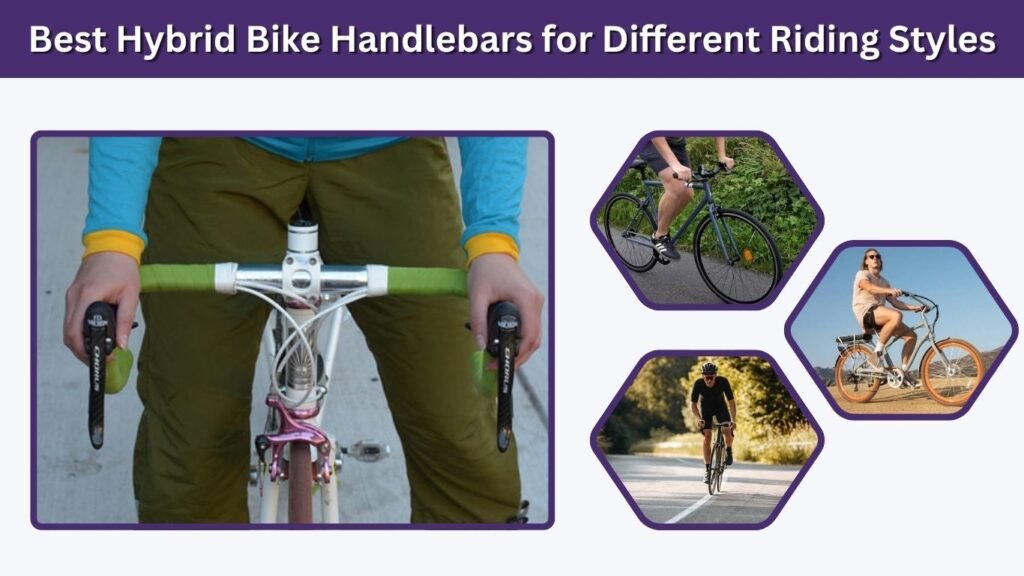
The best handlebars for a hybrid bike depend on where you ride, how long you cycle, and your preferred posture. A handlebar suited to fast fitness rides may not provide the same comfort during relaxed urban commuting.Rather than choosing solely by appearance, consider your riding habits, flexibility, and ability to reach the brakes comfortably.
Best for Daily Commuting
Flat handlebars are an excellent option for everyday commuting because they provide straightforward steering and easy access to braking and shifting controls.For riders who prefer a more upright position, low-rise or moderately swept-back handlebars can offer additional comfort.
Best for Upright Riding
Riser and swept-back handlebars are popular choices for cyclists seeking a more upright riding position.Both can reduce forward reach, although their effectiveness depends on stem length, frame geometry, and overall bicycle fit.
Best for Long-Distance Comfort
Trekking handlebars or appropriately fitted swept-back bars can provide comfortable alternatives for longer journeys.Some trekking designs offer multiple hand positions, allowing riders to change their grip throughout the ride and reduce continuous pressure on the same areas of their hands.
Best for Fitness Cycling
Flat handlebars with modest rise and sweep often suit fitness cycling because they balance steering control with an efficient pedaling position.Drop handlebars may appeal to riders seeking additional hand positions and aerodynamic benefits, provided the bicycle is converted using compatible components.
How to Choose the Right Hybrid Bike Handlebars
Choosing suitable handlebars involves more than selecting a comfortable shape. Handlebar width, material, rise, and compatibility all influence how your hybrid bicycle performs. Poorly sized handlebars can create uncomfortable wrist angles or excessive forward reach.Before purchasing replacements, check your bicycle’s existing components and consider whether the new design will improve your natural riding position.
Important Features to Consider
- Handlebar width: Choose a width that supports a natural arm position, usually close to shoulder width. Individual preferences and riding conditions may justify variations.
- Handlebar rise: Higher-rise models can help create a more upright posture and reduce forward reach.
- Backsweep angle: Handlebars with backward sweep can encourage a comfortable wrist position and bring the grips closer.
- Material: Aluminum provides a practical balance of strength, weight, and affordability. Steel and carbon fiber are alternative materials with different characteristics.
- Clamp diameter: Common sizes include 25.4 mm and 31.8 mm, with some designs using 35 mm. The handlebar must match the stem’s clamping requirements.
- Control compatibility: Confirm that brake levers, shifters, and accessories will fit the new handlebar.
Handlebar dimensions and stem compatibility are especially important when replacing components.
Can You Put Drop Handlebars on a Hybrid Bike?
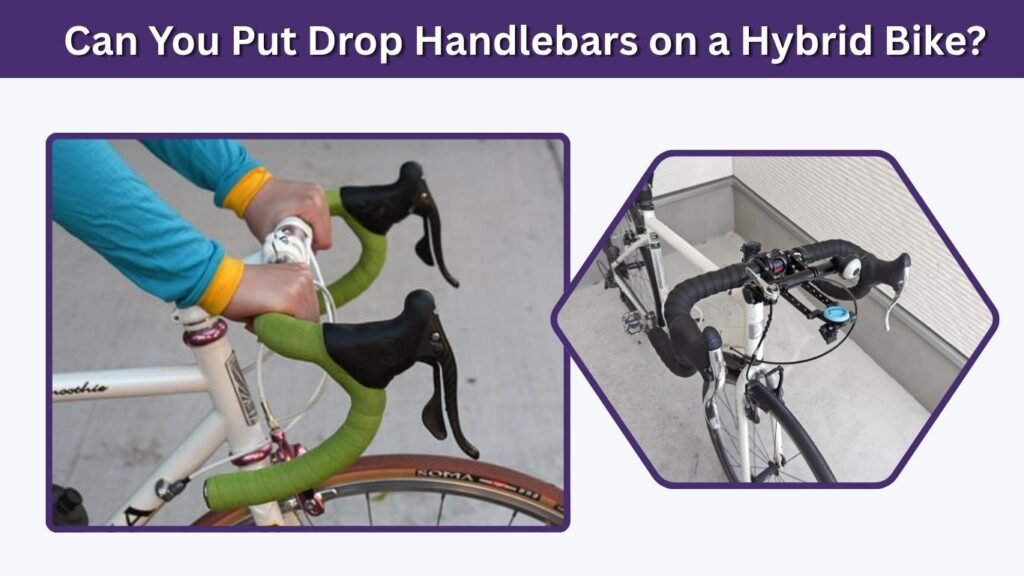
Yes, drop handlebars can be installed on many hybrid bicycles, but the conversion is more complicated than simply replacing the existing bar. Most hybrid bikes use flat-bar brake levers and shifters, while drop handlebars generally require different control designs.The final result also depends on frame geometry, handlebar reach, and component compatibility.
What Changes Are Required?
Switching to drop handlebars commonly requires compatible road-style brake levers, gear shifters, cables or hydraulic hoses, and potentially a different stem. Brake compatibility is particularly important because cable-pull requirements and hydraulic systems vary between components. The new shifting controls must also work with the existing drivetrain. A professional bicycle mechanic can assess whether the conversion is practical. In some situations, choosing a purpose-built drop-bar bicycle is more economical than modifying a hybrid.
How to Raise or Adjust Hybrid Bike Handlebars
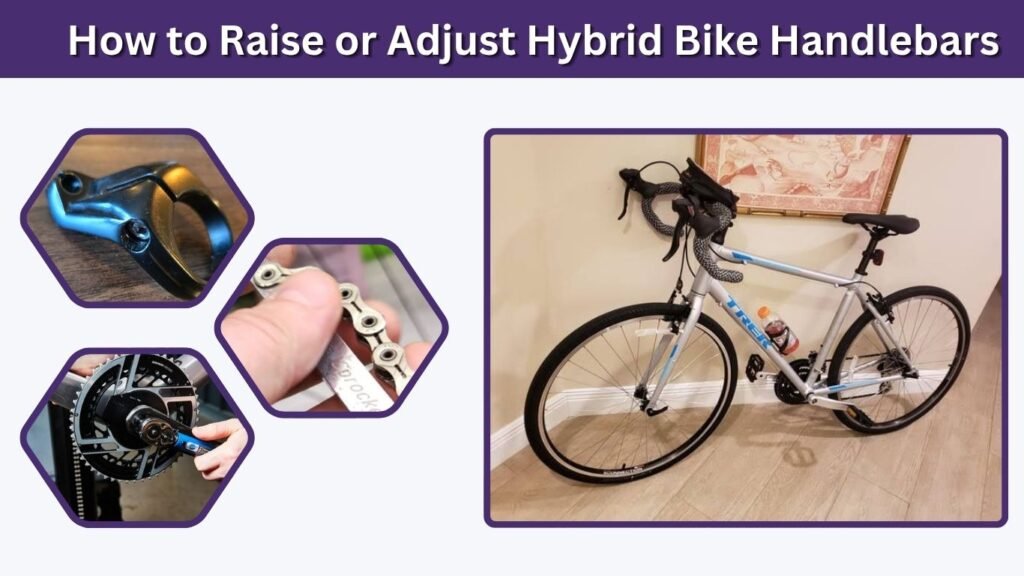
Adjusting hybrid bike handlebars can improve comfort without requiring a completely new handlebar. A small change in height, angle, or reach may make a noticeable difference during everyday riding. However, adjustment options depend on the bicycle’s stem design. Some hybrid bikes have adjustable stems, while others use fixed stems with limited available height adjustments.
Steps to Adjust Handlebar Height
- Identify your stem type: Determine whether your bicycle uses a threaded quill stem, adjustable stem, or threadless stem.
- Check available adjustments: Threadless systems may allow spacer repositioning only when sufficient steerer tube length is available.
- Adjust the position: Use the manufacturer’s procedure to change the height or angle without exceeding component limits.
- Check cable clearance: Ensure brake hoses and shift cables are not stretched or restricted when turning.
- Secure all components: Tighten bolts to their specified torque values and verify that the steering system operates correctly.
- Test the riding position: Begin with a cautious test ride to evaluate comfort and steering.
Improper stem adjustment can affect steering safety. Have a qualified mechanic perform the work if you are unfamiliar with the bicycle’s headset and stem system.
How High Should Hybrid Bike Handlebars Be?
The ideal handlebar height depends on riding style, flexibility, body proportions, and bicycle geometry. Many comfort-oriented hybrid bikes position their handlebars approximately level with or above the saddle, supporting a relaxed riding posture.Fitness-focused hybrids may position the handlebars lower to encourage a more forward-leaning stance. Neither arrangement is universally correct because comfortable cycling posture varies between individuals.
Finding a Comfortable Riding Position
Start with a position that allows a slight bend in your elbows and relaxed shoulders. Your wrists should remain relatively neutral while holding the grips, with easy access to the brakes.If you experience excessive hand pressure or shoulder discomfort, evaluate handlebar height and reach together rather than adjusting height alone.The saddle should initially be positioned for proper pedaling and leg extension, not moved simply to compensate for incorrect handlebar reach. A professional bike fitting can help identify persistent positioning problems.
When Should You Replace Hybrid Bike Handlebars?
Hybrid bike handlebars may need replacement when they become damaged, no longer suit your riding preferences, or cannot provide a comfortable position through ordinary adjustments. A different shape can improve posture and handling, but replacing handlebars will not automatically correct an incorrectly sized bicycle.
Signs Your Handlebars Need Replacement
Common reasons to consider replacement include persistent discomfort despite fit adjustments, insufficient hand-position options, or a desire for a more upright riding posture.Visible cracks, significant dents, deformation, or other structural damage also require attention. Damaged handlebars should not be used because component failure can lead to loss of control.When upgrading, choose handlebars that meet the manufacturer’s compatibility and intended-use requirements.
FAQs
1. What Type of Handlebars Are Best for a Hybrid Bike?
Flat handlebars are best for many hybrid bike riders because they provide comfortable steering, straightforward control, and versatility. Riser handlebars are better for riders seeking a more upright posture, while swept-back handlebars are suitable for relaxed city cycling and comfort-focused commuting.
2. Can You Change the Handlebars on a Hybrid Bike?
Yes, most hybrid bike handlebars can be replaced with compatible alternatives. Before changing them, check the stem clamp diameter, brake lever compatibility, shifter placement, and cable length. More complicated conversions, especially switching to drop handlebars, may require additional components and professional installation.
3. Are Riser Handlebars Better for Hybrid Bikes?
Riser handlebars can be better for riders who prefer an upright position and reduced forward reach. Their raised grip position may improve comfort during commuting and recreational rides. However, the best choice depends on individual body proportions, riding preferences, and overall bike fit.
4. What Is the Ideal Hybrid Bike Handlebar Width?
The ideal handlebar width generally starts around the rider’s shoulder width, although preferences vary. Wider handlebars may provide additional steering leverage, while narrower designs can offer a compact riding position. The correct width should allow comfortable shoulder alignment and natural wrist positioning.
5. Can You Put Road Bike Handlebars on a Hybrid Bike?
Yes, road bike drop handlebars can be installed on some hybrid bicycles, provided the necessary components are compatible. Converting usually requires suitable brake levers and shifters, and sometimes changes to the stem or cables. Professional assessment is recommended before attempting this modification.
