
Choosing between hybrid and comfort bikes can be challenging, especially when both types are designed for everyday cycling. Although they share several features, hybrid bikes generally focus on versatility, efficiency, and fitness, while comfort bikes prioritize relaxed riding and an upright seating position. Understanding their differences can help you choose the right bicycle for commuting, exercise, or recreational activities. This guide explains the main features, riding positions, performance differences, advantages, and disadvantages of hybrid and comfort bikes to help you make an informed decision.
What Are Hybrid and Comfort Bikes?
Hybrid and comfort bikes are popular among cyclists who prefer practical, easy-to-handle bicycles. Both are designed for everyday use, but their frame geometry, riding positions, and performance characteristics differ. Understanding how each bicycle works is essential before comparing their features.
What Is a Hybrid Bike?
A hybrid bike combines features of road bikes, mountain bikes, and sometimes touring bicycles. It offers a balance between speed, comfort, and versatility, making it suitable for commuting, fitness cycling, and recreational riding.Most hybrid bicycles feature flat handlebars, relatively lightweight frames, multiple gears, and medium-width tires. Their riding positions are generally upright but may include a slight forward lean for improved pedaling efficiency.Hybrid bikes are particularly useful for cyclists who ride on different surfaces, including paved roads, cycling paths, and light gravel trails. Their adaptable design makes them suitable for both short everyday trips and longer recreational rides.
What Is a Comfort Bike?
A comfort bike is designed primarily for relaxed and enjoyable cycling. Unlike performance-oriented bicycles, comfort bikes emphasize an upright riding posture, stable handling, and features that make casual cycling more comfortable.These bicycles typically feature wide padded saddles, swept-back handlebars, relaxed frame geometry, and relatively wide tires. Some models also include suspension seatposts or front suspension forks to absorb minor bumps.Comfort bikes are suitable for beginners, casual cyclists, and people who enjoy leisurely rides around neighborhoods, parks, and smooth recreational trails. Their main purpose is to provide a comfortable riding experience rather than maximum speed.
Hybrid vs. Comfort Bike: Key Differences
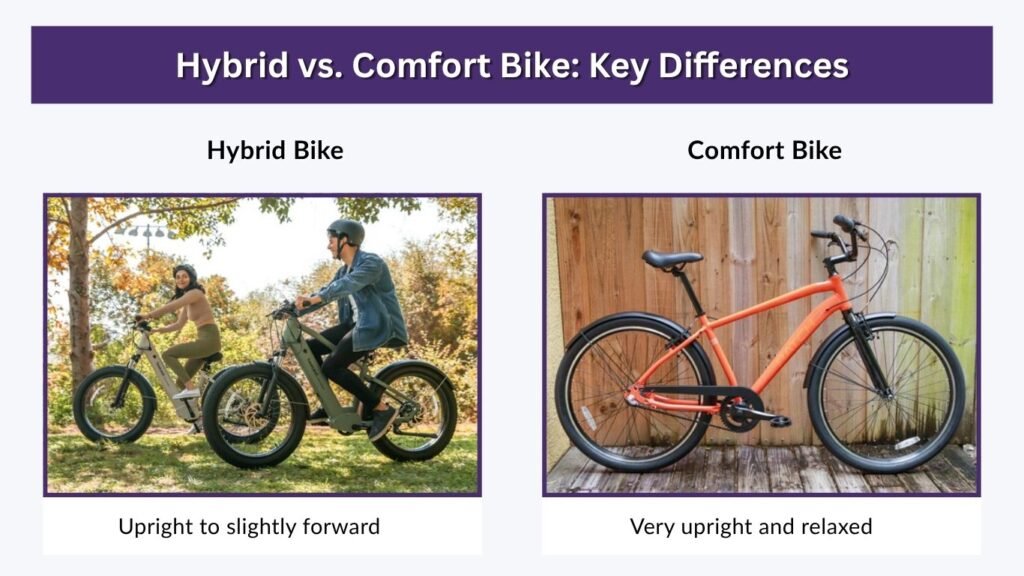
The primary difference between a hybrid bike and a comfort bike is their intended purpose. Hybrid bicycles are designed to balance efficiency, versatility, and comfort, while comfort bicycles focus on relaxed riding and stable handling.
The following table highlights their main differences.
| Features | Hybrid Bike | Comfort Bike |
| Riding position | Upright to slightly forward | Very upright and relaxed |
| Speed | Generally faster and more efficient | Designed for slower recreational rides |
| Frame design | Versatile and often lightweight | Relaxed geometry |
| Handlebars | Flat or slightly raised | Swept-back or raised |
| Saddle | Moderate padding | Usually wide and cushioned |
| Tire width | Medium to wide | Usually wider |
| Suspension | Optional | Common on some models |
| Best terrain | Roads, paths, and light gravel | Smooth roads and recreational paths |
| Main purpose | Fitness, commuting, and recreation | Leisure and casual cycling |
These characteristics may vary depending on the manufacturer and bicycle model. Some comfort-focused hybrid bikes combine features from both categories.
Riding Position and Comfort Differences
Riding position is one of the most noticeable differences between hybrid and comfort bikes. The placement of the handlebars, saddle, and pedals determines how body weight is distributed while cycling.
Hybrid Bike Riding Position
Hybrid bikes generally provide a moderately upright riding position with a slight forward lean. This posture supports efficient pedaling while maintaining good visibility and control.Flat handlebars allow cyclists to steer comfortably and respond quickly when navigating roads or cycling paths.The riding position is suitable for commuters and fitness cyclists who want to travel longer distances without adopting the aggressive posture commonly associated with road bikes.
Comfort Bike Riding Position
Comfort bikes feature a more upright seating position, allowing riders to sit naturally with less forward leaning.Their handlebars are often positioned higher and closer to the cyclist, reducing pressure on the hands and wrists.Wide saddles and relaxed frame geometry can make short recreational rides more comfortable. However, proper bicycle fit remains important because excessive saddle padding or an unsuitable riding position may cause discomfort during longer trips.
Hybrid vs. Comfort Bike: Speed and Performance

Speed and overall performance are important factors when choosing a bicycle. While both types can handle everyday cycling, their designs support different riding styles and levels of efficiency.
Hybrid Bike Speed and Performance
Hybrid bicycles generally provide better pedaling efficiency, particularly on paved roads and longer routes.Their relatively lightweight construction, moderate riding posture, and efficient tire designs make maintaining a steady pace easier.Fitness hybrid bikes are especially suitable for regular workouts and longer rides. Their gearing systems also help cyclists adjust pedaling effort when climbing hills or traveling across changing terrain.
Comfort Bike Speed and Performance
Comfort bikes prioritize stability and relaxed cycling rather than speed.Their upright posture, wider tires, and sometimes heavier frames can make sustained fast riding more demanding.However, comfort bicycles perform well during casual neighborhood rides, park cycling, and short recreational trips.They are ideal for cyclists who prefer enjoying their surroundings rather than focusing on speed or distance.
Tire Size and Suspension Differences
Tires and suspension influence how bicycles handle uneven surfaces, road vibrations, and minor obstacles. Both hybrid and comfort bikes may include features that improve stability and riding comfort.
Hybrid Bike Tires and Suspension
Hybrid bikes commonly use 700c wheels, although some models feature 27.5-inch wheels.Tire width depends on the bicycle’s intended purpose. Fitness hybrids often use relatively narrow, smooth tires for efficient road cycling, while dual-sport hybrids generally feature wider tires for better traction on gravel paths.Some hybrid bicycles include front suspension forks, while others use rigid forks to reduce weight and improve pedaling efficiency.
Comfort Bike Tires and Suspension
Comfort bicycles often feature wider tires that provide cushioning and stability.Many models use 26-inch or 700c wheels, depending on the frame design.Wider tires can absorb small road imperfections and improve comfort on uneven pavement.Some comfort bikes also include front suspension systems or suspension seatposts. These components help reduce vibration but may add weight and require additional maintenance.
Hybrid and Comfort Bikes for Different Riding Purposes
Selecting the right bicycle becomes easier when considering where and how you plan to ride. Hybrid and comfort bicycles have different strengths depending on the cycling activity.
Which Bike Is Better for Commuting?
Hybrid bikes are generally better suited for regular commuting because they offer efficient pedaling, versatile gearing, and practical frame designs.Many hybrid bicycles support racks, fenders, and lights, making them useful for traveling to work, shopping, or completing daily errands.Comfort bikes can also handle short commutes, especially on flat roads. However, their relaxed geometry may make longer journeys less efficient.
Which Bike Is Better for Fitness?
Fitness-oriented hybrid bikes are typically the better option for structured cycling workouts.Their relatively lightweight frames and efficient riding positions make them suitable for building endurance, improving cardiovascular fitness, and covering longer distances.Comfort bikes also provide valuable exercise and can help beginners develop a consistent cycling routine.However, cyclists focused on improving speed and endurance may prefer the performance advantages of hybrid bicycles.
Which Bike Is Better for Casual Riding?
Comfort bikes are particularly suitable for casual recreational cycling because they emphasize upright positioning and relaxed handling.They are excellent for neighborhood rides, parks, waterfront paths, and short scenic trips.Hybrid bikes can also provide comfortable recreational riding, especially for cyclists who want the flexibility to explore different routes or travel farther.
Fitness Hybrid vs. Comfort Hybrid vs. Dual-Sport Bike
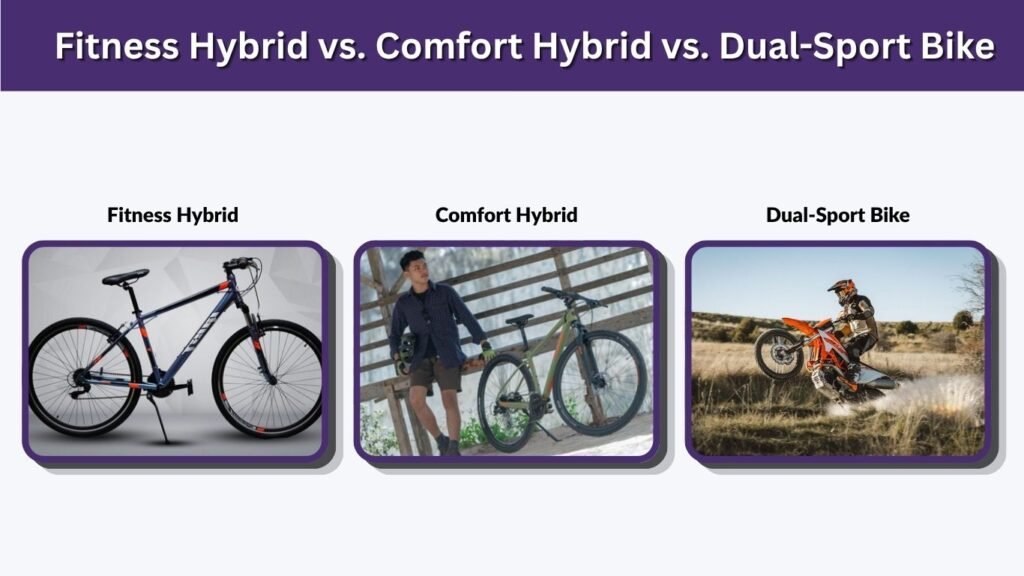
Hybrid bicycles are available in several categories designed for different riding conditions. Understanding these variations helps cyclists select a model that matches their preferences.
Fitness Hybrid Bikes
Fitness hybrid bikes prioritize efficient pedaling, moderate weight, and responsive handling.They generally feature flat handlebars, rigid forks, and relatively smooth tires. These bicycles are suitable for exercise, commuting, and longer paved-road rides.Their design makes them appealing to cyclists who want comfortable handling without sacrificing too much speed.
Comfort Hybrid Bikes
Comfort hybrid bikes combine the versatility of traditional hybrids with features designed for relaxed cycling.They may include upright handlebars, ergonomic grips, cushioned saddles, and wider tires.These bicycles are suitable for beginners and recreational cyclists who want more comfort while retaining the flexibility of a hybrid bicycle.
Dual-Sport Hybrid Bikes
Dual-sport hybrid bikes are designed for riders who travel on both paved roads and unpaved paths.They commonly feature wider tires, stable frame geometry, and multiple gears.Some models also include suspension systems for improved handling on uneven surfaces.Dual-sport hybrids are useful for cyclists who regularly ride on gravel trails, park paths, and moderately rough roads.
How to Choose Between a Hybrid and Comfort Bike
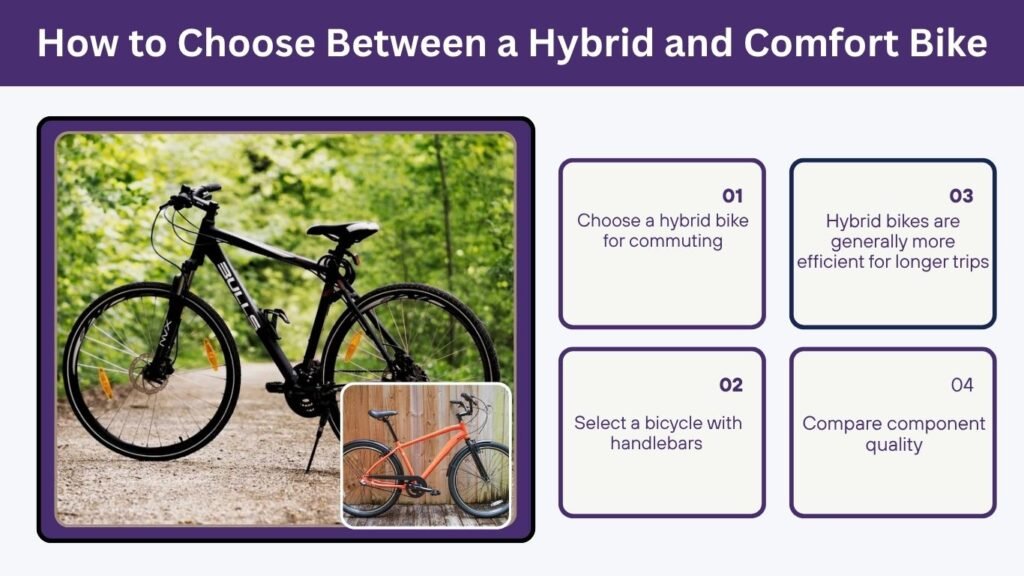
Choosing the right bicycle depends on your riding habits, physical comfort, local terrain, and budget. Rather than focusing only on appearance, consider how each bicycle will perform during your regular cycling activities.
Several important factors can help you make the right decision:
- Riding purpose: Choose a hybrid bike for commuting, fitness, or versatile transportation. A comfort bike is better suited for relaxed recreational riding.
- Cycling distance: Hybrid bikes are generally more efficient for longer trips, while comfort bikes work well for shorter journeys.
- Terrain conditions: Consider tire width, gearing, and suspension when riding on uneven surfaces.
- Riding position: Select a bicycle with handlebars and saddle positioning that feel comfortable.
- Frame size: Choose a properly fitted frame to improve handling and reduce unnecessary discomfort.
- Budget: Compare component quality, maintenance requirements, and available accessories.
Taking a short test ride is one of the best ways to determine which bicycle feels more natural and comfortable.
Advantages and Disadvantages of Hybrid and Comfort Bikes
Both bicycle types offer practical benefits, but they also have limitations. Comparing their strengths and weaknesses can help you choose a model suitable for your everyday cycling needs.
Hybrid Bike Advantages and Disadvantages
Advantages:
- Suitable for commuting, fitness, and recreational cycling.
- Generally more efficient over longer distances.
- Available in different tire sizes and gearing configurations.
- Often compatible with racks, fenders, and commuting accessories.
- Offers a balance between comfort and performance.
Disadvantages:
- Some models have firmer saddles and sportier riding positions.
- Performance-oriented hybrids may feel less relaxed.
- Not all hybrid bikes are suitable for demanding off-road trails.
Comfort Bike Advantages and Disadvantages
Advantages:
- Provides a relaxed and upright riding position.
- Designed for comfortable recreational cycling.
- Offers stable and accessible handling.
- Suitable for beginners and casual riders.
- Often includes wider saddles and cushioning features.
Disadvantages:
- Generally less efficient for fast cycling.
- Some models are relatively heavy.
- Less suitable for demanding trails or performance riding.
- Upright geometry can make riding into strong headwinds more difficult.
FAQs
1. What Is the Main Difference Between a Hybrid and a Comfort Bike?
The main difference is their intended purpose. Hybrid bikes balance speed, efficiency, and versatility, while comfort bikes focus on upright riding positions and relaxed recreational cycling.
2. Are Hybrid Bikes More Comfortable Than Comfort Bikes?
Not necessarily. Comfort bikes generally provide a more relaxed seating position, but properly fitted hybrid bikes can be equally comfortable for certain riders, particularly during longer cycling sessions.
3. Can You Use a Comfort Bike for Long-Distance Riding?
Yes, comfort bikes can handle longer recreational rides. However, their upright geometry and potentially heavier construction may make covering substantial distances less efficient than on fitness-oriented hybrid bicycles.
4. Are Hybrid Bikes Suitable for Beginners?
Yes. Hybrid bicycles are excellent beginner options because they provide straightforward handling, practical gearing, and versatility on paved roads and light recreational trails.
5. Which Is Better for Older Adults, a Hybrid or Comfort Bike?
Both can be suitable depending on individual mobility, fitness, and comfort preferences. Comfort bikes often provide relaxed riding positions, while low-step hybrid bikes may offer easier mounting and versatile everyday performance.
