
The average hybrid bike speed typically ranges from 12 to 16 mph (19–26 km/h) on relatively flat, paved roads under favorable conditions. However, actual cycling speed depends on rider fitness, terrain, weather, tire condition, and riding experience. Hybrid bikes combine features of road and mountain bikes, making them popular for commuting, fitness riding, and recreational cycling. Although they are not specifically designed for racing, they can maintain comfortable speeds over everyday routes. This guide explains hybrid bike speeds, compares different bicycle types, and offers practical ways to improve cycling performance.
What Is the Average Hybrid Bike Speed?
Hybrid bikes are designed to balance comfort, efficiency, and versatility across different riding environments. Most recreational riders can maintain reasonable speeds on paved roads without the aggressive riding position of a road bike. However, average speed changes with physical fitness, route conditions, and traffic. A typical estimate for steady hybrid cycling is approximately 12–16 mph.
Average Hybrid Bike Speed in MPH and KM/H
| Rider Level | Speed (MPH) | Speed (KM/H) |
|---|---|---|
| Beginner | 8–12 mph | 13–19 km/h |
| Casual rider | 10–14 mph | 16–23 km/h |
| Intermediate | 12–16 mph | 19–26 km/h |
| Experienced rider | 15–19 mph | 24–31 km/h |
These are illustrative ranges for favorable paved-road conditions, not scientifically established averages for every hybrid rider.
Is 15 MPH Fast on a Hybrid Bike?
Maintaining 15 mph on a hybrid bike is a respectable recreational cycling pace.
For beginners, it may require considerable effort. Experienced cyclists may maintain this speed comfortably on flat roads, depending on wind, fitness, and riding distance.
Average Hybrid Bike Speed on Different Terrains
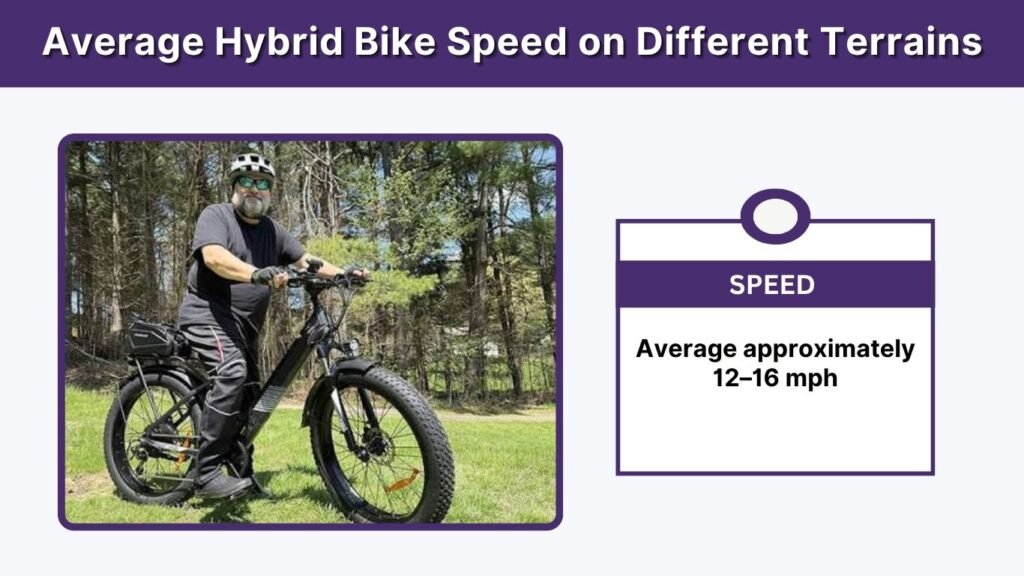
The riding surface significantly influences how quickly a hybrid bicycle travels. Smooth pavement generally allows higher speeds than gravel, dirt paths, or steep hills. Hybrid bikes are versatile enough to handle several surfaces, but tire design and gearing affect performance. Comparing average speeds across different terrain types helps riders establish realistic expectations.
Hybrid Bike Speed on Flat Roads
On smooth, level pavement, recreational riders may average approximately 12–16 mph.
Fit cyclists can sometimes maintain higher speeds over longer distances. However, wind resistance becomes increasingly important as speed rises.
Hybrid Bike Speed on Hills
Climbing requires greater effort, which usually reduces average speed.
On moderate inclines, riders may travel around 6–10 mph, depending on hill steepness and fitness. Descending can produce substantially higher speeds, but safe braking and bicycle control remain essential.
Hybrid Bike Speed on Gravel Paths
Hybrid bikes with suitable tires can handle compacted gravel and mixed-use trails.
Speeds around 8–13 mph may be practical on relatively smooth gravel, while rough or loose surfaces require slower riding for traction and control.
Average Hybrid Bike Speed by Rider Experience
Cycling experience influences efficiency, endurance, and the ability to maintain a consistent pace. Beginners usually ride more cautiously while developing balance and confidence. Regular cyclists can sustain higher speeds as their fitness improves. However, age alone does not determine performance, and individual health, cycling habits, and environmental conditions matter considerably.
Hybrid Bike Speed for Beginners
Beginner hybrid bike riders often travel around 8–12 mph on relatively flat routes.
Starting at a comfortable pace helps develop confidence and endurance. New cyclists should prioritize handling, braking, and traffic awareness before attempting to increase speed.
Hybrid Bike Speed for Experienced Cyclists
Experienced cyclists may maintain approximately 15–19 mph on favorable paved roads.
Achieving these speeds consistently requires sufficient fitness, efficient pedaling, and suitable riding conditions. Strong headwinds or frequent stops can substantially reduce trip averages.
Hybrid Bike vs. Road Bike vs. Mountain Bike Speed
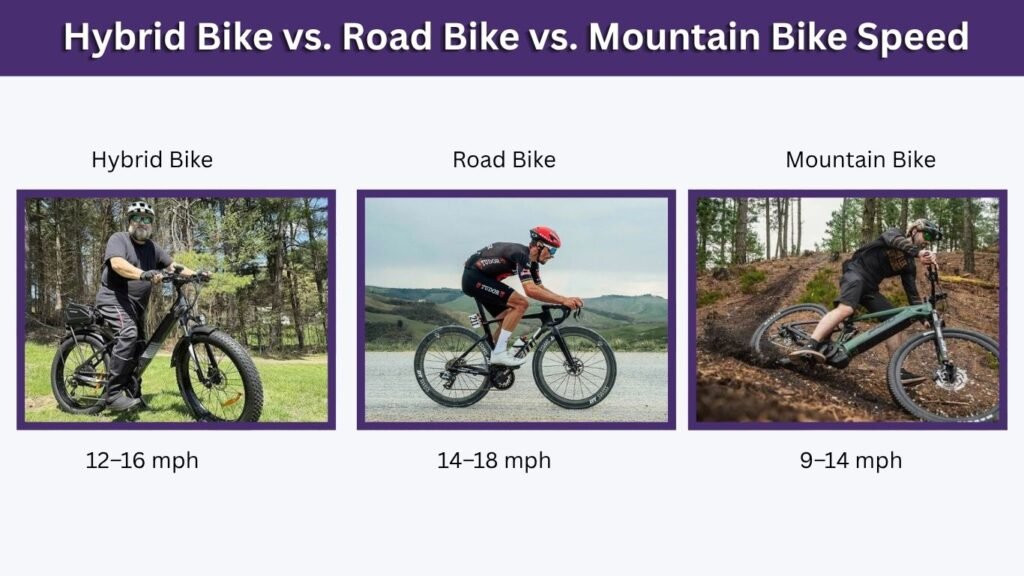
Different bicycle designs influence speed through tire choice, riding position, gearing, and weight. Road bikes typically emphasize efficiency on pavement, while mountain bikes prioritize traction and control over rough terrain. Hybrid bikes provide a middle ground, making them practical for riders who value comfort and versatility without sacrificing too much pavement performance.
Average Speed Comparison by Bike Type
| Bicycle Type | Illustrative Speed on Pavement |
|---|---|
| Road bike | 14–18 mph |
| Hybrid bike | 12–16 mph |
| Mountain bike | 9–14 mph |
| Gravel bike | 11–16 mph |
These ranges overlap because rider fitness and conditions often matter more than bicycle category.
Why Are Road Bikes Usually Faster?
Road bikes generally use more aerodynamic riding positions and tires optimized for pavement.
Hybrid bikes feature upright handlebars and frequently wider tires, making them comfortable and versatile but potentially less efficient at higher speeds.
Factors That Affect Hybrid Bike Speed
Several factors influence the average speed of a hybrid bike, even when the bicycle itself remains unchanged. Environmental conditions, mechanical efficiency, and rider habits all contribute to cycling performance. Understanding these variables helps riders identify practical improvements without unnecessarily replacing their bicycles or investing in expensive equipment.
Main Factors Affecting Cycling Speed
- Rider fitness: Stronger endurance supports faster sustained cycling.
- Terrain: Hills, gravel, and uneven roads reduce speed.
- Wind: Headwinds increase effort, particularly in upright riding positions.
- Tire pressure: Suitable inflation helps maintain efficient rolling.
- Bicycle weight: Additional weight can make climbing harder.
- Traffic: Intersections and frequent stops lower trip averages.
- Riding position: Excessively upright positions create greater aerodynamic resistance.
Average Hybrid Bike Speed for Commuting
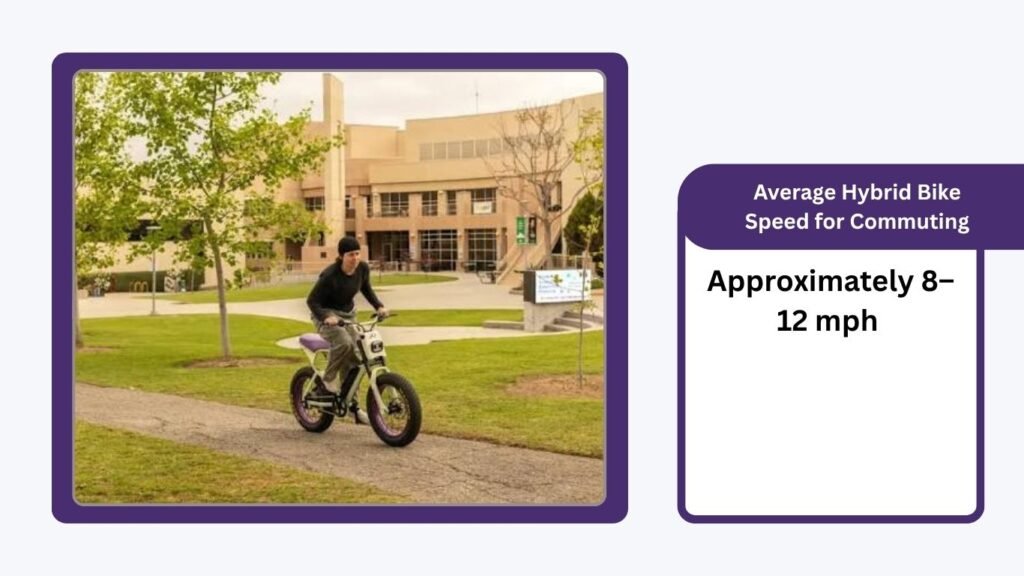
Hybrid bikes are popular commuting bicycles because they combine practical handling with relatively efficient pavement performance. Their upright position improves visibility, while mounts for racks and fenders make everyday transportation convenient. Nevertheless, commuting averages are often lower than uninterrupted fitness rides because traffic, intersections, pedestrian crossings, and carrying additional equipment affect overall travel time.
Typical Hybrid Bike Commuting Speed
A practical planning estimate for an urban hybrid-bike commute is approximately 8–12 mph when stops and traffic are included.
A cyclist may ride substantially faster between intersections, but the overall journey average decreases when stationary periods are counted.
Is a Hybrid Bike Fast Enough for Daily Commuting?
Yes. Hybrid bikes can be efficient for short and medium-distance commuting.
For example, a five-mile commute at a 10 mph overall average takes approximately 30 minutes. Actual travel time depends on traffic, route conditions, and stops.
How to Increase Your Average Hybrid Bike Speed
Improving hybrid bike speed does not necessarily require replacing your bicycle. Small changes in riding habits, maintenance, and fitness can improve cycling efficiency. Regular practice also helps riders maintain a steady pace with less fatigue. Focus on safe, sustainable improvements rather than attempting to achieve the highest possible speed on every ride.
Practical Ways to Ride Faster
- Maintain proper tire pressure: Follow the tire and bicycle manufacturer’s recommendations.
- Keep the drivetrain clean: Lubricate the chain appropriately and inspect for wear.
- Use gears efficiently: Shift before steep climbs to maintain a comfortable cadence.
- Ride consistently: Gradually increase cycling frequency and distance.
- Improve positioning: Avoid unnecessary wind resistance without sacrificing control.
- Choose suitable tires: Consider pavement-oriented tires for mostly paved routes.
- Reduce unnecessary weight: Remove accessories that are not needed for the ride.
Does Cycling More Often Improve Speed?
Regular riding can improve cardiovascular fitness, muscular endurance, and cycling efficiency.
Gradually increasing distance and introducing occasional moderate-intensity intervals may help develop sustainable speed. Allow adequate recovery between demanding rides.
How to Calculate Your Average Hybrid Bike Speed
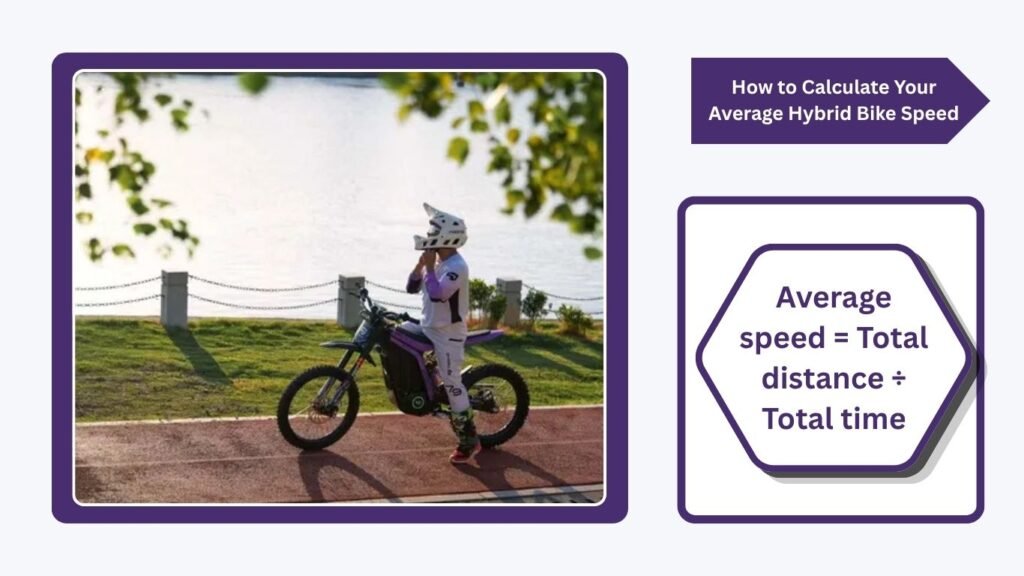
Calculating average cycling speed helps riders monitor progress and estimate journey times. The basic calculation divides total distance by elapsed time. However, cycling computers and mobile applications may display moving averages that exclude stationary periods. Understanding the difference prevents confusion when comparing recreational rides with commuting journeys.
Average Bike Speed Formula
Average speed = Total distance ÷ Total time
For example, cycling 12 miles in one hour produces an average speed of 12 mph.
If you travel 15 miles in 75 minutes, your average speed is also 12 mph.
Moving Speed vs. Overall Speed
Moving speed excludes time spent stationary, while overall speed includes stops.
For commuting, overall speed is usually more useful for predicting arrival times. For fitness comparisons, moving speed can help evaluate riding performance.
FAQs
1. What Is a Good Average Speed on a Hybrid Bike?
An average of 12–16 mph is a useful recreational benchmark on relatively flat paved roads. Beginners may average 8–12 mph, while experienced riders can be faster.
2. Can a Hybrid Bike Go 20 MPH?
Yes. A hybrid bike can reach 20 mph or more, particularly with an experienced rider or favorable conditions. Maintaining that speed for long distances requires more effort.
3. Are Hybrid Bikes Slower Than Road Bikes?
Generally, yes, on smooth pavement at higher speeds. Road bikes typically offer more aerodynamic riding positions, although differences depend heavily on tires, terrain, and rider fitness.
4. What Is the Average Hybrid Bike Speed in KM/H?
A common recreational estimate is approximately 19–26 km/h, equivalent to 12–16 mph under favorable riding conditions.
5. How Fast Can a Beginner Ride a Hybrid Bike?
Beginners often ride around 8–12 mph on relatively flat roads. Speed varies according to fitness, confidence, terrain, and weather conditions.
