
Hybrid bikes are designed to offer the perfect balance between comfort, performance, and versatility. Whether you’re commuting through city streets, enjoying a fitness ride, or exploring light trails, there’s a hybrid bike tailored to your needs. By combining features from road bikes, mountain bikes, and touring bikes, hybrids provide a flexible riding experience for a wide range of cyclists.
In this guide, you’ll discover 13 different types of hybrid bikes, each built with a specific purpose in mind. Understanding these types will help you choose the right bike based on your riding style, terrain, and personal preferences.
1. City Hybrid Bike
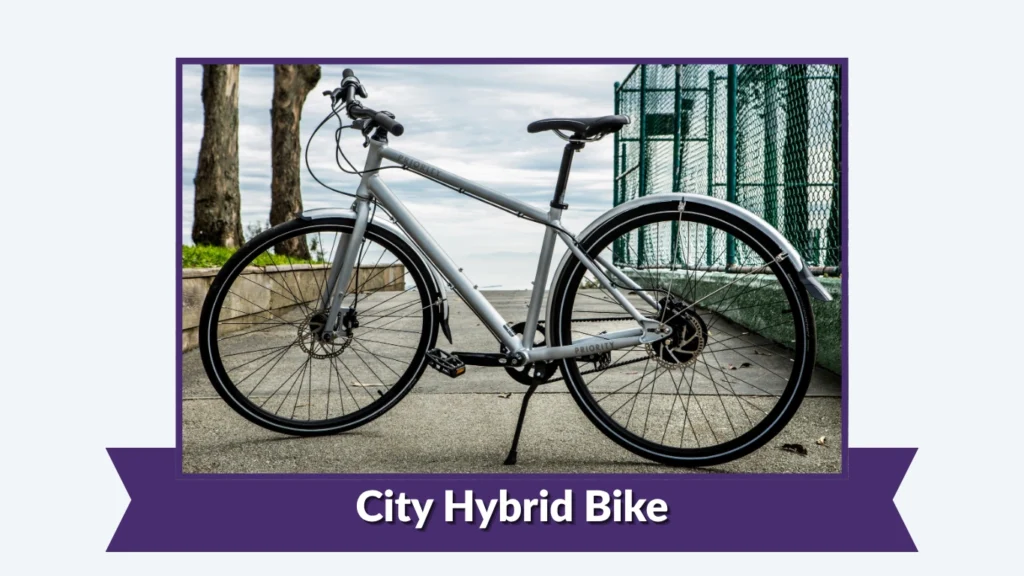
A city hybrid bike is designed for smooth, efficient riding in urban environments. It blends the comfort of a casual bike with the practicality needed for daily commuting, making it ideal for paved roads, bike lanes, and short-distance travel.
Design and Purpose
City hybrid bikes focus on ease of use and practicality. They typically feature a lightweight frame with an upright riding position, allowing better visibility and comfort in traffic. These bikes are built for flat roads and moderate speeds, making them perfect for navigating crowded streets and commuting to work or school.
Key Features
- Upright handlebars for comfortable posture
- Lightweight aluminum or steel frame
- Medium-width tires for stability on paved roads
- Simple gear system for easy shifting
- Mounts for racks, baskets, and fenders
Riding Experience
The riding experience on a city hybrid bike is smooth and relaxed. It is designed to reduce strain on the rider’s back and shoulders while providing steady control. These bikes are not meant for high-speed performance but excel in providing a comfortable and predictable ride through urban areas.
Ideal Use Cases
City hybrid bikes are best suited for daily commuting, running errands, and casual rides around town. They perform well on paved roads and bike paths but are not ideal for rough terrains or long-distance touring. Their practicality makes them a popular choice for city dwellers.
2. Fitness Hybrid Bike
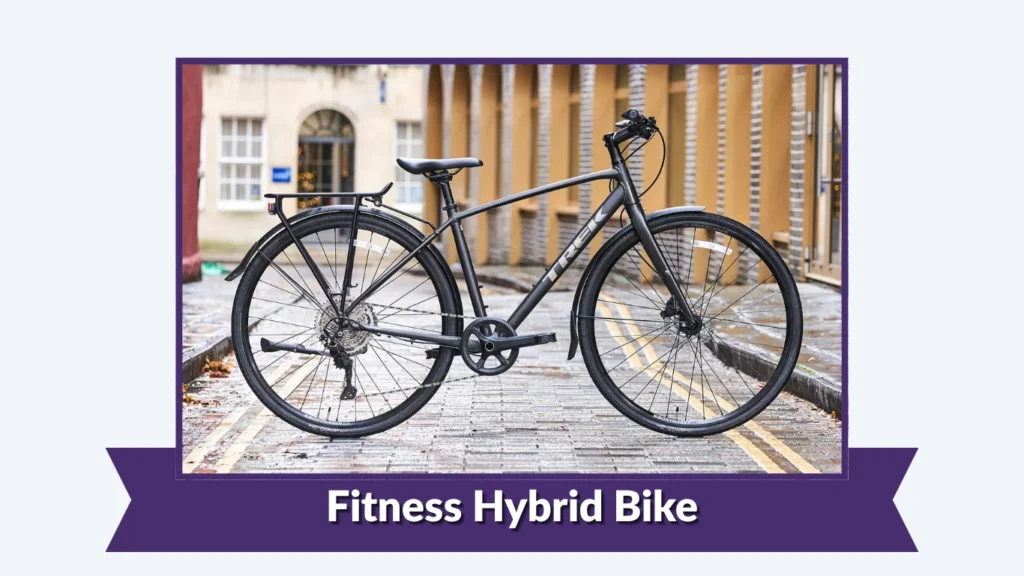
A fitness hybrid bike is built for riders who want speed, efficiency, and a good workout without switching to a full road bike. It combines the lightweight feel of road bikes with the comfort and control of flat handlebars, making it ideal for exercise and fast commuting.
Design and Purpose
Fitness hybrid bikes are designed for performance on paved roads. They feature a more forward-leaning riding position compared to city hybrids, helping riders generate more power and speed. The frame is typically lightweight, allowing quicker acceleration and easier handling during longer rides.
Key Features
- Flat handlebars for better control and stability
- Lightweight frame for speed and efficiency
- Narrower tires for reduced rolling resistance
- Wide gear range for varied riding intensity
- Minimal accessories to keep the bike lightweight
Riding Experience
Riding a fitness hybrid bike feels faster and more responsive than a standard hybrid. It encourages a more active posture, which helps improve pedaling efficiency. The bike handles smoothly on roads, making it great for maintaining higher speeds during workouts or long rides.
Ideal Use Cases
Fitness hybrid bikes are perfect for riders focused on exercise, speed, and endurance. They work well for fitness training, long-distance rides on paved surfaces, and fast commuting. However, they are less suited for rough terrain or carrying heavy loads due to their lightweight design.
3. Comfort Hybrid Bike
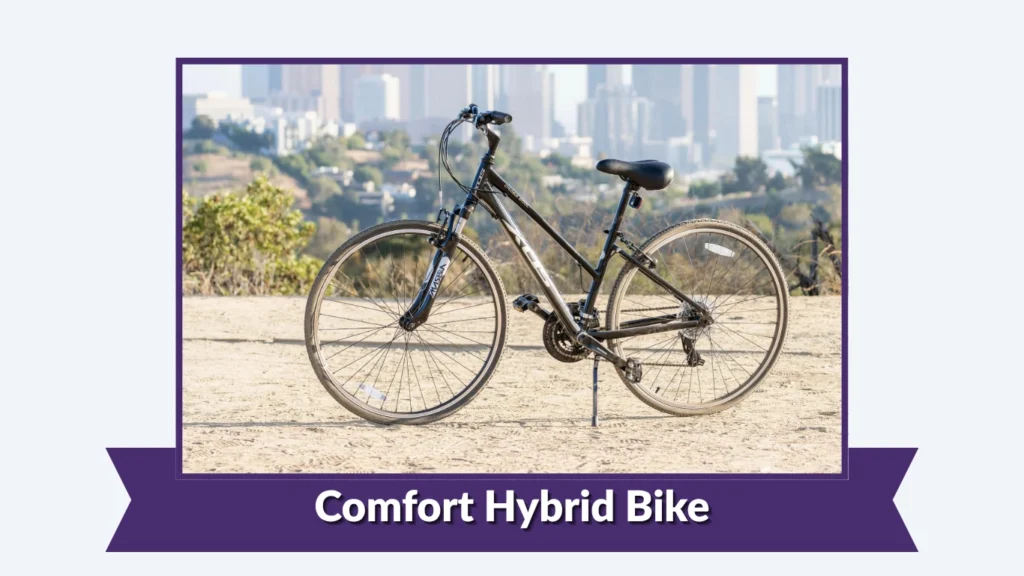
A comfort hybrid bike is designed to provide a smooth and relaxed riding experience. It prioritizes rider comfort over speed, making it an excellent choice for casual cyclists, beginners, and those who prefer easy, enjoyable rides on paved or light gravel paths.
Design and Purpose
Comfort hybrid bikes focus on ergonomics and ease of riding. They feature a more upright seating position, often with a shorter frame reach, allowing riders to sit naturally without leaning forward. The design reduces strain on the back, neck, and wrists, making it suitable for longer, leisurely rides.
Key Features
- Wide, cushioned saddle for maximum comfort
- Upright handlebars for relaxed posture
- Suspension seatpost or front fork for shock absorption
- Wider tires for better stability and grip
- Easy-to-use gear system for simple riding
Riding Experience
The riding experience is soft, stable, and highly forgiving. Comfort hybrid bikes absorb small bumps and road vibrations effectively, making rides feel smoother even on uneven surfaces. They are not built for speed but excel in delivering a calm and enjoyable journey.
Ideal Use Cases
Comfort hybrid bikes are best for casual rides, park trails, and neighborhood cruising. They are ideal for riders who value comfort over performance, including beginners and older cyclists. While great for short to moderate distances, they are less suitable for fast commuting or long-distance cycling.
4. Dual Sport Hybrid Bike
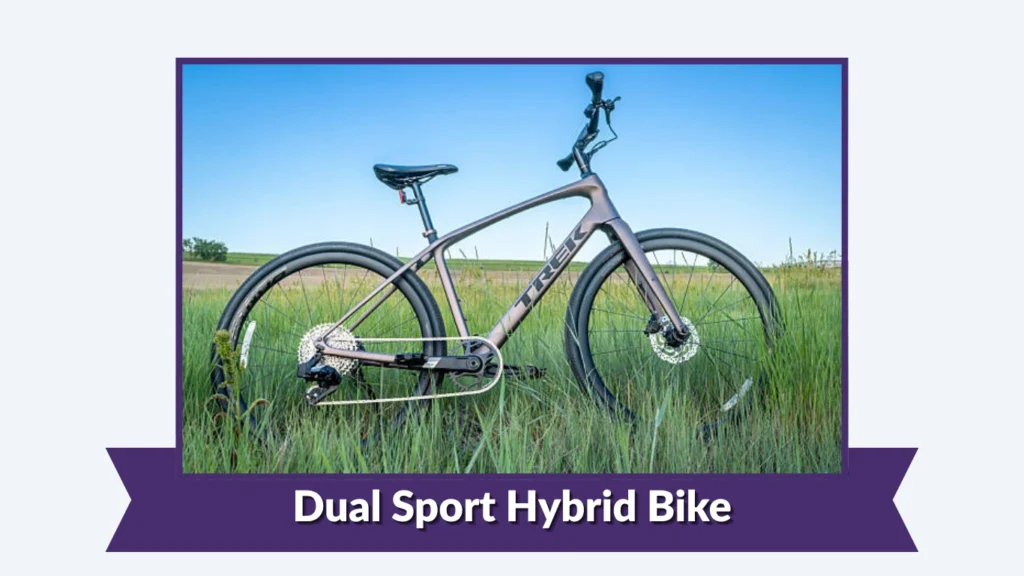
A dual sport hybrid bike is designed to handle both paved roads and light off-road trails. It offers a balanced mix of durability, comfort, and versatility, making it a great option for riders who want one bike for multiple types of terrain.
Design and Purpose
Dual sport hybrid bikes are built with a sturdy frame and slightly more aggressive geometry than standard hybrids. They often include front suspension to absorb shocks from uneven surfaces. The design allows riders to transition easily between city streets and gravel or dirt paths without compromising stability.
Key Features
- Front suspension fork for shock absorption
- Durable frame built for mixed terrain
- Wider, treaded tires for better grip
- Flat handlebars for control and balance
- Reliable gear system for varied surfaces
Riding Experience
Riding a dual sport hybrid bike feels stable and adaptable. It performs well on smooth roads while also handling bumps and rough patches with ease. The suspension adds comfort, especially on uneven terrain, though it may slightly reduce speed compared to road-focused hybrids.
Ideal Use Cases
Dual sport hybrid bikes are ideal for riders who frequently switch between urban roads and light trails. They are suitable for weekend adventures, commuting on mixed surfaces, and recreational cycling. However, they are not intended for extreme mountain biking or high-speed road racing.
5. Trekking Hybrid Bike
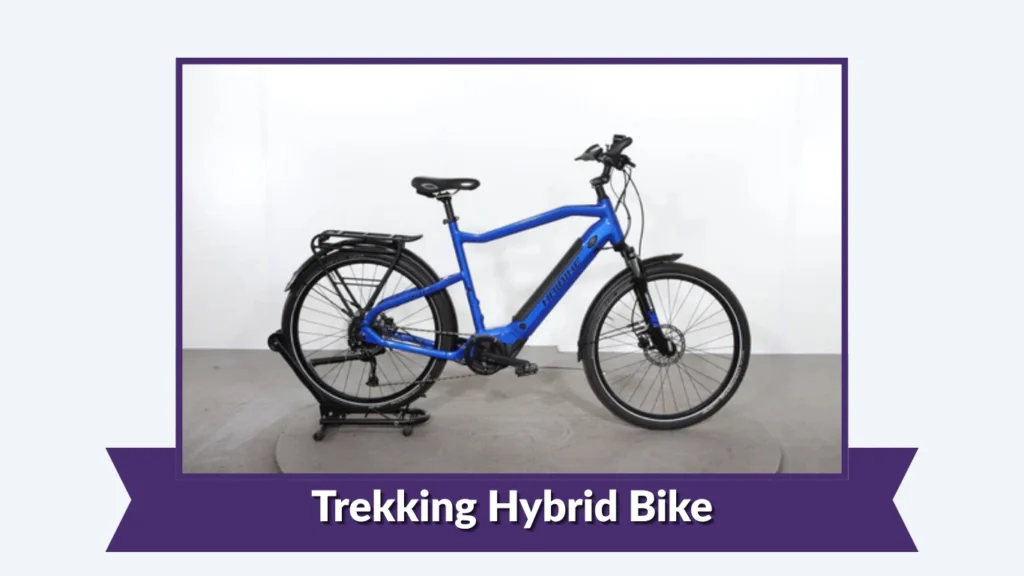
A trekking hybrid bike is designed for long-distance rides and multi-day journeys. It combines comfort, durability, and carrying capacity, making it ideal for riders who enjoy extended travel on a variety of road conditions.
Design and Purpose
Trekking hybrid bikes are built with a strong frame and geometry that supports endurance riding. They often include attachment points for racks, panniers, and accessories needed for travel. The design focuses on stability and comfort over long hours, allowing riders to maintain control even when carrying extra weight.
Key Features
- Strong frame designed for long-distance durability
- Mounts for racks, panniers, and water bottles
- Comfortable saddle for extended rides
- Medium-width tires for mixed surfaces
- Wide gear range for hills and heavy loads
Riding Experience
The riding experience is steady and reliable, especially over long distances. Trekking bikes are built to handle weight without compromising balance, making them feel secure even when fully loaded. They may not be the fastest, but they provide consistent performance and comfort on extended trips.
Ideal Use Cases
Trekking hybrid bikes are best for long-distance touring, bikepacking, and travel adventures. They perform well on paved roads, gravel paths, and countryside routes. These bikes are perfect for riders who need to carry gear, but they are less suited for short city commutes or high-speed riding.
6. Touring Hybrid Bike
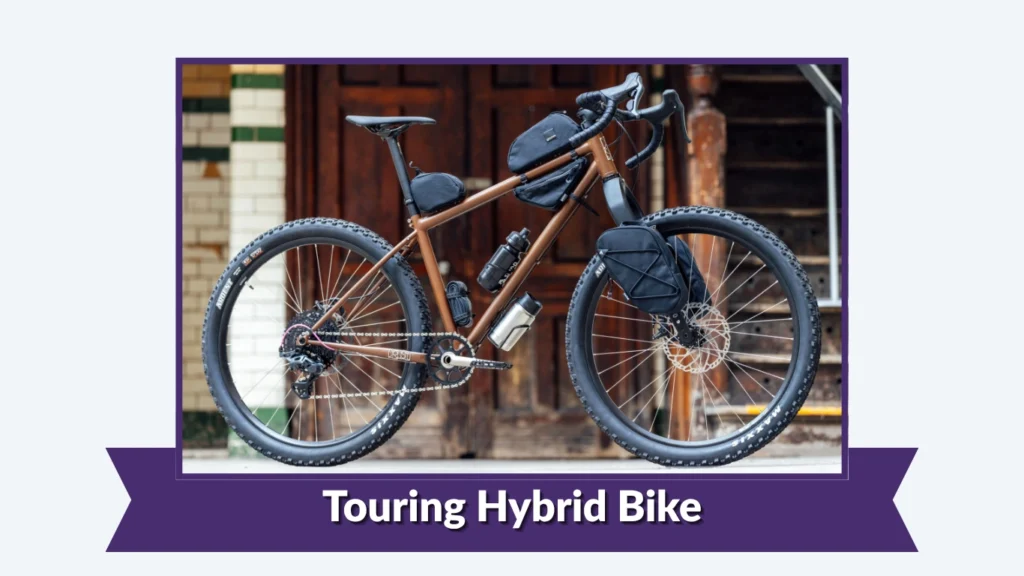
A touring hybrid bike is built specifically for long-distance travel with heavy loads. It focuses on strength, stability, and reliability, making it a dependable choice for cyclists planning extended journeys across different terrains.
Design and Purpose
Touring hybrid bikes feature a reinforced frame designed to handle extra weight from luggage and gear. The geometry is optimized for comfort over long hours, with a slightly relaxed riding position. These bikes are engineered to remain stable even when fully loaded, ensuring safety and control during long trips.
Key Features
- Reinforced frame for carrying heavy loads
- Multiple mounting points for racks and panniers
- Wide gear range for climbing hills with weight
- Durable wheels built for long-distance use
- Comfortable geometry for extended riding
Riding Experience
The riding experience is stable and predictable, even on long journeys. Touring hybrids are not built for speed but for endurance and control. They perform well under pressure, maintaining balance and smooth handling even when carrying significant cargo over varied terrain.
Ideal Use Cases
Touring hybrid bikes are ideal for long-distance touring, cross-country trips, and bikepacking adventures. They work well on paved roads and light gravel paths. These bikes are perfect for riders who need reliability and load-carrying capacity, but they are less suited for quick urban commutes or high-speed cycling.
7. Commuter Hybrid Bike
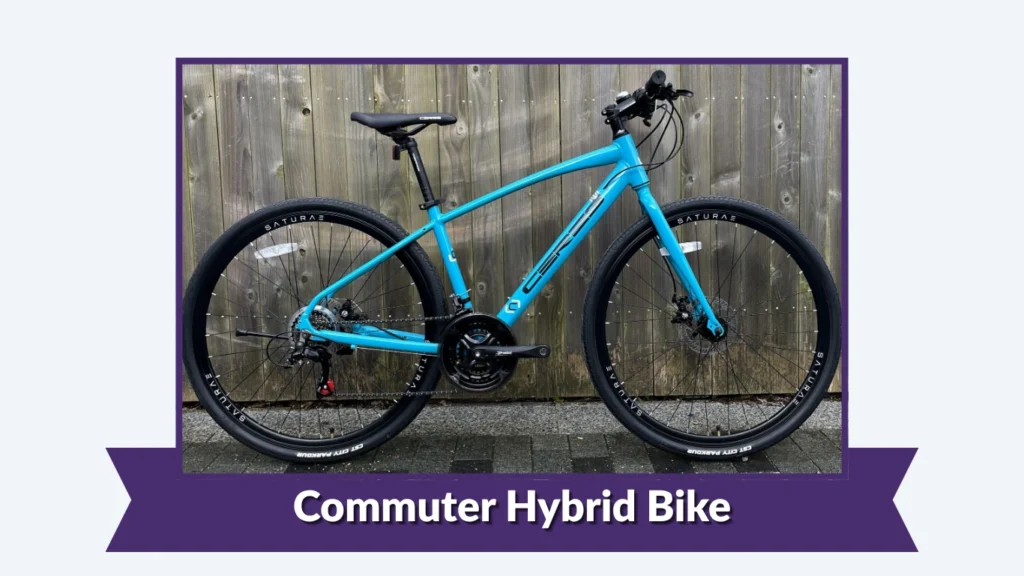
A commuter hybrid bike is designed for daily travel in urban environments. It focuses on practicality, efficiency, and reliability, making it an excellent choice for riders who need a dependable bike for getting to work, school, or running regular errands.
Design and Purpose
Commuter hybrid bikes are built with everyday usability in mind. They often feature a sturdy yet lightweight frame and a comfortable upright riding position. The design supports frequent use, with added emphasis on durability and low maintenance for consistent daily performance.
Key Features
- Integrated mounts for racks, fenders, and lights
- Durable frame for everyday commuting
- Medium-width tires for balance and grip
- Efficient gearing for stop-and-go traffic
- Chain guards or belt drives for cleaner rides
Riding Experience
The riding experience is smooth, efficient, and predictable. Commuter bikes handle well in traffic and are designed for quick acceleration and easy braking. They provide a balance between comfort and speed, helping riders navigate busy streets with confidence.
Ideal Use Cases
Commuter hybrid bikes are perfect for daily transportation, including work commutes and city travel. They perform best on paved roads and bike lanes. These bikes are ideal for consistent use in urban settings but are not designed for rough trails or long-distance touring.
8. Flat-Bar Road Hybrid Bike
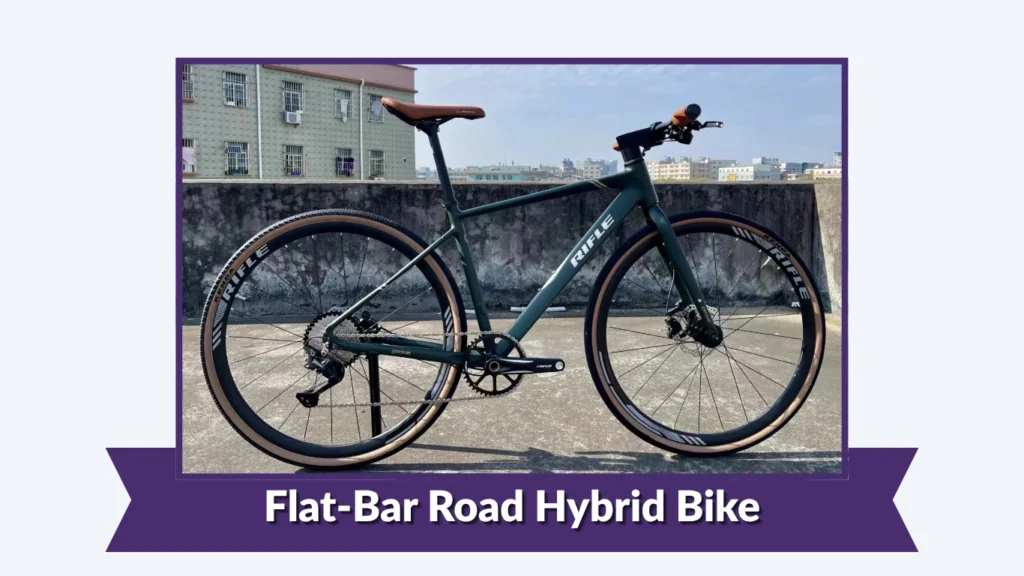
A flat-bar road hybrid bike combines the speed of a road bike with the control of flat handlebars. It is designed for riders who want a fast and efficient ride on paved surfaces without the aggressive posture of traditional road bikes.
Design and Purpose
Flat-bar road hybrids feature a lightweight frame and geometry similar to road bikes but with a more upright position. The flat handlebars provide better control and comfort, especially for riders who are not used to drop bars. This design makes the bike approachable while still maintaining strong performance.
Key Features
- Flat handlebars for better control and comfort
- Lightweight frame for improved speed
- Narrow, smooth tires for low rolling resistance
- Responsive braking system for road use
- Performance-focused gear setup
Riding Experience
The riding experience is quick, smooth, and responsive. These bikes allow riders to maintain higher speeds with less effort while still feeling stable and in control. The upright posture reduces strain, making longer rides more comfortable compared to traditional road bikes.
Ideal Use Cases
Flat-bar road hybrid bikes are ideal for fast commuting, fitness riding, and long rides on paved roads. They suit riders who want speed without sacrificing comfort. However, they are not suitable for rough terrain or carrying heavy loads due to their performance-oriented design.
9. Adventure Hybrid Bike
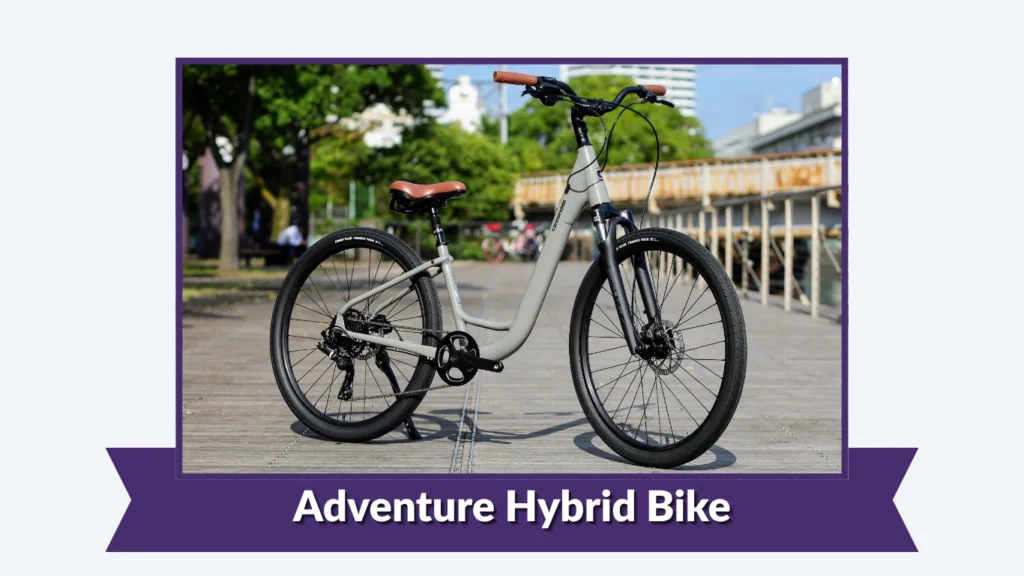
An adventure hybrid bike is built for riders who enjoy exploring beyond city limits. It combines versatility, durability, and comfort, making it suitable for a wide range of terrains, including paved roads, gravel paths, and light trails.
Design and Purpose
Adventure hybrid bikes are designed with a strong frame and adaptable geometry. They often feature wider tire clearance and mounting options for gear, allowing riders to customize the bike for longer rides or off-road exploration. The design supports both comfort and control across mixed surfaces.
Key Features
- Wider tire clearance for rougher terrain
- Strong frame for durability and stability
- Mounts for bags, racks, and accessories
- Versatile gearing for different conditions
- Flat handlebars for better handling
Riding Experience
The riding experience is stable and confidence-inspiring across different terrains. Adventure hybrids handle uneven surfaces better than standard hybrids while still maintaining decent speed on roads. They offer a balanced feel, making them suitable for both relaxed rides and more demanding routes.
Ideal Use Cases
Adventure hybrid bikes are ideal for mixed-terrain riding, weekend exploration, and light off-road trips. They are great for riders who want flexibility in where they can ride. However, they are not as specialized as mountain bikes for rough trails or as fast as road bikes on smooth pavement.
10. Cross Hybrid Bike
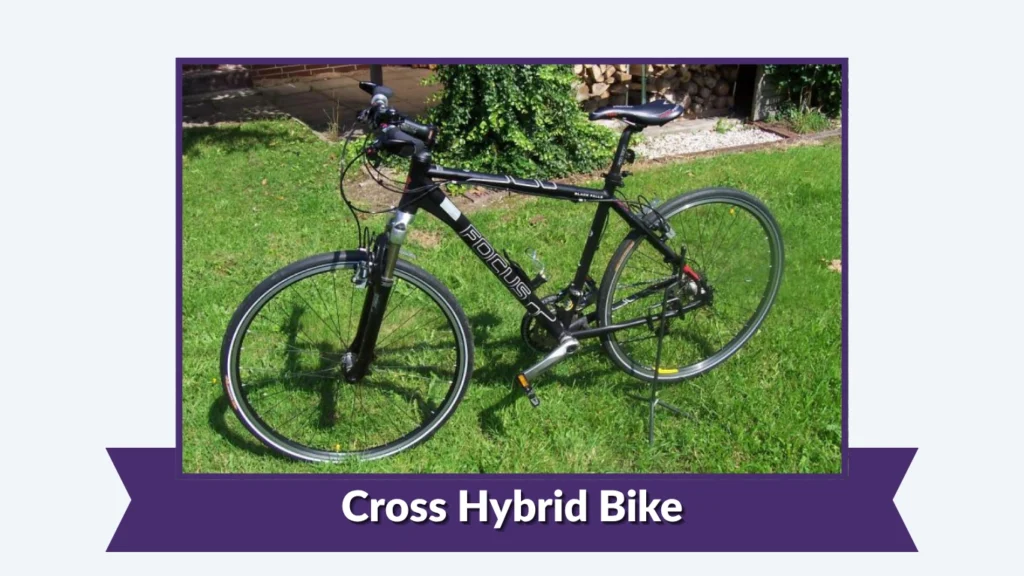
A cross hybrid bike is designed for riders who want a blend of speed, agility, and light off-road capability. It sits between road-focused hybrids and rugged bikes, making it suitable for both paved surfaces and mild trails.
Design and Purpose
Cross hybrid bikes feature a sporty design with a lightweight frame and slightly aggressive geometry. They are built to handle quick movements and varied terrain while maintaining efficiency on roads. The design allows riders to switch easily between urban routes and park trails.
Key Features
- Lightweight and responsive frame
- Slightly wider tires for mixed terrain
- Flat handlebars for better control
- Efficient gearing for speed and flexibility
- Durable components for varied use
Riding Experience
The riding experience is fast and agile, with a good balance between comfort and performance. Cross hybrids feel more responsive than standard hybrids, allowing quicker acceleration and sharper handling. They perform well on smooth roads while still managing light gravel or dirt paths.
Ideal Use Cases
Cross hybrid bikes are ideal for riders who want versatility with a performance edge. They are great for commuting, fitness riding, and occasional off-road use. However, they are not designed for rough mountain trails or heavy touring, as they prioritize speed and agility.
11. Electric Hybrid Bike
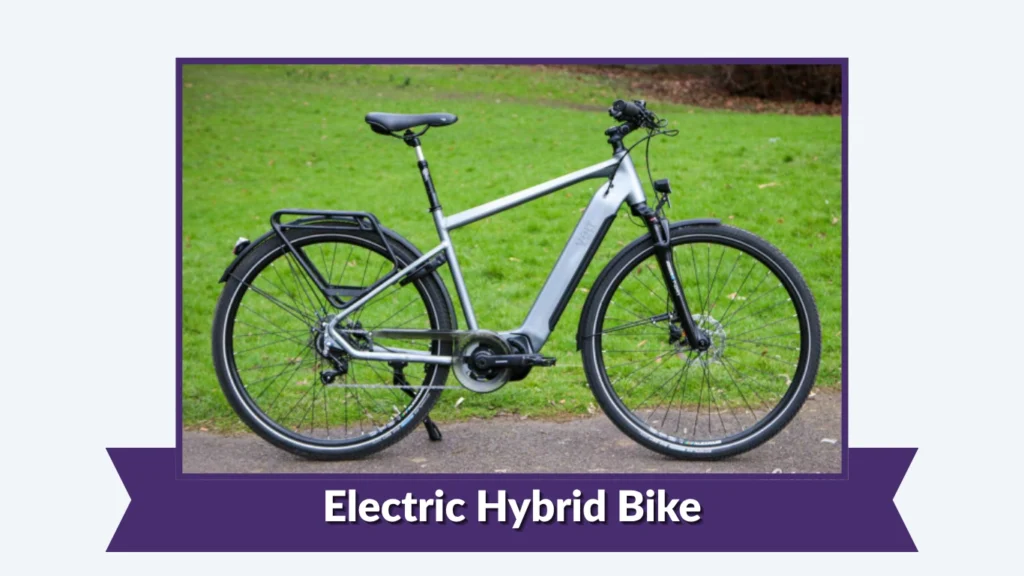
An electric hybrid bike, also known as an e-hybrid, combines traditional pedaling with electric motor assistance. It is designed to make riding easier, especially over long distances, hills, or during daily commutes.
Design and Purpose
Electric hybrid bikes are built with an integrated motor and battery system while maintaining the structure of a standard hybrid bike. The design focuses on comfort and efficiency, allowing riders to travel farther with less physical effort. Many models include different assistance levels to suit various riding needs.
Key Features
- Built-in electric motor for pedal assistance
- Rechargeable battery for extended range
- Multiple assist modes for different riding conditions
- Sturdy frame to support motor and battery weight
- Integrated display for speed, battery level, and settings
Riding Experience
The riding experience is smooth and effortless, especially when tackling hills or long distances. The motor provides a boost while pedaling, reducing fatigue and making rides more enjoyable. Despite the added weight, the assistance helps maintain a steady and comfortable pace.
Ideal Use Cases
Electric hybrid bikes are ideal for commuting, long-distance travel, and riders who want extra support while cycling. They are especially useful in hilly areas or for those who prefer a less physically demanding ride. However, they require regular charging and are generally more expensive than non-electric bikes.
12. Urban Hybrid Bike
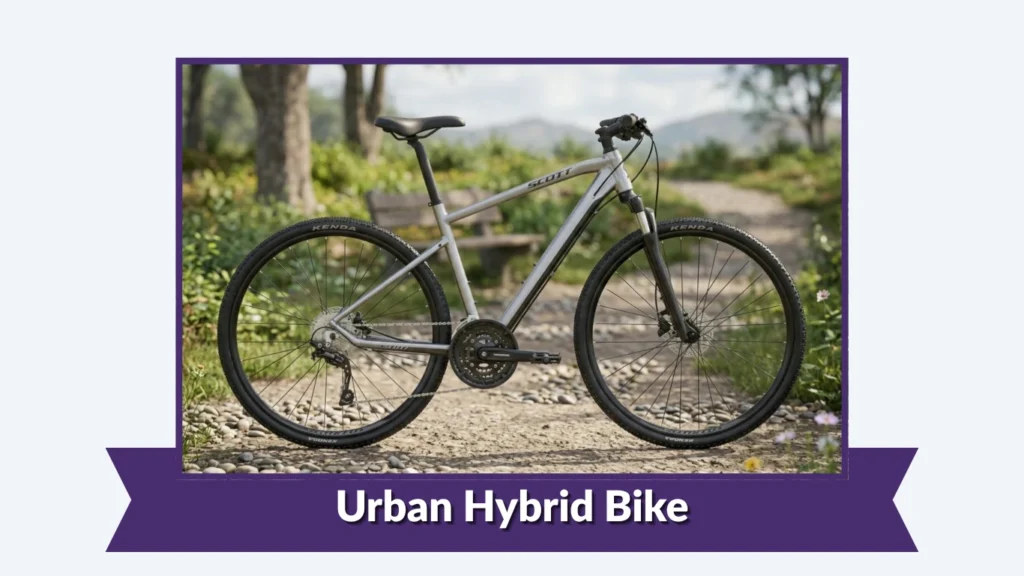
An urban hybrid bike is designed specifically for city living, focusing on style, practicality, and everyday convenience. It is built to handle busy streets, short commutes, and frequent stops while offering a smooth and efficient ride.
Design and Purpose
Urban hybrid bikes feature a sleek and modern design tailored for city environments. They often include integrated components like lights and racks, along with a comfortable geometry for daily use. The design emphasizes low maintenance and ease of handling in crowded urban areas.
Key Features
- Integrated lights for visibility and safety
- Built-in racks or carriers for carrying items
- Puncture-resistant tires for city roads
- Internal gear hub for low maintenance
- Stylish and minimalistic frame design
Riding Experience
The riding experience is smooth, quiet, and highly practical. Urban hybrids are designed for stop-and-go traffic, offering easy control and efficient movement through busy streets. They provide a comfortable balance between speed and stability for everyday riding.
Ideal Use Cases
Urban hybrid bikes are ideal for city commuting, errands, and short daily trips. They perform best on paved roads and bike lanes. These bikes are perfect for riders who want convenience and style, but they are not suited for rough terrain or long-distance touring.
13. Performance Hybrid Bike
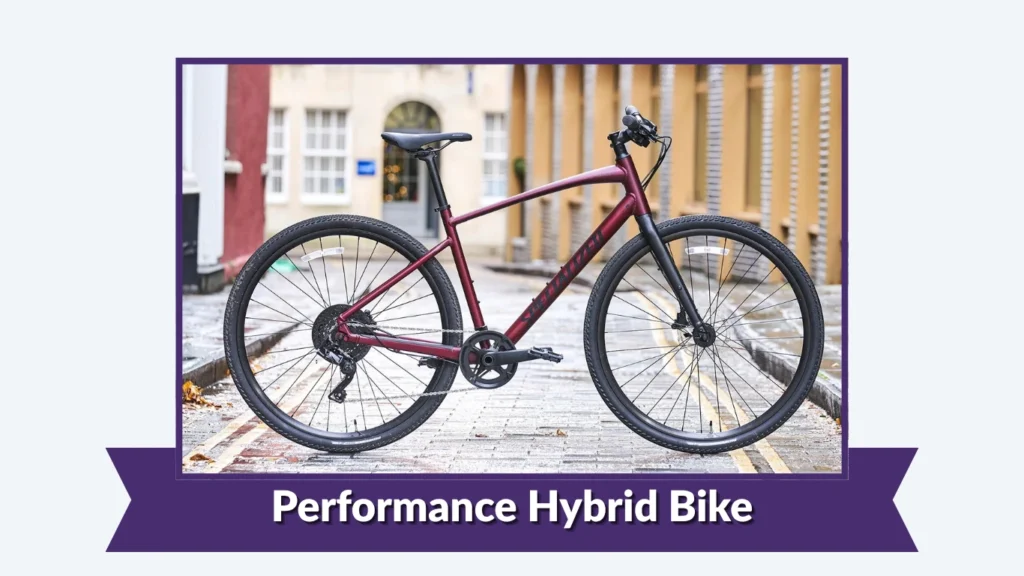
A performance hybrid bike is designed for riders who want maximum speed and efficiency while still enjoying the comfort of a hybrid. It blends elements of road bikes and fitness hybrids, making it ideal for high-speed riding on paved surfaces.
Design and Purpose
Performance hybrid bikes feature a lightweight frame and an aerodynamic design that promotes speed. The riding position is slightly more aggressive than standard hybrids, allowing better power transfer and efficiency. These bikes are built for riders who prioritize performance without switching to a full road bike.
Key Features
- Lightweight and aerodynamic frame
- Narrow tires for higher speed and efficiency
- Advanced gearing system for performance riding
- Flat handlebars with responsive handling
- High-quality components for durability and speed
Riding Experience
The riding experience is fast, smooth, and highly responsive. Performance hybrids accelerate quickly and maintain speed with less effort. While they offer less cushioning than comfort-focused hybrids, they excel in delivering a dynamic and energetic ride on smooth roads.
Ideal Use Cases
Performance hybrid bikes are ideal for fast commuting, fitness training, and long-distance rides on paved roads. They suit experienced riders looking for speed and efficiency. However, they are not suitable for rough terrain or heavy load carrying due to their performance-focused design.
FAQs
What is a hybrid bike best used for?
Hybrid bikes are best used for a mix of riding conditions, including city commuting, fitness riding, and light trail use. They combine comfort and efficiency, making them ideal for everyday cycling without specializing in extreme terrains like mountain or road racing.
Are hybrid bikes good for long-distance rides?
Yes, many hybrid bikes are suitable for long-distance rides, especially trekking, touring, and fitness hybrids. They provide a comfortable riding position and efficient performance, though they may not be as fast as dedicated road bikes over very long distances.
How is a hybrid bike different from a road bike?
Hybrid bikes have a more upright riding position and flat handlebars, while road bikes use drop handlebars and focus on speed. Hybrids are more comfortable and versatile, whereas road bikes are designed mainly for high-speed performance on smooth roads.
Can hybrid bikes be used on rough terrain?
Hybrid bikes can handle light gravel paths and uneven surfaces, especially dual sport or adventure hybrids. However, they are not designed for very rough or technical trails like mountain bikes, which have stronger suspension and more aggressive tires.
Are electric hybrid bikes worth it?
Electric hybrid bikes are worth it for riders who want extra assistance, especially for commuting or long rides. They reduce physical effort and make cycling more accessible, though they are more expensive and require battery charging and maintenance.
