
Hybrid bikes are an excellent choice for commuting because they combine comfort, versatility, and practical everyday performance. Designed with features from road and mountain bikes, they offer upright riding positions, comfortable handlebars, and tires suitable for different surfaces. Whether you travel through busy city streets, suburban neighborhoods, or maintained bike paths, a hybrid commuter bike can make everyday cycling more convenient. However, choosing the right bicycle depends on your commuting distance, road conditions, budget, and personal preferences. This guide explores the advantages, limitations, and essential features of hybrid bikes for commuting.
Are Hybrid Bikes Good for Commuting?
Yes, hybrid bikes are generally good for commuting because they offer a practical balance between comfort, efficiency, and versatility. Their upright riding positions can improve visibility in urban environments, while relatively wide tires help manage uneven pavement. Most hybrid bicycles also support useful accessories such as mudguards, luggage racks, and lights, making them convenient for everyday transportation.
Why Hybrid Bikes Are Popular for Commuting
- Comfortable riding position: Upright geometry reduces the need for an aggressive forward-leaning posture.
- Versatile tires: Medium-width tires handle paved roads and maintained paths.
- Practical accessories: Many frames accommodate racks, mudguards, and bottle cages.
- Accessible handling: Flat handlebars provide familiar steering control.
- Suitable gearing: A useful gear range supports commuting across flat roads and moderate hills.
What Is a Hybrid Commuter Bike?
A hybrid commuter bike combines the practical characteristics of several bicycle categories. Most models feature flat handlebars, relatively upright geometry, and tires designed for efficient riding on pavement and occasional light gravel. Some hybrids prioritize speed, while others emphasize comfort and carrying capacity. Their adaptable designs make them suitable for work commutes, errands, and recreational cycling.
How Hybrid Commuter Bikes Work
Hybrid bikes use conventional bicycle components, including gears, brakes, pedals, and wheels, arranged to provide balanced performance.
Compared with racing-oriented road bikes, hybrids typically offer a more relaxed riding position. Many also include mounting points for commuting accessories, allowing riders to carry everyday essentials more conveniently.
Benefits of Using Hybrid Bikes for Daily Commuting
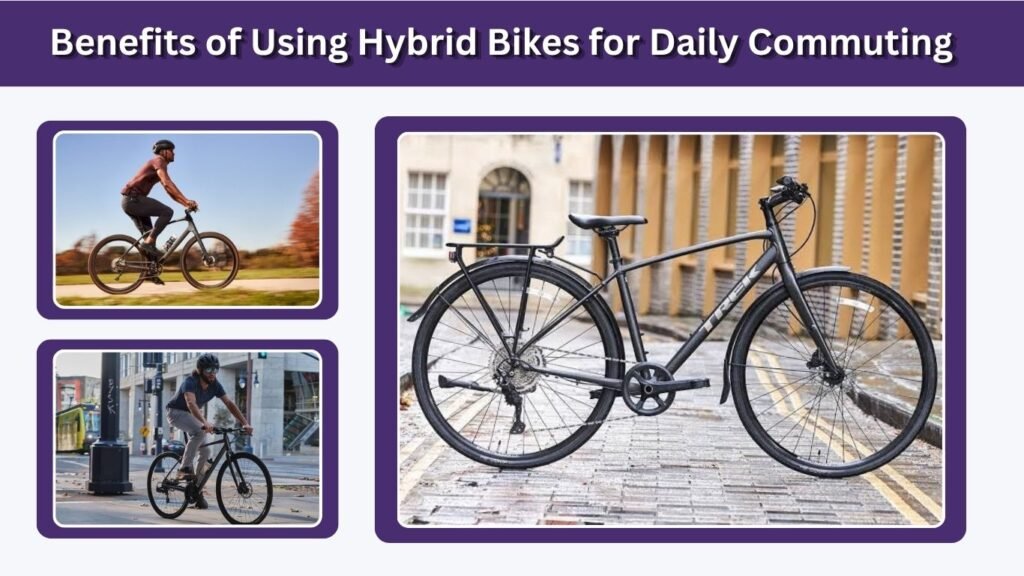
Commuting by hybrid bike offers several practical advantages for riders who regularly travel to work, school, or nearby destinations. These bicycles accommodate various riding conditions without requiring specialized equipment. Their combination of comfort, manageable handling, and everyday functionality makes them particularly attractive for cyclists seeking dependable transportation rather than competitive cycling performance.
Comfortable for Daily Riding
A properly fitted hybrid bike can provide a relaxed position that suits everyday travel.
Flat handlebars allow natural hand placement, while moderately wide tires help absorb minor road irregularities. These features may improve comfort during repeated journeys.
Suitable for Different Road Conditions
Hybrid commuter bikes perform well on paved streets, cycle lanes, and many compacted gravel paths.
Tire selection influences their capability. Smooth tires favor efficient pavement riding, while lightly treaded tires provide additional versatility on maintained unpaved routes.
Disadvantages of Hybrid Bikes for Commuting
Although hybrid bicycles work well for everyday transportation, they involve compromises. Their upright riding positions create more aerodynamic resistance than aggressive road-bike setups, and some models are relatively heavy. Hybrid bikes also vary significantly in quality and equipment. Understanding these limitations helps commuters choose bicycles that match their travel distance, terrain, and storage requirements.
Common Limitations of Hybrid Commuter Bikes
- Reduced aerodynamic efficiency: Upright riding positions may require more effort at higher speeds.
- Variable weight: Comfort-focused models can be heavier than lightweight road bikes.
- Limited technical terrain capability: Most hybrids are unsuitable for demanding mountain-bike trails.
- Different equipment levels: Budget models may lack racks, mudguards, and quality lighting.
- Less specialized performance: Hybrids may not match dedicated road or mountain bikes in demanding conditions.
Hybrid Bike vs. Commuter Bike: What’s the Difference?
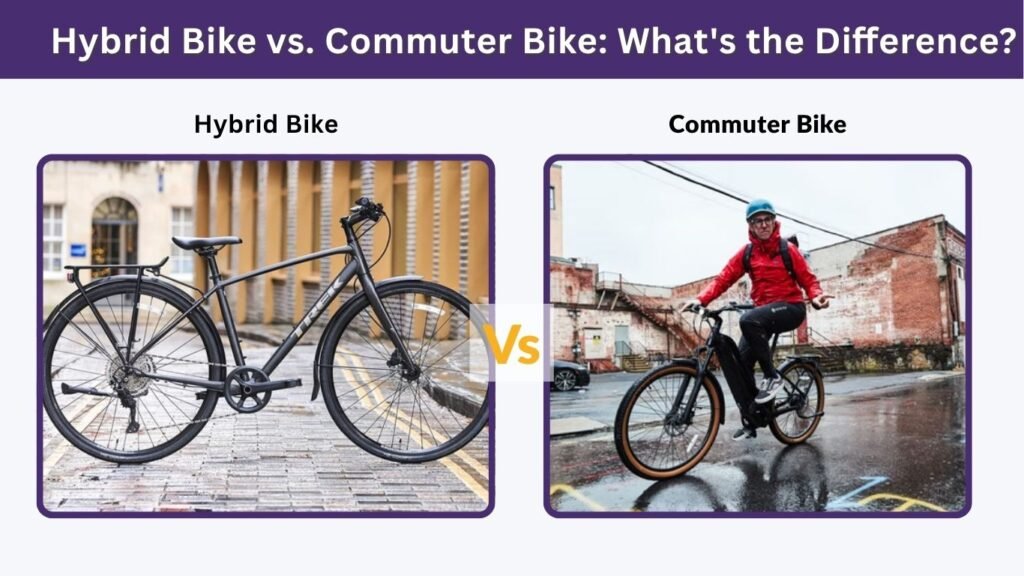
Hybrid bikes and commuter bikes frequently overlap, but the terms describe slightly different concepts. A hybrid refers to a versatile bicycle design, while a commuter bike describes a bicycle intended primarily for everyday transportation. Many hybrid bikes are also commuter bikes. The main differences usually involve included accessories, riding geometry, and features designed for regular travel.
Hybrid Bikes vs. Dedicated Commuter Bikes
A standard hybrid may come without mudguards, racks, or integrated lights, allowing buyers to customize it according to their needs.
A dedicated commuter bike may include these features from the factory. Some commuter models also use internally geared hubs or belt drives to reduce certain maintenance requirements.
Hybrid Bike vs. Road Bike for Commuting
Both road bikes and hybrids can provide efficient daily transportation, but they emphasize different riding characteristics. Road bikes generally prioritize speed and aerodynamic performance, while hybrids offer more relaxed positioning and versatile handling. Choosing between them depends on commuting distance, road surfaces, carrying requirements, and whether the rider values efficiency or everyday practicality.
Which Bike Is Better for City Commuting?
Hybrid bikes are often convenient for urban trips involving frequent stops, traffic signals, and changing road conditions.
Road bikes may suit riders covering longer distances on smooth roads at sustained speeds. However, an appropriately fitted road bike can also be practical for city commuting.
Hybrid Bike vs. Gravel Bike for Commuting
Hybrid and gravel bikes both handle mixed surfaces, making them useful for commuters whose routes include pavement and occasional unpaved sections. Their main differences involve handlebars, geometry, and intended riding styles. Gravel bikes typically emphasize longer-distance mixed-terrain cycling, while hybrids often prioritize upright comfort and accessible handling for everyday journeys.
Which Bike Handles Mixed Terrain Better?
A gravel bike generally offers greater versatility for extended unpaved routes and faster mixed-surface riding.
For mostly paved commutes with occasional smooth gravel sections, a hybrid may provide sufficient capability. Tire clearance and tire selection are important considerations for either bicycle.
Best Features to Look for in a Hybrid Commuter Bike
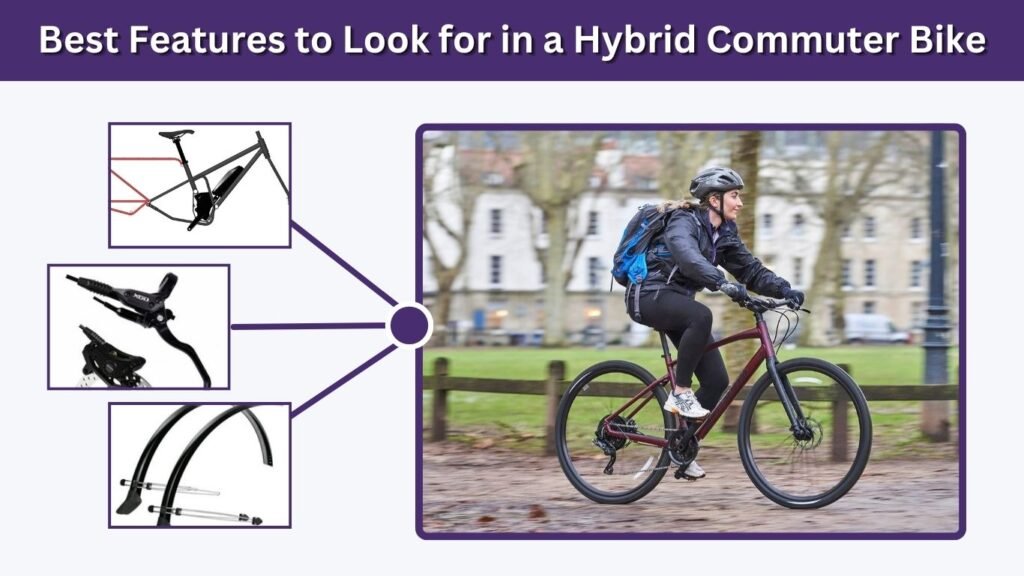
Choosing a dependable hybrid commuter bike requires evaluating components that influence comfort, reliability, and everyday usability. Commuters should prioritize appropriate frame sizing, effective brakes, durable tires, and practical carrying options. The ideal bicycle should match local terrain and typical travel distances while remaining manageable to maintain, store, and transport between journeys.
Essential Commuter Bike Features
- Lightweight frame: Aluminum frames offer a practical balance of weight and durability.
- Reliable brakes: Quality disc or rim brakes provide controlled stopping when maintained properly.
- Puncture-resistant tires: Reinforced tires can reduce interruptions caused by road debris.
- Luggage rack mounts: Allow installation of panniers for carrying work essentials.
- Mudguard compatibility: Helps reduce water and road spray during wet conditions.
- Suitable gearing: Choose a range appropriate for local hills and daily distances.
Best Hybrid Bikes for Commuting
Several established bicycle manufacturers produce hybrids intended for city travel, fitness, and everyday transportation. Popular options vary in geometry, equipment, tire clearance, and riding characteristics. Rather than focusing exclusively on brand names, commuters should compare individual models based on fit, component quality, intended route, and whether useful accessories are included or available separately.
Trek Hybrid Commuter Bikes
Trek’s FX range emphasizes fitness and efficient urban riding, while the Verve range generally prioritizes comfort.
Certain Dual Sport configurations are designed for pavement and maintained unpaved paths. Specifications and available models vary by market.
Giant, Specialized, and Cannondale Hybrids
Giant Escape, Specialized Sirrus, and Cannondale Quick models are examples of hybrid ranges that can suit commuting.
Compare tire clearance, mounting points, brakes, and frame geometry before choosing. Model equipment may change between production years.
How Far Can You Commute on a Hybrid Bike?
Hybrid bikes can handle short and moderately long commutes, provided the rider is comfortable and the bicycle fits properly. Distance suitability depends on fitness, elevation, traffic conditions, and riding frequency. Some commuters comfortably travel substantial distances on hybrids, while others prefer more specialized bikes for extended journeys or faster road cycling.
Are Hybrid Bikes Good for Long Commutes?
Yes, hybrids can work well for longer commutes when equipped appropriately.
A comfortable saddle, efficient tires, proper bike fit, and a suitable gear range become increasingly important as distance increases. Gradually building endurance can make regular longer journeys more manageable.
How to Set Up a Hybrid Bike for Commuting
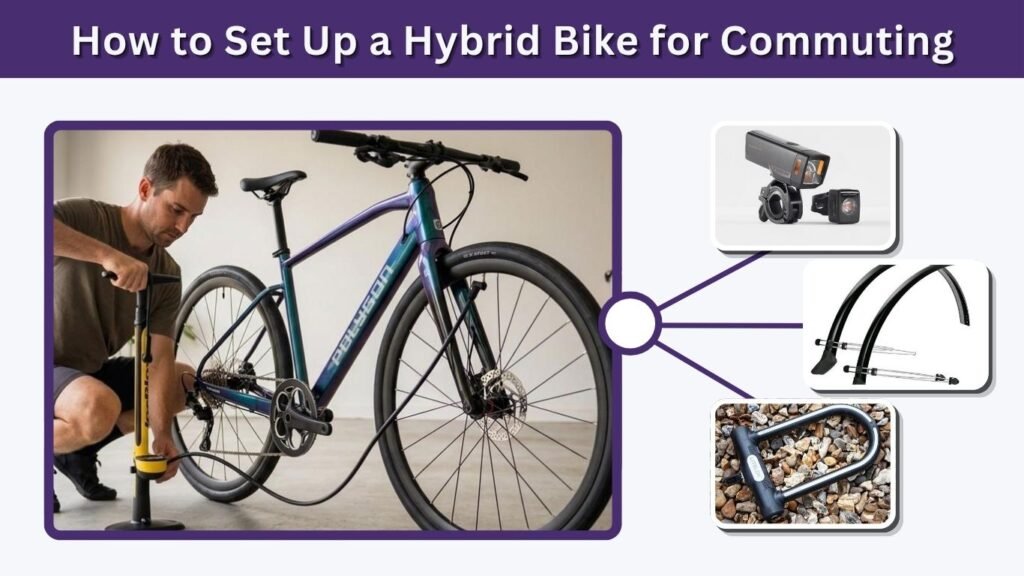
A few practical upgrades can make a standard hybrid bicycle better suited to everyday transportation. Commuting accessories improve cargo capacity, visibility, weather protection, and security. Selecting suitable equipment also helps keep work clothing and personal belongings organized. The necessary additions depend on when, where, and how frequently you ride.
Essential Hybrid Commuting Accessories
- Front and rear lights: Improve visibility and support safer riding in low light.
- Mudguards: Reduce water and dirt splashing onto clothing.
- Rear rack and panniers: Carry bags without placing their weight on your back.
- Quality bicycle lock: Help secure the bicycle during unattended stops.
- Helmet: Choose a properly fitted helmet meeting relevant safety standards.
- Repair essentials: Carry a spare tube or repair kit, pump, and basic multitool.
Are Hybrid Bikes Good for Commuting in Rain?
Hybrid bikes can be used for commuting during wet weather when equipped with suitable tires, effective brakes, and practical accessories. However, rain reduces traction and visibility, especially around painted road markings and metal surfaces. Appropriate riding techniques, regular maintenance, and weather-resistant equipment help make rainy commutes more manageable.
How to Commute Safely in Wet Weather
Reduce speed, increase braking distance, and avoid sudden steering movements on slippery surfaces.
Use mudguards, waterproof luggage, and visible clothing. Inspect tire condition and brake performance regularly, and avoid riding through deep or unfamiliar floodwater.
FAQs
1. Are Hybrid Bikes Better Than Road Bikes for Commuting?
Hybrid bikes often suit commuters prioritizing comfort, upright posture, and practical accessories. Road bikes may be preferable for longer, faster journeys on smooth pavement.
2. Can You Use a Hybrid Bike for Daily Commuting?
Yes. Hybrid bikes are designed for versatile riding and can handle regular trips to work, school, or other destinations when properly maintained.
3. Are Hybrid Bikes Good for Long-Distance Commuting?
Yes, many hybrids can handle longer journeys. Proper fit, efficient tires, suitable gearing, and rider fitness play important roles in comfort and performance.
4. What Is the Best Hybrid Bike for City Commuting?
A suitable city commuter hybrid should have comfortable geometry, reliable brakes, puncture-resistant tires, and mounting points for practical accessories.
5. Are Hybrid Bikes Good for Beginners Who Commute?
Yes. Flat handlebars, relatively upright riding positions, and versatile tires make many hybrid bikes approachable for beginners who commute on paved roads and maintained paths.
