
A city bike is designed for comfortable, practical riding on paved streets, bike paths, and everyday urban routes. Compared with performance-focused road or mountain bikes, city bikes usually prioritize an upright riding position, easy handling, useful accessories, and low-maintenance components. They can work well for commuting, errands, casual exercise, or short recreational rides. From traditional step-through models to electric city bikes and hybrid-style commuters, understanding the main features can help you choose a city bike that matches your riding needs.
What Is a City Bike?
A city bike is a bicycle made mainly for everyday transportation in towns and urban areas. It typically favors comfort and convenience over maximum speed or off-road performance. Many city bikes include practical features such as racks, fenders, lights, chain guards, or kickstands, making them useful for commuting, shopping, and regular short-distance trips.
Comfortable Upright Riding Position
Most city bikes place the rider in a more upright position than a traditional road bike.
This reduces the need to lean heavily over the handlebars and can make it easier to watch traffic, pedestrians, and road conditions.
For riders making shorter daily trips, the relaxed position can also feel more comfortable than a racing-style setup.
Designed for Everyday Use
City bikes are usually designed for frequent starts, stops, and moderate speeds.
They work best on:
- Paved roads
- Bike lanes
- Greenways
- Urban trails
- Neighborhood streets
- Short commuting routes
Some models can handle light gravel or rough pavement, but they are generally not intended for demanding trails.
Main Types of City Bikes
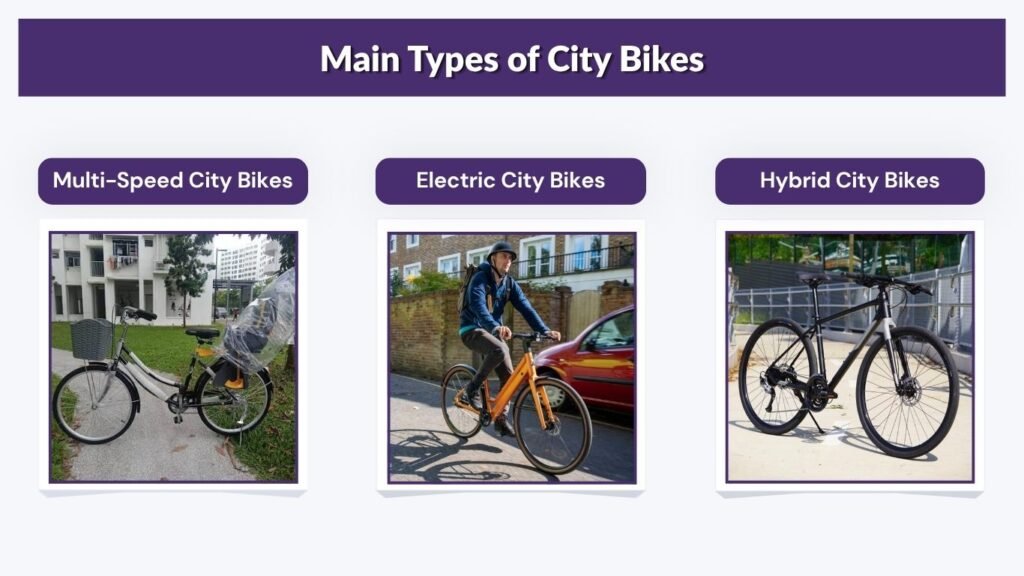
City bikes come in several styles because urban riders have different needs. Some people want a simple bicycle for short trips, while others need multiple gears, electric assistance, cargo capacity, or a frame that is easier to mount. Knowing the main categories can make it easier to narrow down the right type.
Step-Through City Bikes
Step-through frames have a lowered top tube that makes mounting and dismounting easier.
They can be useful for:
- Stop-and-go commuting
- Riders with limited mobility
- Casual urban riding
- Wearing everyday clothing
- Frequent short trips
This frame design is common on comfort-focused and commuter city bikes.
Multi-Speed City Bikes
Multi-speed models provide several gears for different terrain.
A 7-speed or 8-speed city bike, for example, can make hills easier and give the rider more control over cadence.
These bikes are often more versatile than single-speed options for riders who encounter slopes or longer commuting routes.
Electric City Bikes
A city electric bike adds a motor and battery to provide pedal assistance.
Electric assistance can make commuting easier when dealing with hills, longer distances, headwinds, or heavier loads.
Electric city bikes are especially useful for riders who want to reduce physical effort while still pedaling.
Hybrid City Bikes
Hybrid city bikes combine features from road, fitness, and comfort bicycles.
They often use medium-width tires, multiple gears, flat handlebars, and a moderately upright riding position.
A hybrid-style city commuter bike can be a good choice for riders who want both practical transportation and recreational fitness.
Benefits of Riding a City Bike
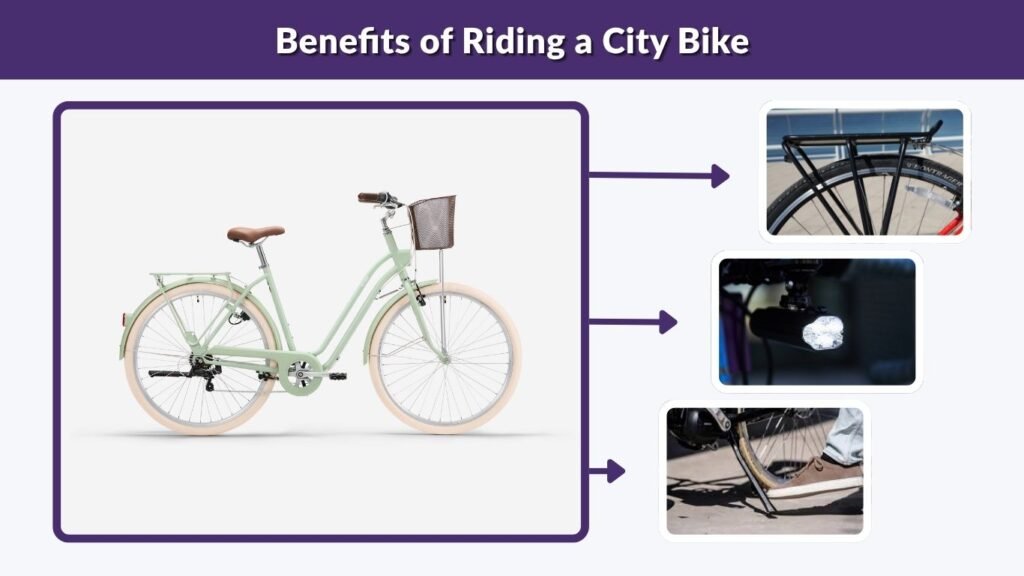
City bikes are popular because they are built around practical everyday riding rather than specialized performance. Their design can make short and medium-distance trips easier while reducing dependence on a car for simple errands or commuting. The exact benefits depend on route conditions, bike setup, and rider preferences.
Comfortable for Daily Riding
The upright geometry of many city bikes can reduce pressure on the hands and lower back compared with aggressive road-bike positions.
Wide saddles, swept-back handlebars, and moderately sized tires can also improve comfort.
Useful for Commuting
A well-equipped city commuter bike can carry work bags, groceries, or other daily items.
Common commuting accessories include:
- Rear rack
- Basket
- Panniers
- Fenders
- Lights
- Kickstand
- Bell
These additions can make everyday riding more convenient.
Easier to Handle in Traffic
City bikes are generally designed for predictable handling rather than aggressive speed.
An upright position provides better visibility, while flat or swept handlebars can make steering comfortable at lower speeds.
This is useful when navigating traffic lights, intersections, shared paths, and crowded streets.
City Bike vs. Road Bike
City bikes and road bikes may both be used on pavement, but they are designed for different priorities. Road bikes typically emphasize speed, efficiency, and long-distance performance. City bikes focus more on comfort, convenience, and practical transportation.
Riding Position
A road bike usually places the rider in a lower, more aerodynamic position.
A city bike generally keeps the torso more upright.
The upright city-bike position can be easier for casual rides and stop-and-go traffic, while the road-bike position is more efficient at higher speeds.
Tires and Handling
Road bikes usually have relatively narrow tires and responsive steering.
City bikes often use wider tires that can provide more stability and comfort over cracked pavement.
This makes city bikes more forgiving on typical urban roads.
Practical Equipment
Many city bikes include or support racks, fenders, kickstands, lights, and baskets.
Road bikes are generally more stripped down to reduce weight and improve efficiency.
For daily transportation, the extra practicality of a city bike can be more useful than the speed advantage of a road bike.
City Bike vs. Hybrid Bike
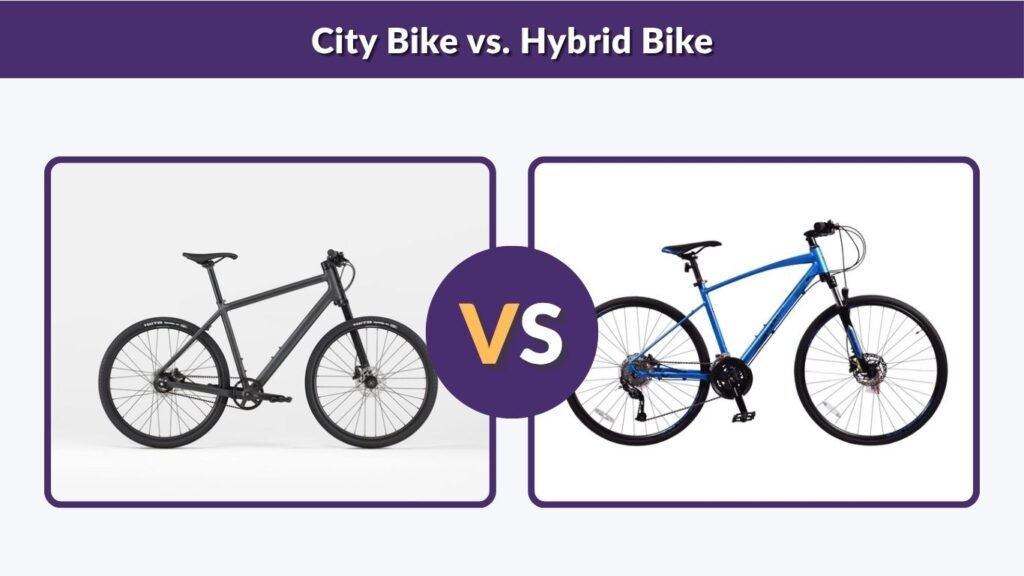
City and hybrid bikes overlap considerably, which can make the difference confusing. Both may use flat handlebars, multiple gears, and wider tires than road bikes. However, city bikes usually emphasize urban comfort and utility, while hybrids often aim to balance commuting and fitness.
City Bike Strengths
City bikes are typically better suited to riders who prioritize:
- Upright comfort
- Easy mounting
- Built-in accessories
- Short urban trips
- Practical transportation
Their design tends to feel relaxed and stable.
Hybrid Bike Strengths
Hybrid bikes can feel slightly faster and more athletic.
They may be better for longer fitness rides, mixed commuting, or riders who want a more versatile bicycle.
For someone who mainly rides around town, however, a dedicated city bike can offer greater convenience.
Important City Bike Features
The best city bike is not simply the one with the most features. It is the one that matches your route, body position, storage needs, and riding habits. A few key specifications make a much bigger difference than decorative extras.
Frame Design
City bikes commonly use step-through, mid-step, or traditional diamond frames.
Choose a frame that allows comfortable mounting while still feeling stable.
Frame material also affects weight and ride feel. Aluminum is common because it is relatively light and corrosion-resistant, while steel can provide a smoother feel but may weigh more.
Gears
Single-speed city bikes are simple and low maintenance, but they work best on relatively flat terrain.
Multi-speed bikes provide more flexibility.
Common options include:
- 3-speed
- 7-speed
- 8-speed
- Wider-range drivetrains
More gears are useful if your commute includes hills.
Brakes
Reliable brakes are important for urban riding.
Rim brakes can work well in dry conditions, while disc brakes generally provide stronger and more consistent braking in wet weather.
The best option depends on your budget, climate, and maintenance preferences.
Tires
City-bike tires should balance comfort, durability, and rolling efficiency.
Wider tires can absorb rough pavement better, while narrower tires generally roll faster.
Puncture-resistant tires are especially useful for commuting because flat tires can be inconvenient during daily travel.
Electric Bike for City Commuting
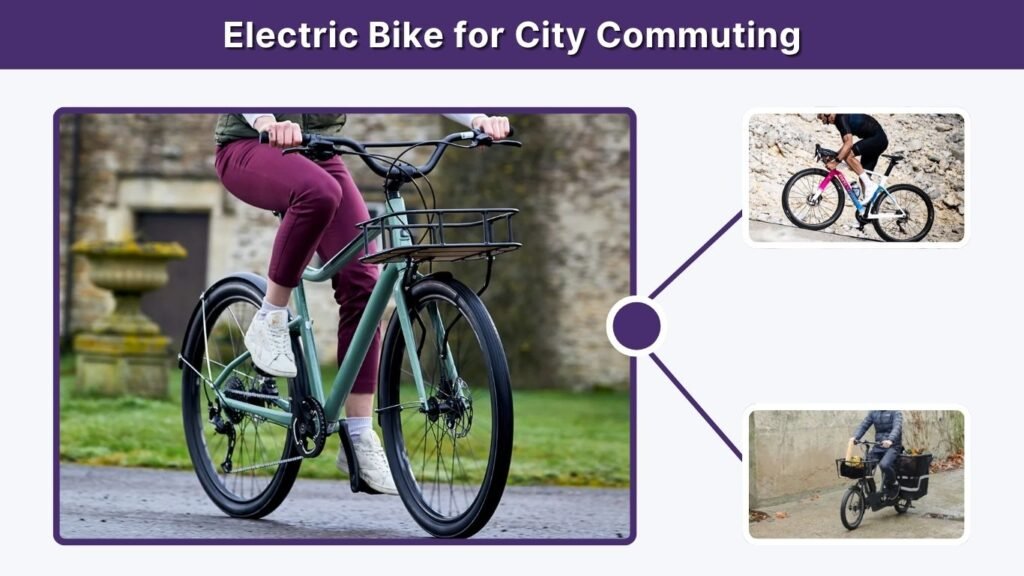
Electric city bikes are increasingly popular with riders who want to travel farther without arriving exhausted. Pedal assistance can make urban commuting more practical, particularly when routes include hills or long stretches.
Why Choose a City E-Bike?
Electric assistance can make it easier to:
- Climb hills
- Carry groceries
- Ride longer distances
- Reduce commute effort
- Maintain a steady pace
- Handle headwinds
A city e-bike can therefore replace some short car trips for certain riders.
What to Check on an Electric City Bike
Pay attention to motor assistance, battery range, bike weight, charging time, brakes, and local regulations.
Battery range varies based on rider weight, hills, weather, assistance level, tire pressure, and riding speed.
Choose a bike with enough practical range for your typical round trip rather than relying only on the maximum advertised number.
How to Choose the Best City Bike
Choosing the best city bike starts with understanding how you will use it. A rider making a flat two-mile trip needs something different from someone commuting ten miles through hills. Comfort, reliability, maintenance, and practical accessories should generally matter more than appearance alone.
Consider Your Daily Distance
For short trips, a simple single-speed or 3-speed bike may be enough.
Longer rides may be more comfortable with additional gears, lighter components, or electric assistance.
Think About Terrain
Flat cities allow simpler gearing.
Hilly areas usually benefit from more gears or an electric motor.
Before buying, consider the steepest part of your normal route rather than only the average terrain.
Check Fit and Comfort
Bike fit affects comfort, control, and efficiency.
Make sure you can comfortably reach the handlebars and pedals while maintaining a slight bend in the knee at the bottom of the pedal stroke.
If possible, test ride several sizes before choosing.
Useful Accessories for City Bikes
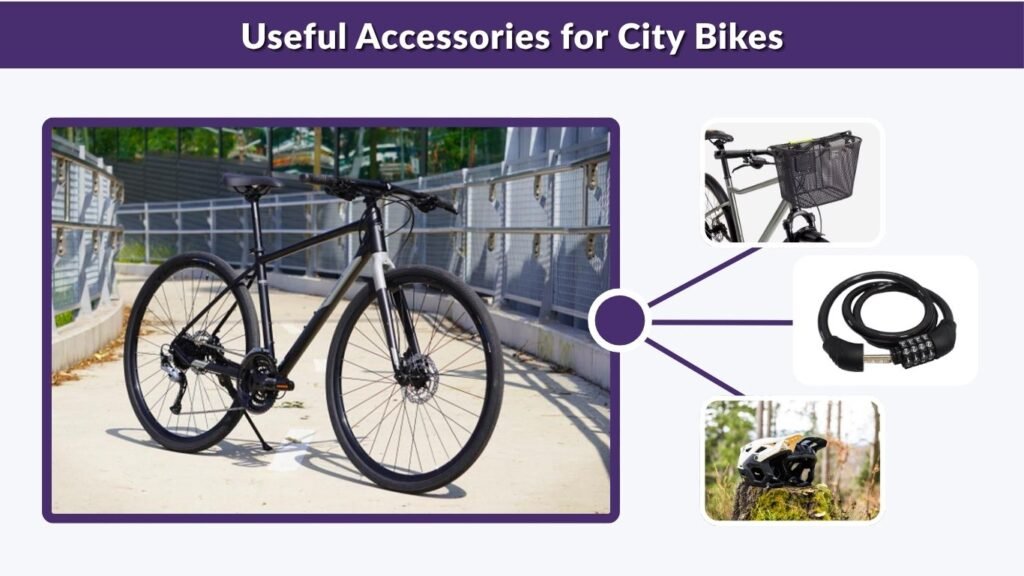
Accessories can make a basic city bike significantly more practical. The best setup depends on whether you ride for commuting, errands, exercise, or recreation.
Everyday City Bike Accessories
Useful additions include:
- Front and rear lights
- Bell
- Rear rack
- Panniers
- Basket
- Fenders
- Lock
- Water bottle holder
- Kickstand
- Helmet
For daily commuting, prioritize safety and carrying capacity before decorative accessories.
FAQs
What is a city bike used for?
A city bike is mainly used for commuting, errands, casual riding, and short or medium-distance transportation on paved urban roads and bike paths.
Are city bikes good for commuting?
Yes. City bikes are often excellent for commuting because they emphasize comfort, stable handling, and practical accessories such as racks, fenders, lights, and baskets.
What is the difference between a city bike and a hybrid bike?
City bikes generally prioritize upright comfort and utility, while hybrid bikes combine commuting and fitness features for a slightly more versatile riding style.
Are electric city bikes worth it?
Electric city bikes can be useful for longer commutes, hills, heavier loads, or riders who want to reduce physical effort. Their value depends on riding distance, terrain, budget, and charging access.
How many gears should a city bike have?
For flat areas, a single-speed or 3-speed bike may be enough. A 7-speed, 8-speed, or wider-range drivetrain is more useful when the route includes hills or varied terrain.
