
A commuting hybrid bike is a practical option for riders who want comfort, efficiency, and versatility for everyday travel. Hybrid bikes combine the speed of a road bike with the stable handling and upright position commonly associated with city and mountain bikes. They are well suited to work commutes, college trips, paved paths, fitness rides, and occasional light gravel. Choosing the right hybrid commuter bike depends on your route, distance, terrain, comfort preferences, and carrying needs. This guide explains the key features, benefits, sizing, tires, brakes, gears, and accessories daily riders should consider.
What Is a Commuting Hybrid Bike?
A commuting hybrid bike is a bicycle designed for practical everyday riding while borrowing features from several bike categories. Most models use flat handlebars, moderate-width tires, useful gearing, and relaxed geometry. They are typically more comfortable than performance road bikes and more efficient on pavement than mountain bikes, making them a strong choice for regular daily transportation.
Hybrid Bike Design
Hybrid bikes usually combine road-bike efficiency with features that improve comfort and control.
Common characteristics include:
- Flat handlebars
- Upright riding position
- Moderate-width tires
- Multiple gears
- Disc or rim brakes
- Rack and fender mounts
- Lightweight frames
- Stable handling
This combination makes hybrid bikes adaptable to many commuting environments.
Designed for Daily Riders
A commuter hybrid is suitable for riders who travel regularly but do not need a racing bike or heavy off-road bicycle.
It can work well for short city trips, longer suburban commutes, errands, recreational rides, and paved cycling paths.
Are Hybrid Bikes Good for Commuting?

Yes, hybrid bikes are generally very good for commuting. They offer a comfortable position, practical gearing, and enough speed for most everyday routes. Wider tires provide more stability than traditional road-bike tires, while flat handlebars make steering and braking straightforward.
Why Hybrid Bikes Work Well
Hybrid bikes are useful for commuting because they provide:
- Comfortable riding geometry
- Good visibility in traffic
- Stable steering
- Efficient pavement performance
- Useful gear ranges
- Compatibility with racks
- Fender mounting options
- Easy accessory installation
These features make them suitable for both new and experienced commuters.
Comfortable for Repeated Riding
A commuting bike should remain comfortable when ridden several times per week.
Hybrid bikes usually place less emphasis on aerodynamic positioning and more on relaxed posture. This can reduce fatigue for riders who prioritize everyday convenience over maximum speed.
Best Features of a Hybrid Commuter Bike
The best hybrid commuter bike should match your route rather than simply offering the most expensive components. Features that improve reliability, comfort, visibility, and carrying capacity are usually more valuable than racing-oriented upgrades.
Important Features to Look For
Consider:
- Correct frame size
- Reliable brakes
- Durable tires
- Comfortable grips
- Useful gearing
- Rear rack mounts
- Fender mounts
- Bottle cage mounts
- Strong wheels
- Easily serviced components
These features make a hybrid more practical for daily use.
Rack Compatibility
Rear racks allow riders to carry panniers, backpacks, groceries, laptops, or work equipment without placing all the weight on their shoulders.
This can significantly improve comfort on longer commutes.
Fender Compatibility
Fenders help reduce water and road spray reaching your clothing.
For riders who commute in mixed weather, full-length fenders can make the bicycle more practical throughout the year.
How to Choose a Commuting Hybrid Bike
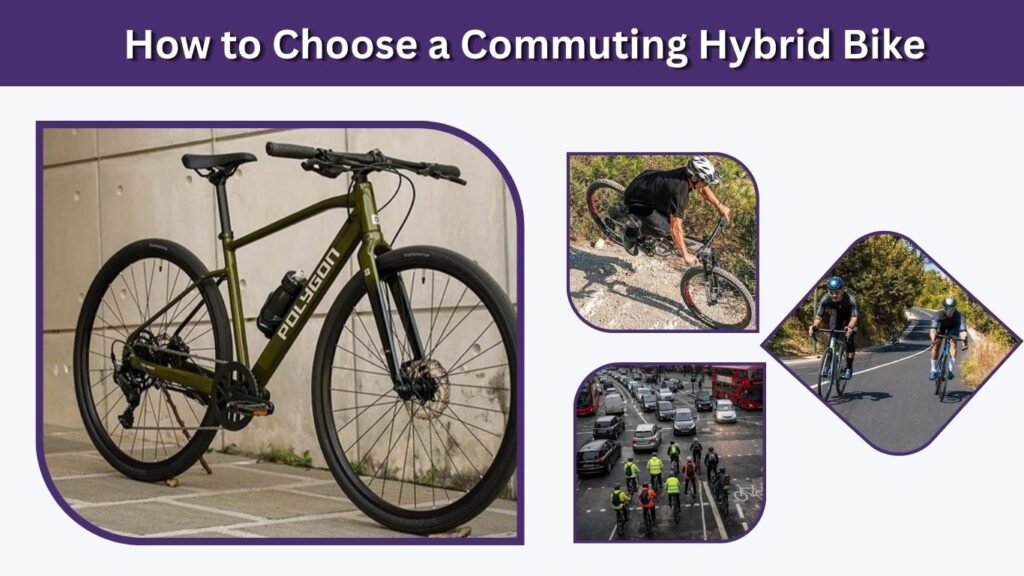
Choosing a commuter hybrid bike starts with understanding how and where you ride. A short flat urban commute has different requirements from a longer route containing hills, poor pavement, or gravel.
Consider Your Route
Before buying, think about:
- Daily distance
- Road surface
- Number of hills
- Traffic conditions
- Weather
- Bike-lane availability
- Gravel sections
- Cargo requirements
A lightweight fitness hybrid may suit smooth roads, while wider tires may be better for rough streets.
Choose the Right Frame Size
Proper fit is more important than brand.
You should be able to reach the handlebars comfortably without stretching excessively. Your shoulders should remain relaxed, and your knees should maintain a slight bend at the bottom of the pedal stroke.
Manufacturer sizing charts provide a useful starting point.
Test Ride When Possible
A short test ride can reveal whether the bike feels stable and comfortable.
Pay attention to steering, braking, reach, saddle position, and how easily you can start and stop.
Best Tires for Hybrid Bike Commuting
Tires strongly affect how a commuting hybrid feels. Wider tires usually provide greater comfort and stability, while narrower tires tend to roll faster on smooth pavement. Most commuters benefit from a balance between these extremes.
Tire Characteristics for Daily Riding
Useful commuting tires often provide:
- Moderate width
- Smooth or lightly treaded surfaces
- Puncture resistance
- Durable sidewalls
- Reliable wet-weather grip
If your route contains rough pavement or light gravel, slightly wider tires can improve comfort.
Puncture Resistance
Flat tires are inconvenient during work or school commutes.
Puncture-resistant tires and properly inflated tubes can reduce the likelihood of interruptions.
However, even durable tires should be inspected regularly for embedded debris and wear.
Brakes for a Hybrid Commuter Bike
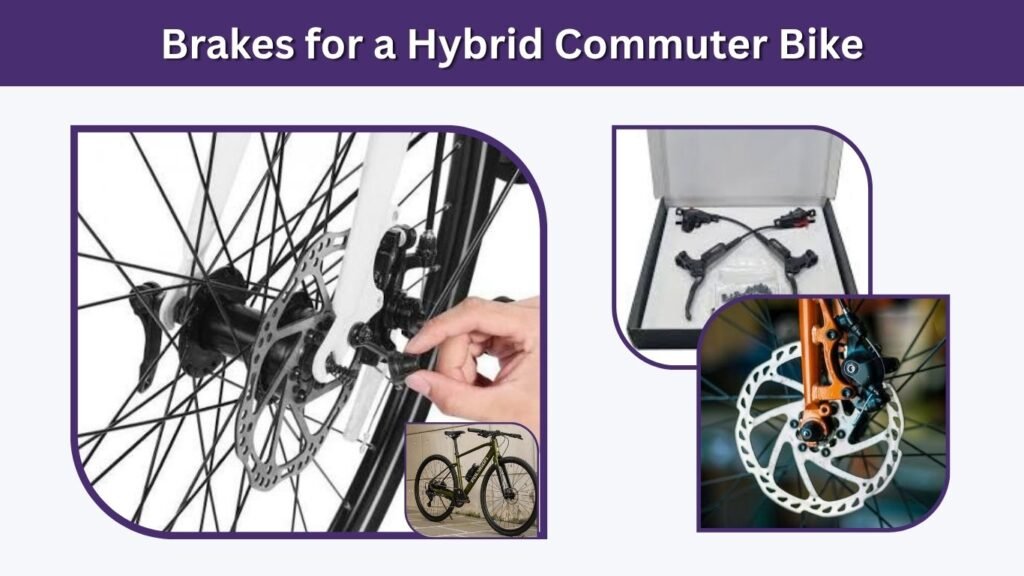
Reliable brakes are especially important for commuting because urban riders frequently encounter intersections, traffic lights, pedestrians, and changing road conditions.
Disc Brakes
Disc brakes are increasingly common on hybrid commuter bikes.
They generally provide strong braking and consistent performance in wet conditions.
Hydraulic disc brakes often require less hand pressure, while mechanical disc brakes use cables and may be easier for some riders to maintain.
Rim Brakes
Rim brakes are simple, lightweight, and usually less expensive.
They can work well for casual commuting, although their performance may decrease when the wheel rims become wet.
Gears for Commuting Hybrid Bikes
The best gearing depends on your terrain. Flat city commutes require fewer low gears, while hilly areas benefit from a wider range.
Simple Gearing for Flat Routes
A 1x drivetrain uses one front chainring and several rear gears.
This system can be convenient for commuters because there is only one shifter to manage.
It also reduces drivetrain complexity.
Wider Gearing for Hills
If your commute includes steep climbs, choose a drivetrain with lower climbing gears.
Having the right gear range is more important than simply having a large total number of gears.
Commuter Bike vs Hybrid Bike
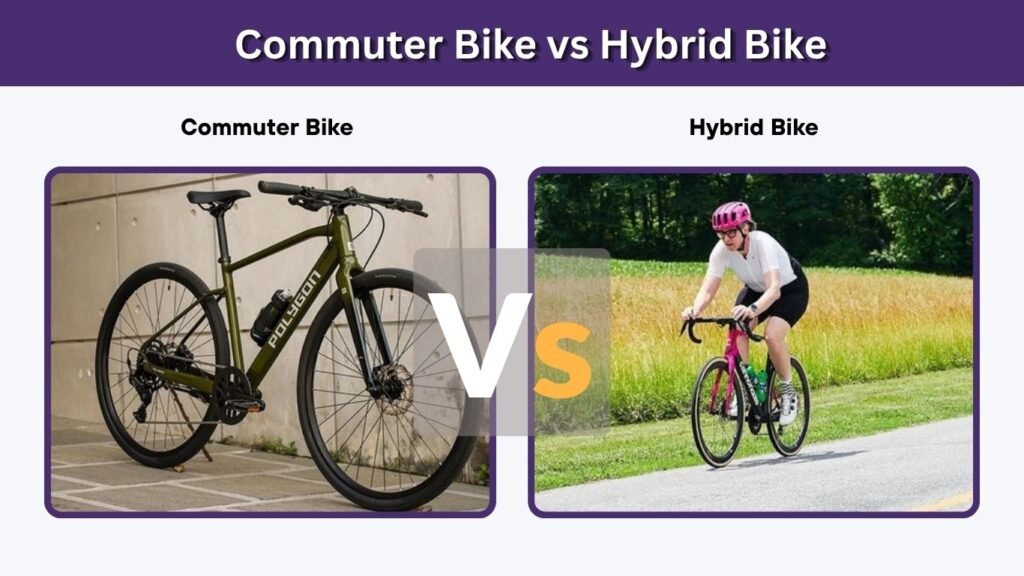
The terms commuter bike and hybrid bike are sometimes used interchangeably, but they describe slightly different concepts. A commuter bike is defined primarily by its purpose, while a hybrid refers to the bicycle’s overall design.
What Is the Difference?
A dedicated commuter bike may come equipped with:
- Fenders
- Rear rack
- Integrated lights
- Chain guard
- Kickstand
A hybrid may not include these features from the factory but often has mounting points for adding them later.
Which Is Better?
A dedicated commuter can be more convenient if transportation is your only priority.
A hybrid may be better if you also want to use the bike for fitness, weekend rides, or recreational cycling.
Hybrid vs Road Bike for Commuting
Both road and hybrid bikes can work for commuting, but they suit different riders. Road bikes emphasize speed and efficiency, while hybrids usually prioritize comfort and versatility.
Choose a Hybrid Bike If
A hybrid may be better if you prefer:
- Upright positioning
- Flat handlebars
- Wider tires
- Easier everyday handling
- Rack compatibility
- Better rough-road comfort
These features are particularly helpful for casual and beginner commuters.
Choose a Road Bike If
A road bike may suit riders who have longer paved commutes and prioritize speed.
The lighter frame, narrower tires, and aerodynamic position can improve efficiency, but the riding posture may be less comfortable for some users.
Hybrid vs Mountain Bike for Commuting

Mountain bikes are designed for rough trails and technical terrain. Their suspension and wide tires can be unnecessary for most city routes.
Why Hybrids Are Better on Pavement
Hybrid tires typically produce less rolling resistance.
Rigid forks also transfer pedaling effort more efficiently on smooth surfaces.
This makes hybrids faster and easier to pedal on roads compared with many mountain bikes.
When a Mountain Bike Makes Sense
A mountain bike may be better if your route includes:
- Rough trails
- Large rocks
- Roots
- Deep gravel
- Technical off-road sections
Otherwise, a hybrid is usually more efficient for daily commuting.
Lightweight Hybrid Commuter Bikes
A lightweight hybrid commuter bike can be useful for riders who carry their bicycle upstairs, use public transportation, or regularly climb hills.
Benefits of a Lightweight Bike
A lighter hybrid can be easier to:
- Carry into an apartment
- Load onto a vehicle
- Lift onto storage racks
- Accelerate from stops
- Ride uphill
Aluminum frames are common because they provide a good balance of weight, durability, and price.
Do Not Focus on Weight Alone
A very light bike is not automatically better.
Durability, fit, tire comfort, and accessory compatibility are often more important for daily riders.
Essential Accessories for Daily Commuting
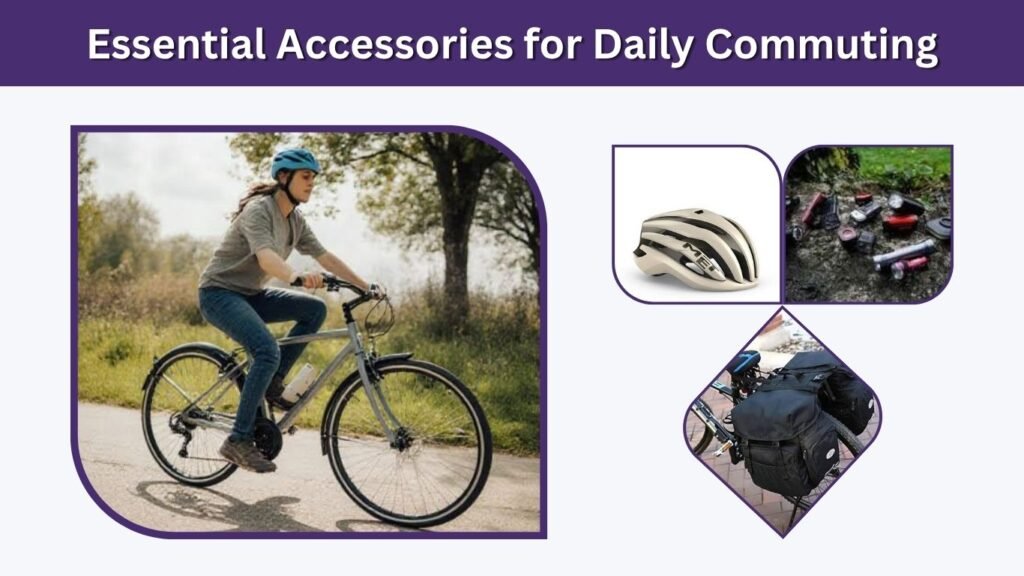
A few accessories can make a basic hybrid much better suited to regular transportation. Prioritize safety, carrying capacity, and weather protection.
Useful Commuter Accessories
Consider:
- Helmet
- Front light
- Rear light
- Rear rack
- Panniers
- Fenders
- Strong bike lock
- Bell
- Water bottle
- Mini pump
- Spare tube
- Basic repair kit
You may not need every accessory immediately, but lights and a reliable lock are especially important for many commuters.
Common Commuting Hybrid Bike Mistakes
Many riders focus too much on brand names or component numbers when choosing a bike. Everyday usability is usually more important.
Mistakes to Avoid
Avoid:
- Buying the wrong frame size
- Choosing unnecessarily narrow tires
- Paying for suspension you do not need
- Ignoring rack mounts
- Ignoring fender compatibility
- Choosing too many gears unnecessarily
- Forgetting security needs
- Skipping routine maintenance
A simpler bike that fits properly is often better than a complicated bike that feels uncomfortable.
Maintaining a Hybrid Commuter Bike
A commuter bike may be ridden frequently, so basic maintenance helps improve reliability and reduce unexpected problems. You do not need advanced mechanical knowledge to handle routine checks.
Check Tire Pressure Regularly
Low tire pressure can make the bicycle harder to pedal and may increase the risk of certain punctures.
Check pressure regularly and stay within the manufacturer’s recommended range.
Keep the Chain Lubricated
A clean, properly lubricated chain generally shifts more smoothly and lasts longer.
Remove excess lubricant after application so dirt does not accumulate unnecessarily.
Check Brakes and Gears
Test your brakes before regular rides and pay attention to changes in stopping performance.
If shifting becomes noisy or inconsistent, the drivetrain may need adjustment.
FAQs
1. Are hybrid bikes good for daily commuting?
Yes. Hybrid bikes are well suited to daily commuting because they combine comfortable geometry, efficient tires, practical gearing, and compatibility with racks and fenders.
2. What is the difference between a commuter bike and a hybrid bike?
A commuter bike is designed specifically for transportation, while a hybrid bike is a versatile bicycle that combines characteristics from road, city, and mountain bikes. Many hybrids can easily be set up for commuting.
3. Are hybrid bikes faster than mountain bikes?
On pavement, hybrids are generally faster because they use narrower tires, lighter components, and often rigid forks that reduce rolling resistance.
4. Should a commuting hybrid bike have disc brakes?
Disc brakes are a useful choice for commuting because they offer strong and consistent braking, especially in wet conditions. Rim brakes can still work well for dry-weather or lighter use.
5. What should I look for in a commuting hybrid bike?
Look for proper frame fit, durable tires, reliable brakes, useful gearing, rack and fender mounts, comfortable geometry, and components that are easy to maintain.
